
Mediterranean Diet & Longevity
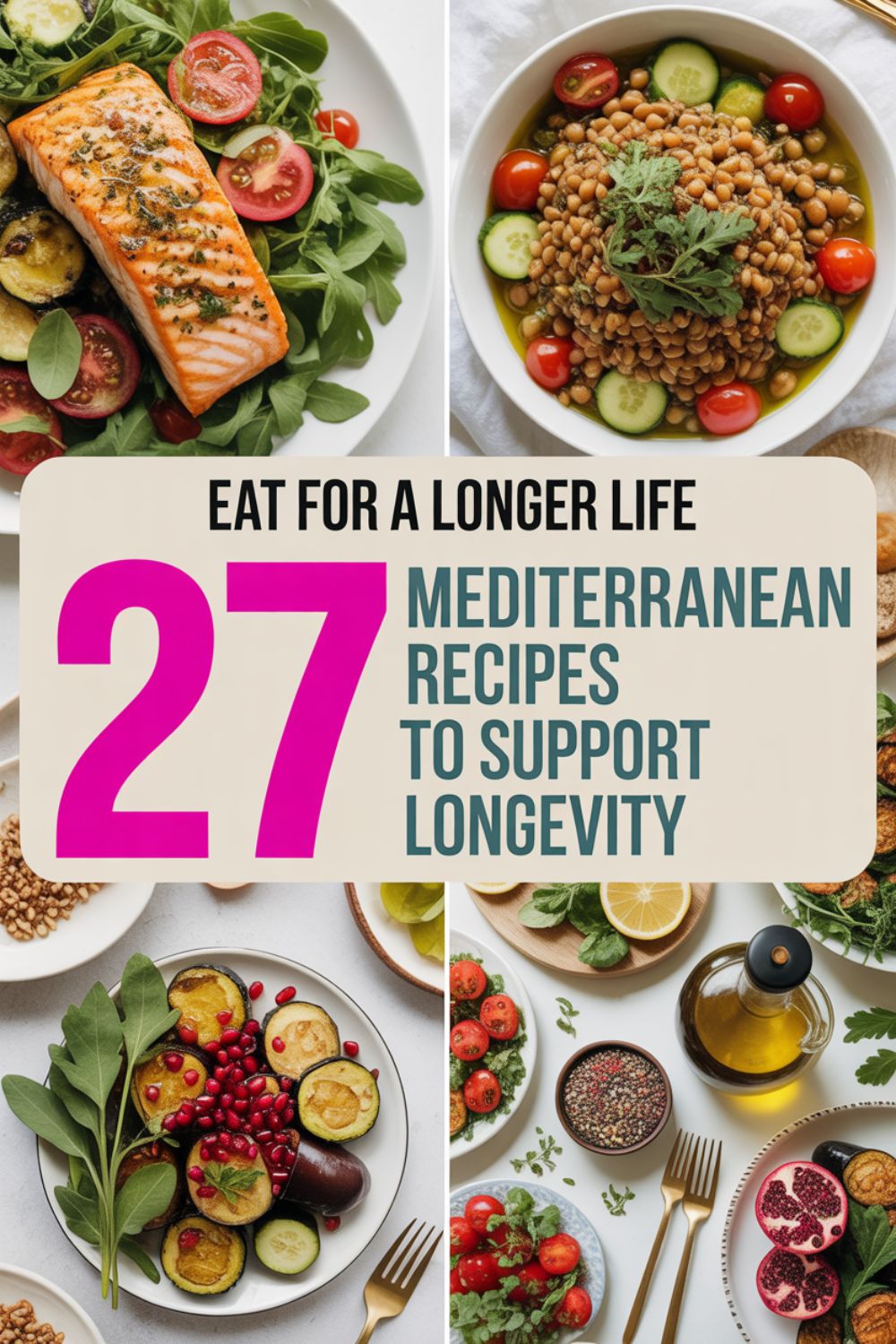
27 Mediterranean Recipes to Support Longevity
Real food that goes the distance — for your health, your energy, and honestly, your mood.
There is something almost unfair about Mediterranean cooking. The people eating this way have been living longer, moving better in their 70s, and somehow pulling off a full dinner spread with just olive oil, garlic, and whatever was fresh at the market — while the rest of us stress-order takeout and wonder why our energy crashes by 3 p.m. If you have spent any time looking into longevity research, you already know the Mediterranean diet keeps showing up like the reliable friend who actually does what they say. And if you have not looked into it yet, welcome — you picked a good day to start.
This list of 27 Mediterranean recipes is not here to overwhelm you with obscure ingredients or lecture you about macros. These are real, craveable dishes built around the foods that blue zone populations and decades of nutrition research agree on: olive oil, legumes, whole grains, fresh vegetables, herbs, fatty fish, and a glass of something red now and then. Every recipe in this collection earns its place because it does something meaningful for your body — fights inflammation, supports your gut, fuels your brain, or keeps your heart in good shape. Ideally all four at once.
Ready to cook your way to a longer, better life? Let’s get into it.
Why Mediterranean Food and Longevity Go Together So Well
Here is the short version: the Mediterranean diet is one of the most studied dietary patterns in the world, and virtually every major study points in the same direction. According to research published in the journal Nutrients reviewing decades of evidence, consistent adherence to Mediterranean eating patterns is associated with significantly lower risk of cardiovascular disease, type 2 diabetes, certain cancers, and neurodegenerative conditions. That is a seriously impressive resume for something that basically just asks you to eat more fish and drizzle olive oil on things.
The secret is in the combination. No single ingredient is magic, but together they create an eating pattern that actively reduces chronic inflammation — which is the slow-burning root cause behind most age-related diseases. Extra-virgin olive oil brings polyphenols that work at a cellular level. Legumes feed the gut bacteria that regulate your immune system. Fatty fish flood your system with omega-3s that your brain and heart both depend on. Herbs like oregano and rosemary are not just decoration — they carry real antioxidant loads. It all stacks up.
And a 2024 narrative review on Mediterranean diet patterns for healthy and active aging (PubMed) makes the case clearly: the phytochemical compounds in these foods are directly linked to a lower risk of developing the chronic diseases that shorten — and more importantly, diminish — the quality of our later years. You are not just adding years; you are keeping those years worth having.
Pro Tip
Start with olive oil swaps. Replace every other fat in your kitchen with a good extra-virgin olive oil — butter, vegetable oil, seed oils — and you will shift your omega-3 to omega-6 ratio in a meaningful way before you change a single recipe.
The 27 Recipes: Your Full Longevity Collection
I organized these by meal type and category so you can actually use this list without scrolling forever. Each recipe is intentional — nothing in here is just “a salad” for the sake of having a salad. Every dish has something going for it nutritionally, and together they cover a full week of inspired, genuinely satisfying eating.
Breakfast Recipes That Start Your Day With Purpose
Breakfast is the easiest meal to get wrong. Most people grab something fast and processed and wonder why they are foggy by mid-morning. Mediterranean breakfasts are different — they front-load fiber, healthy fat, and protein in a way that actually holds you. These five recipes are the ones I keep coming back to.
- Savory Greek yogurt bowl with cucumber, olive oil, and za’atar Get Full Recipe
- Shakshuka with harissa, feta, and fresh herbs Get Full Recipe
- Whole grain toast with smashed avocado, lemon, and dukkah Get Full Recipe
- Warm farro porridge with honey, walnuts, and dried figs Get Full Recipe
- Baked eggs in tomato and chickpea sauce Get Full Recipe
The yogurt bowl deserves a special mention. Greek yogurt — specifically the full-fat, strained kind — is one of the most underrated longevity foods on the planet. It delivers protein, calcium, and live cultures that support your gut microbiome, which research increasingly links to everything from immune function to mood regulation. Top it with a drizzle of good olive oil and you have got a breakfast that genuinely earns its keep. I use a good stainless steel mixing bowl set to prep mine the night before — makes the morning zero-effort.
Lunch Recipes That Keep You Full Without the Slump
The post-lunch crash is not inevitable. It is what happens when your lunch is mostly refined carbs and not enough fat, fiber, or protein. These six recipes flip that script entirely. High fiber, satisfying, genuinely delicious — and none of them require more than 30 minutes of active cooking time.
- Roasted red pepper and lentil soup with lemon and cumin Get Full Recipe
- Chickpea and spinach stew with garlic and smoked paprika Get Full Recipe
- Tabbouleh with extra parsley, pomegranate seeds, and mint Get Full Recipe
- White bean and tuna salad with capers, lemon, and olive oil Get Full Recipe
- Grilled halloumi and roasted veggie grain bowl Get Full Recipe
- Fattoush salad with toasted pita, sumac dressing, and radish Get Full Recipe
The white bean and tuna combo is one of those meals that sounds incredibly simple and then surprises you. Canned tuna (packed in olive oil, please — not water) brings omega-3 fatty acids, and white beans add plant-based protein plus soluble fiber that slows glucose absorption. It is the kind of lunch that keeps you clear-headed and not thinking about snacks at 2 p.m. I prep the beans on Sundays using a reliable 6-quart dutch oven that handles legumes, stews, and soups equally well.
IMO, the fattoush salad is also criminally underrated in Western food culture. The sumac dressing alone is worth knowing about — sumac is a sour, fruity spice that adds a citrus-like punch without actually being citrus, and it is loaded with polyphenols. You can grab it at most Middle Eastern grocery stores or online.
Quick Win
Cook a big batch of legumes once a week. Lentils, chickpeas, and white beans form the backbone of at least half these recipes — having them ready in the fridge turns a 45-minute recipe into a 10-minute one.
Dinner Recipes Worth Sitting Down For
Mediterranean dinner culture has something the rest of the world kind of forgot: dinner is an event. Even a simple one. It involves color, freshness, and sitting down without your phone. These eight recipes are designed for that — meals that make you slow down and actually taste what you made.
- Baked salmon with lemon, dill, and olive oil on a bed of wilted spinach Get Full Recipe
- Slow-cooked lamb and white bean ragù with rosemary Get Full Recipe
- Roasted eggplant with tahini, pomegranate, and pine nuts Get Full Recipe
- Grilled sea bass with chermoula and roasted fennel Get Full Recipe
- Stuffed bell peppers with quinoa, feta, and sun-dried tomatoes Get Full Recipe
- Turkish red lentil soup with crispy mint butter drizzle Get Full Recipe
- Baked chicken thighs with preserved lemon, olives, and capers Get Full Recipe
- Slow-roasted tomato and white bean bake with herbed breadcrumbs Get Full Recipe
The baked salmon recipe is the one I point people toward when they ask where to start. Salmon is one of the richest dietary sources of omega-3 fatty acids, particularly EPA and DHA — the forms your brain actually absorbs and uses. Pair it with olive oil and leafy greens and you have got a plate that ticks nearly every longevity box in one go. For perfect results, I use a rimmed ceramic baking sheet that distributes heat evenly without needing parchment or foil.
If the stuffed bell peppers are calling your name, check out these 25 high-protein Mediterranean recipes for muscle gain — the stuffed pepper concept appears in several variations over there, and they are all genuinely worth your time.
Snacks and Sides That Pull Their Weight
Snacking gets a bad reputation, but Mediterranean-style snacking is actually something to learn from. These cultures have been doing mezze and small plates forever — it is not about mindless eating; it is about small, intentional bites that satisfy without wrecking your appetite or your blood sugar. These five recipes cover the snack and side territory.
- Hummus with roasted garlic, olive oil, and smoked paprika Get Full Recipe
- Marinated olives with orange zest, chili, and thyme Get Full Recipe
- Baba ganoush with pomegranate and fresh mint Get Full Recipe
- Roasted chickpeas with cumin and lemon zest Get Full Recipe
- Tzatziki with cucumber ribbons and fresh dill Get Full Recipe
Making hummus from scratch is one of those things that feels like too much effort until you actually do it once. Then you realize it takes 10 minutes in a food processor, tastes about four times better than store-bought, and costs a fraction of the price. A high-powered blender or a quality food processor makes the texture genuinely silky. The secret is blending for longer than feels necessary — at least two full minutes — and adding ice water gradually.
Salads and Grain Bowls That Deserve More Than Side-Dish Status
A great salad is a meal. A bad salad is just wet lettuce and disappointment. These recipes fall firmly in the first category.
- Warm farro salad with roasted beets, goat cheese, and walnuts Get Full Recipe
- Greek salad reimagined: barley, cucumber, tomato, and Kalamata dressing Get Full Recipe
- Roasted cauliflower and lentil bowl with tahini and pickled onion Get Full Recipe
The farro salad with roasted beets is one of those dishes that photographs beautifully and tastes even better than it looks. Farro is an ancient grain with a nutty chew and a genuinely impressive fiber and protein profile — it keeps you full longer than pasta ever will. Combine it with walnuts (heart-healthy fat and polyphenols) and beets (nitrates that support blood pressure and circulation) and you have a bowl that is working hard on your behalf. I store the components separately in glass meal prep containers with snap-lock lids so I can assemble bowls throughout the week without anything getting soggy.
FYI — if you want these bowls to become a full weekly system, these 15 best Mediterranean bowl recipes you will want to meal prep every week are an excellent companion to bookmark right now.
Kitchen Essentials for Mediterranean Cooking
These are the tools I actually use — nothing fancy, nothing obscure. Just the gear that makes Mediterranean cooking faster, easier, and more consistent.
Physical Kitchen Tools
A quality enameled cast iron dutch oven (5–6 quart)
This is the one tool that earns its cabinet space more than anything else. Soups, stews, braised chicken, slow-cooked lamb — it does all of it and looks great on the table. A good one lasts decades.
A sturdy food processor (7-cup minimum)
Hummus, baba ganoush, tapenade, herb pastes — Mediterranean cooking involves a lot of blending and pureeing. A powerful food processor cuts prep time dramatically and handles everything from chickpeas to cauliflower without complaining.
Glass meal prep containers with airtight lids (set of 10)
Batch cooking is the backbone of eating well all week. Glass containers keep flavors clean, work in both the oven and microwave, and do not stain when you store tomato-based dishes — which you will be doing a lot.
Digital Resources
7-Day Mediterranean Anti-Inflammation Meal Plan (Printable PDF)
A fully mapped-out week of meals — grocery list included. Perfect for anyone who wants to implement Mediterranean eating without spending Sunday afternoon planning from scratch.
14-Day Anti-Inflammatory Eating Plan for Women
A two-week structured plan that addresses hormone balance, energy, and inflammation simultaneously. Practical, flexible, and designed for real life schedules.
30-Day Mediterranean Wellness Plan
The full program for anyone who wants to go all in. Thirty days of structured Mediterranean eating with a progressive approach that builds habits rather than just following recipes.
The Ingredients That Do the Heavy Lifting
Most longevity-focused diets converge on a handful of core ingredients, and the Mediterranean diet is no different. What sets it apart is how seamlessly these ingredients appear together — not as supplements or add-ons, but as the actual foundation of every meal. Here is what to keep stocked at all times.
Extra-Virgin Olive Oil
This is the non-negotiable. Extra-virgin olive oil is the fat that underpins the entire Mediterranean food culture, and it is not interchangeable with regular olive oil or other vegetable oils. The “extra-virgin” classification means it was cold-pressed without heat or chemicals, preserving its polyphenol content — specifically oleocanthal, which acts similarly to ibuprofen in reducing inflammation. Use it for everything: cooking, drizzling, dressings, finishing. You want the real stuff, so look for a single-origin bottle with a harvest date. I keep a dark-glass dispensing bottle on the counter for easy pouring without exposing the oil to light.
Legumes: Chickpeas, Lentils, and White Beans
If olive oil is the fat foundation, legumes are the protein and fiber foundation. Lentils alone provide more protein per cup than most people realize — about 18 grams, plus 16 grams of fiber, iron, and folate. Chickpeas support gut bacteria diversity because of their resistant starch content, which feeds the microbiome rather than being absorbed quickly. White beans add potassium and additional soluble fiber. These three rotate through almost every recipe in this collection in some form. Keep the dry versions and the canned versions on hand.
If you want to go deeper on lentil-based cooking specifically, these 17 Mediterranean lentil dishes packed with protein are a genuinely great resource — the variety might surprise you.
Fatty Fish: Salmon, Sardines, Mackerel
Fatty fish twice a week is one of the most consistent recommendations across virtually every longevity-focused dietary framework, and Mediterranean eating has been practicing this for centuries without needing a guideline. The omega-3 fatty acids in these fish support brain health, reduce triglycerides, lower blood pressure, and decrease systemic inflammation — all simultaneously. Sardines, in particular, are worth getting over any texture hesitation you might have. They are incredibly sustainable, affordable, and loaded with calcium (you eat the bones, which soften in the can) alongside the omega-3s.
Fresh Herbs: Parsley, Mint, Oregano, Thyme
Herbs in Mediterranean cooking are not garnish — they are ingredients. A cup of fresh parsley in your tabbouleh delivers more vitamin K and vitamin C than most people realize. Oregano has documented antioxidant and antimicrobial properties. Fresh mint aids digestion and adds brightness to dishes that would otherwise feel heavy. Grow a small herb pot on your windowsill and you will never reach for dried herbs the same way again.
Pro Tip
Buy herbs in big bunches, not tiny plastic packages. Wrap them in a damp paper towel, place in a zip bag, and they will last a full week in the fridge. This halves your cost and means you actually use them generously instead of rationing.
How to Turn These Recipes Into a Real Meal Prep System
Twenty-seven recipes sounds like a lot until you realize how many of them share components. Mediterranean cooking is naturally modular. Cook a pot of lentils and they go into the soup on Monday, the salad on Wednesday, and the grain bowl on Friday. Roast a tray of vegetables and they appear in the grain bowl tonight and the stuffed peppers tomorrow. This overlap is not laziness — it is efficiency, and it is how Mediterranean home cooks have always operated.
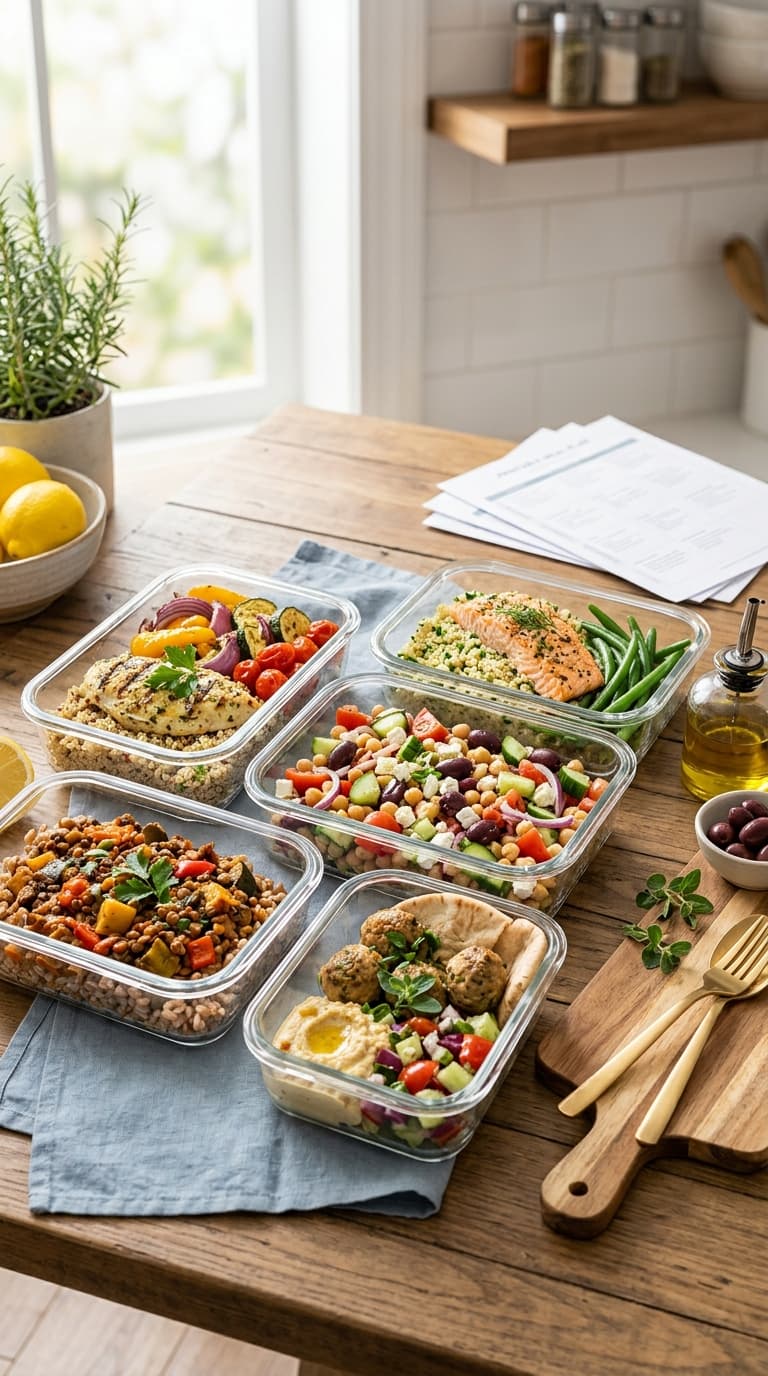
A realistic Sunday prep session looks like this: cook a large batch of grains (farro, barley, or quinoa), prepare one or two legume dishes, roast two or three trays of vegetables, make a large salad base, and mix a versatile dressing or sauce like tahini or herbed olive oil. That gives you the building blocks for at least four or five of the recipes in this collection without any additional cooking during the week.
For a fully structured version of this approach, the 7-day Mediterranean high-fiber meal prep plan maps it all out with a shopping list and schedule — genuinely worth the download if you want to stop improvising and start actually executing. And if you prefer something with more variety across two weeks, the 14-day high-fiber Mediterranean plan for beginners gives you that scaffolding without being rigid about it.
Smart Swaps That Make These Recipes Work for Everyone
One of the most practical things about Mediterranean cooking is how adaptable it is. The core philosophy — whole foods, healthy fats, lots of plants, minimal processing — translates easily to almost any dietary need. Here are some of the most common swaps that keep these recipes accessible:
Dairy-free? Replace feta with a good-quality vegan feta (the almond-based versions are surprisingly convincing) or just skip it and add more lemon zest. Greek yogurt swaps well with full-fat coconut yogurt in sauces and dressings. For a full collection of dairy-free options, the 15 dairy-free Mediterranean recipes for sensitive stomachs are worth bookmarking.
Gluten-free? Farro and barley are not gluten-free, but quinoa and millet replace them seamlessly with nearly identical prep times. Rice works fine in most grain bowl applications. The 21 gluten-free Mediterranean recipes for beginners make those substitutions automatic throughout.
Plant-based? Most of these recipes are already plant-forward. The fish and chicken dishes swap well with chickpeas, hearty mushrooms, or cauliflower steaks. Lamb in the ragù can be replaced with beluga lentils for a similar earthy depth. The texture is different, yes, but the flavor profile holds.
Watching blood sugar? This eating pattern is already low-glycemic by nature — legumes, healthy fats, and fiber slow glucose absorption throughout every meal. For specifically targeted options, these 20 diabetic-friendly Mediterranean recipes dial in the approach even more precisely.
Frequently Asked Questions
Can Mediterranean recipes actually support longevity, or is that just marketing?
The research backing this up is genuinely solid and has been replicated across multiple populations and study designs for decades. The PREDIMED trial — a large randomized controlled study — showed that a Mediterranean diet supplemented with olive oil or nuts significantly reduced the risk of major cardiovascular events. The mechanism is well understood: the combination of healthy fats, polyphenols, fiber, and anti-inflammatory compounds works at a cellular level to reduce the oxidative stress and chronic inflammation that drive most age-related disease.
How many of these recipes require special or hard-to-find ingredients?
Honestly, very few. Most of what these recipes use — olive oil, canned chickpeas, lentils, canned tomatoes, fresh herbs, garlic, lemons, and basic fish — is available in any mainstream grocery store. A few recipes call for sumac, za’atar, or preserved lemons, which you can find at Middle Eastern grocery stores or order online. These spices are worth seeking out even once because they last for months and transform dishes in ways regular spices cannot replicate.
How long does it take to see any difference in how you feel?
Most people notice a shift in energy and digestion within the first one to two weeks — primarily because the high fiber content from legumes and vegetables starts feeding gut bacteria that regulate inflammation and mood. More meaningful changes in blood markers (like triglycerides and inflammatory proteins) typically show up within four to eight weeks of consistent eating. This is not a crash diet or a detox; it is a sustainable shift that builds on itself over time.
Do I need to follow every recipe, or can I mix and match?
Mix and match entirely — that is the point of having 27 options. The Mediterranean diet is a pattern, not a prescription. Pick the breakfast recipes that fit your morning routine, the dinner recipes that match your cooking skill and time budget, and the snacks that you will actually eat instead of abandoning halfway through the week. Consistency over time matters far more than perfection in any given meal.
Is Mediterranean eating expensive?
It does not have to be, and this surprises a lot of people. The most expensive ingredients in this collection are fresh fish and good olive oil — and even those are offset by the fact that legumes, grains, and seasonal vegetables are extremely affordable. A week of Mediterranean eating built around beans, lentils, eggs, seasonal produce, and canned fish costs significantly less per meal than most takeout options. The 14-day high-fiber budget meal plan is a good starting point if cost is a concern.
The Long Game Worth Playing
Longevity food does not have to be punishing. It does not require expensive supplements, complicated protocols, or eating things that make you miss the way you used to eat. These 27 Mediterranean recipes prove that the food most associated with longer, healthier lives also happens to be some of the most satisfying food on the planet.
Start with two or three recipes from this list that genuinely appeal to you. Cook them well. Eat them slowly. Then add a few more next week. That is the entire system — not a sprint, not a reset, just a slow and enjoyable shift toward food that works with your body rather than against it.
The Mediterranean table has been earning its reputation for a very long time. Your seat at it is ready whenever you are.