
17 Mediterranean Diet Recipes for Hosting That Will Actually Impress People
No fussy techniques, no obscure ingredients. Just gorgeous, crowd-pleasing food that happens to be incredibly good for you.
Let’s be real for a second. Hosting dinner is one of those things that sounds delightful in your head and turns into a full-on panic spiral about forty-five minutes before guests arrive. You’re somehow simultaneously overcooked your lamb chops, underdressed your salad, and forgotten to buy ice. Sound familiar? Yeah, me too.
That’s exactly why I started leaning on the Mediterranean diet when I host. Not because I’m some wellness guru who oils her lentils in the moonlight, but because Mediterranean food is genuinely designed for communal eating. Big platters of roasted vegetables. Scoopable dips. Slow-cooked proteins that taste even better when you ignore them for an hour. It’s the cuisine of the shared table, and it has been for thousands of years.
The best part? Everything in this lineup can be prepped ahead, scaled up, and presented without making you look like you tried too hard. Which is, honestly, the whole point of entertaining. Let’s get into it.
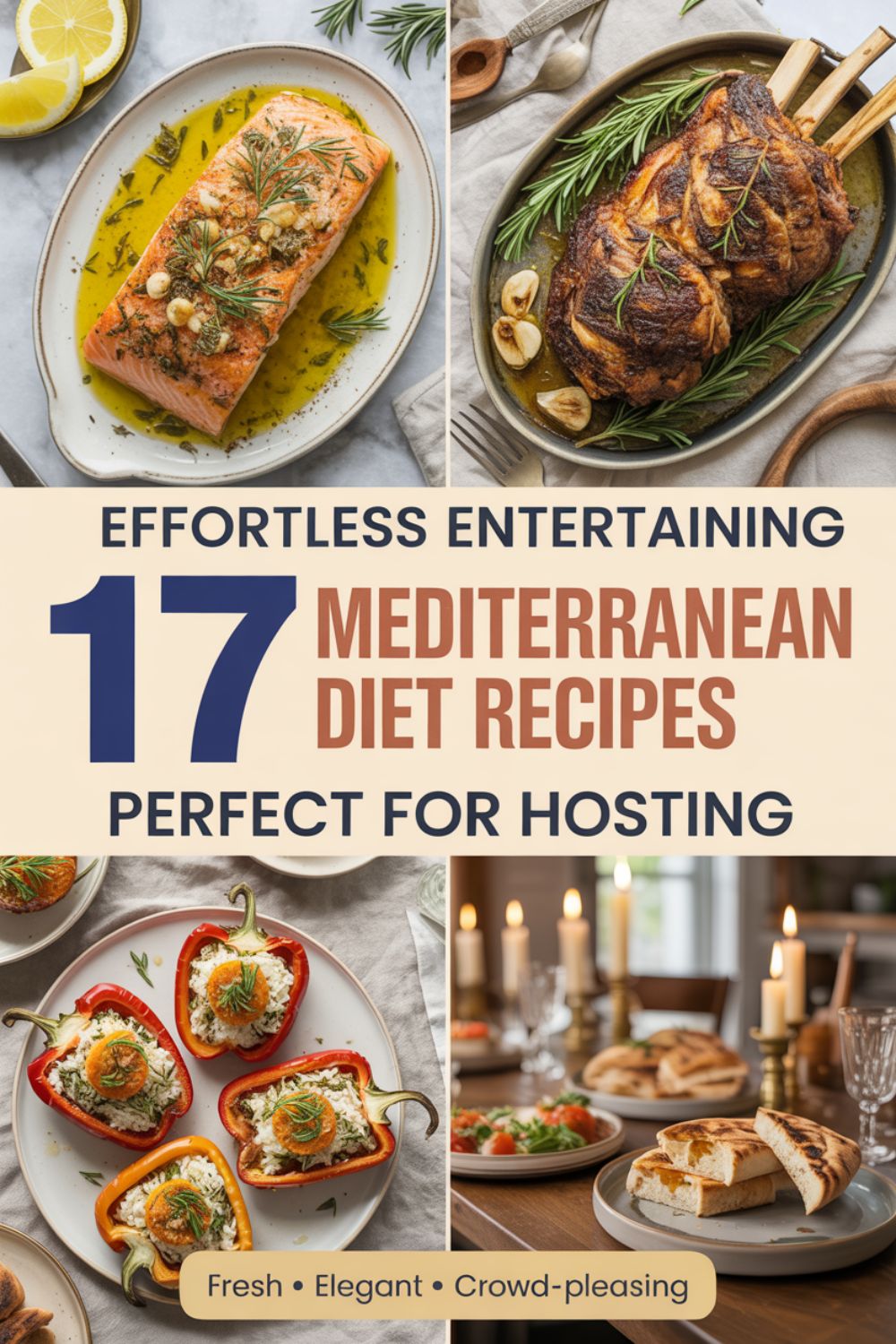
Why Mediterranean Food Is Made for a Crowd
There’s a reason people feel instantly at ease at a Mediterranean table. The food isn’t meant to be pristine or precise — it’s meant to be shared, argued over, and refilled three times. Dishes like baba ganoush, spanakopita, and shakshuka come from cultures where cooking for eight is a Tuesday, not a special occasion.
From a practical standpoint, Mediterranean cooking leans on ingredients that are built for batch cooking. Legumes, whole grains, roasted vegetables, and olive oil-based sauces all improve as they sit. You’re not racing against a soufflé clock here. Most of these dishes taste better when they’ve had a few hours in the fridge, which means you can actually have a glass of wine with your guests instead of sweating over the stove.
There’s also a strong nutritional case for this kind of menu. According to Harvard Health, the Mediterranean dietary pattern is consistently linked to reduced cardiovascular risk, better weight management, and lower rates of chronic inflammation — largely thanks to olive oil, legumes, and the abundance of fresh vegetables that anchor every meal. Feeding your guests food that actively does them good? That’s hospitality with extra credit.
Appetizers and Starters to Kick Things Off Right
The mezze spread is one of the great contributions of Mediterranean culture to the art of hosting. A few small plates in the center of the table give guests something to graze on while you finish up in the kitchen, and it sets a warm, relaxed atmosphere before the main event even begins. Here are five starters that genuinely pull their weight.
1. Whipped Feta with Roasted Cherry Tomatoes
You take a block of good feta, whip it in a food processor with a splash of olive oil and a little lemon zest, and spread it onto a plate. Then you pile roasted, bursting cherry tomatoes on top. That’s basically it. It looks like something from a restaurant and takes about fifteen minutes total. Get Full Recipe
2. Classic Hummus with Za’atar Oil
Hummus is the great equalizer of Mediterranean hosting. Everyone eats it. Make it from scratch (it genuinely takes about ten minutes if you use canned chickpeas) and drizzle heavily with olive oil and a shower of za’atar. Keep a bowl of warm pita nearby and this platter will disappear faster than any other dish on the table. For more appetizer ideas that work just as well, browse through these 25 Mediterranean appetizers that wow every guest.
3. Marinated Olives with Lemon and Herbs
Warm a handful of mixed olives in olive oil with sliced garlic, strips of lemon zest, a sprig of rosemary, and a pinch of chili flakes. Let it cool slightly and serve in a wide, shallow bowl. This costs you almost nothing and looks like you bought it from a specialty deli. Which, IMO, is the absolute dream for any host.
4. Spanakopita Bites
Mini phyllo cups filled with spinach, feta, dill, and egg are the kind of thing guests hover near. You can make the filling two days ahead and assemble right before baking. Serve them warm and watch them vanish. Get Full Recipe
5. Baba Ganoush with Pomegranate Seeds
If hummus is the crowd-pleaser, baba ganoush is the one that gets the “oh, what is this?” reaction from at least two guests. Charring the eggplant directly over a gas flame (or under the broiler) is the move — that smokiness is everything. Finish it with pomegranate seeds and fresh mint for a presentation that photographs well and tastes even better.
Salads That Actually Deserve a Spot on the Hosting Table
Let me say something controversial: a well-made salad can be the best thing on a hosting spread. Not a sad pile of iceberg lettuce. A proper, textured, layered salad with good olive oil and something interesting happening. Here are three that regularly steal the show at my table.
6. Fattoush Salad with Sumac Dressing
Fattoush is a Levantine bread salad built on torn or fried pita, crisp romaine, ripe tomatoes, cucumber, radishes, and fresh herbs — all pulled together with a punchy sumac-and-lemon dressing. Sumac is the secret weapon here: it adds a fruity, astringent tartness that you genuinely can’t replicate with anything else. If you haven’t stocked it yet, fix that immediately.
7. Mediterranean Chickpea Salad with Herbs
Chickpeas, cucumber, cherry tomatoes, red onion, lots of fresh parsley, and a generous drizzle of olive oil with red wine vinegar. Make this two hours before guests arrive so the chickpeas absorb the dressing. It travels well, holds up for hours, and hits every textural note you want in a side dish. There’s a whole archive of 23 Mediterranean chickpea salads for special occasions worth bookmarking for future gatherings.
8. Grilled Halloumi and Watermelon Salad
Yes, I know this sounds like a menu item you’d see at a restaurant charging $22 for a starter. But it’s dead simple and consistently gets a reaction. Sear thick slabs of halloumi in a dry pan until they’re golden and squeaky, slice them over cold watermelon, add fresh mint, a drizzle of honey, and some cracked black pepper. Done. The sweet-salty contrast is genuinely remarkable.
Main Dishes Worth Building Your Whole Menu Around
Here’s where things get interesting. Mediterranean main dishes for a crowd fall into two categories: the slow-cooked, hands-off wonders and the sheet-pan stars that do all the work while you’re getting dressed. Both have their place, and both are on this list.
9. Sheet Pan Greek Chicken with Lemon, Olives, and Feta
Chicken thighs marinated in olive oil, lemon juice, garlic, oregano, and a little smoked paprika, roasted on a sheet pan with cherry tomatoes and kalamata olives. Twenty minutes of prep, forty minutes in the oven, and you have a main dish that looks like you spent the afternoon on it. This is genuinely my most-used hosting recipe. It scales for any number of people and the pan drippings are so good you’ll want to spoon them directly over everything. Get Full Recipe
If you’re a fan of this approach, there are even more ideas in this collection of quick Mediterranean sheet pan recipes you’ll actually look forward to.
10. Slow-Roasted Lamb Shoulder with Harissa and Herbs
Okay, this one does require a low-and-slow oven commitment, but the payoff is extraordinary. Rub a bone-in lamb shoulder with harissa paste, smashed garlic, olive oil, cumin, and coriander. Cover and roast at a low temperature for four to five hours until the meat falls apart at a fork’s suggestion. The smell alone will have your guests convinced you trained somewhere in Marrakech. Serve it with warm flatbread and a simple cucumber yogurt sauce.
11. Baked Whole Salmon with Preserved Lemon and Dill
A whole roasted salmon is arguably the single most impressive-looking hosting dish relative to the actual effort involved. Stuff the cavity with sliced preserved lemon, fresh dill, and thin rounds of fennel. Rub the outside with olive oil and sea salt. Roast at high heat for about 25 minutes. It presents beautifully on a platter and carves easily at the table. The omega-3 content of fatty fish like salmon is an added bonus — Johns Hopkins Medicine notes that fatty fish is a cornerstone of Mediterranean eating precisely because of those heart-protective polyunsaturated fats.
12. Shakshuka for a Crowd
Eggs poached in a spiced tomato and red pepper sauce, finished with crumbled feta and fresh herbs. This is the great equalizer of brunch hosting — it looks dramatic, it’s fully vegetarian, and you make the whole thing in one pan. Scale it up by using a large cast-iron skillet or a wide Dutch oven. Serve it directly at the table with crusty bread for scooping.
Sides and Grains That Round Out the Table
One of the quietly brilliant things about Mediterranean hosting is that the sides are often as good as the mains — sometimes better. These three dishes are the ones I never show up without.
13. Tabbouleh with Extra Herbs
Real tabbouleh is mostly parsley, not bulgur — the grain is a garnish, not the base. A proper ratio is about three cups of parsley to every half cup of fine bulgur. Add ripe tomatoes, spring onions, lemon juice, and good olive oil. Let it sit for at least an hour before serving. The flavor develops dramatically as it rests, which makes it perfect for pre-party prep.
14. Roasted Cauliflower with Tahini and Pomegranate
Roast cauliflower florets at high heat until they’re deeply caramelized and nutty. Drizzle generously with tahini thinned with lemon juice and water, then scatter with pomegranate seeds and toasted pine nuts. This dish consistently surprises people who don’t think they love cauliflower. It’s a great plant-based alternative to a starch-heavy side, and it also happens to be naturally gluten-free for any guests managing sensitivities.
15. Herbed Couscous with Roasted Red Peppers
Couscous is the five-minute miracle of the grain world. Pour boiling broth over it, cover for five minutes, fluff, and stir in chopped roasted peppers, fresh herbs, lemon zest, and a generous splash of olive oil. Make it in your largest serving bowl so it’s ready to go straight to the table. For more grain-bowl inspiration that works beautifully as a hosting side, take a look at these 15 Mediterranean grain bowls you’ll want every day.
Desserts That Feel Indulgent but Won’t Undo Everything
16. Baklava-Inspired Honey Walnut Cups
Instead of wrestling with a full tray of baklava (respect to anyone who does), make individual phyllo cups filled with crushed walnuts, cinnamon, and a drizzle of orange blossom honey. They bake in about twelve minutes and look genuinely impressive on a dessert board. The flavor profile — nuts, honey, floral water — is peak Mediterranean. For a full collection of Mediterranean sweets using these same base ingredients, this roundup of 15 Mediterranean desserts using olive oil and honey is a total rabbit hole.
17. Greek Yogurt Panna Cotta with Berry Compote
Greek yogurt gives panna cotta a gentle tang that makes it feel lighter than the classic cream-heavy version — and it still has that silky, wobble-on-a-spoon texture that makes everyone at the table go quiet for a moment. Make it the night before in individual glasses or ramekins. Top with a quick warm berry compote and a sprig of fresh mint. This is the dessert that people ask for the recipe for. It’s worth having a reliable set of small glass dessert cups or ramekins on hand — they make the presentation look intentional and they’re endlessly reusable for every entertaining situation.
Kitchen Tools & Resources That Make Hosting Easier
These are the things I actually use. Not sponsored, not exaggerated — just the stuff that makes cooking for a crowd genuinely less chaotic.
Large Cast-Iron Skillet
For shakshuka, searing halloumi, and toasting bread. A wide cast-iron skillet goes from stove to table and holds heat long enough for everyone to serve themselves at their own pace.
Immersion Blender
Whipped feta, hummus, baba ganoush, dressings — a good stick blender handles all of it in the bowl or pot you’re already using. Saves washing a separate blender every time.
Half-Sheet Baking Pans (Set of 2)
Two rimmed half-sheet pans are worth their storage space ten times over. A good heavy-gauge set won’t warp at high heat and gives vegetables the caramelized edges that make the difference between mediocre and memorable.
7-Day Mediterranean Meal Plan PDF
If you want a fully planned hosting prep week with shopping lists and timelines built in, the 7-day Mediterranean anti-inflammation meal plan (printable PDF) is an incredibly useful reference.
Digital Download30-Day Mediterranean Wellness Plan
Great for building the cooking habits and pantry staples that make hosting feel effortless. The 30-day Mediterranean wellness plan covers everything from weeknight prep to entertaining-scale cooking.
Digital DownloadHigh-Protein Mediterranean Plan
For hosts feeding guests who are eating with fitness or dietary goals in mind, the 14-day Mediterranean high-protein anti-inflammatory plan is a solid framework for building a satisfying, protein-forward menu.
Digital DownloadHow to Prep All of This Without Losing Your Mind
Here’s the thing about Mediterranean hosting: the cuisine practically hands you a prep schedule. Almost everything on this list is at its best a few hours after it’s made. So let’s talk logistics, because FYI, a good timeline is half the battle.
Two days before: Make dips (hummus, baba ganoush, whipped feta), marinate olives, and prep any dry spice rubs for proteins. Dips keep beautifully in the fridge and their flavor deepens overnight.
The morning of: Make tabbouleh, chickpea salad, and couscous. Prep the phyllo cups for spanakopita and baklava cups. Assemble panna cotta and refrigerate. Marinate your chicken or lamb.
One hour before guests arrive: Roast vegetables, bake phyllo bites, set out the mezze spread with olives and dips. Start your main dish. The first twenty minutes after guests arrive should find you relaxed, not sweating.
Having a reliable good chef’s knife and cutting board set makes the morning-of prep move significantly faster. The number of times I’ve stood there rocking a dull blade through parsley for tabbouleh is genuinely embarrassing — get something sharp and thank yourself later.
Frequently Asked Questions
Can I make these Mediterranean hosting recipes ahead of time?
Most of them, yes — and many of them taste better for it. Dips, grain salads, marinated proteins, and most desserts all improve with a few hours of rest in the fridge. The exceptions are anything crispy (phyllo pastries) or dressed (leafy salads), which should be assembled or dressed shortly before serving.
What Mediterranean dishes work best for a large group?
Sheet pan dishes, slow-roasted proteins, and mezze-style spreads all scale beautifully. Shakshuka can be made in a very large pan for up to eight people. Whole roasted salmon is impressive for ten to twelve. A mezze board with hummus, baba ganoush, olives, and flatbread is essentially infinitely scalable.
Is Mediterranean food suitable for vegetarian or vegan guests?
It’s one of the most accommodating cuisines for plant-based eaters. Dishes like hummus, baba ganoush, tabbouleh, shakshuka, roasted vegetable sides, and chickpea salads are all naturally vegetarian or vegan. Many of the recipes in this list are either fully plant-based or easily adapted — swap the feta for a dairy-free alternative and most dishes remain completely intact in flavor.
What should I serve to drink at a Mediterranean dinner party?
A simple pitcher of sparkling water with cucumber and lemon works for everyone and looks elegant on the table. For wine, a crisp Greek Assyrtiko or a light Grenache-based red from southern France complement the flavors well. Fresh lemon or mint agua fresca is a wonderful non-alcoholic option that fits the flavor profile perfectly.
How do I build a Mediterranean mezze board for beginners?
Start with three anchor dips: hummus, baba ganoush, and something creamy like tzatziki or whipped feta. Add marinated olives, a selection of crudites, warm pita or flatbread, and a handful of nuts. That’s genuinely all you need. Everything else — stuffed grape leaves, cheese, charcuterie — is optional layering on top of a solid base.
The Last Thing You Need to Know Before You Start Cooking
Here’s the honest version of Mediterranean hosting: it’s not about having the fanciest table or the most technically complex recipes. It’s about abundance, warmth, and the kind of food that makes people lean back in their chairs and stay for another hour. Every dish on this list was chosen because it delivers that feeling without asking too much of you in the kitchen.
Start with one or two of these recipes at your next gathering. Get comfortable with the mezze format — it’s genuinely forgiving and infinitely scalable. Once you see how a simple spread of dips, olives, and good bread can anchor an entire evening, you’ll understand why the Mediterranean table has been doing this for generations.
The best part about cooking this way isn’t the compliments (though those are nice). It’s that you actually get to be present at your own dinner party, which is, let’s be honest, the whole point.