

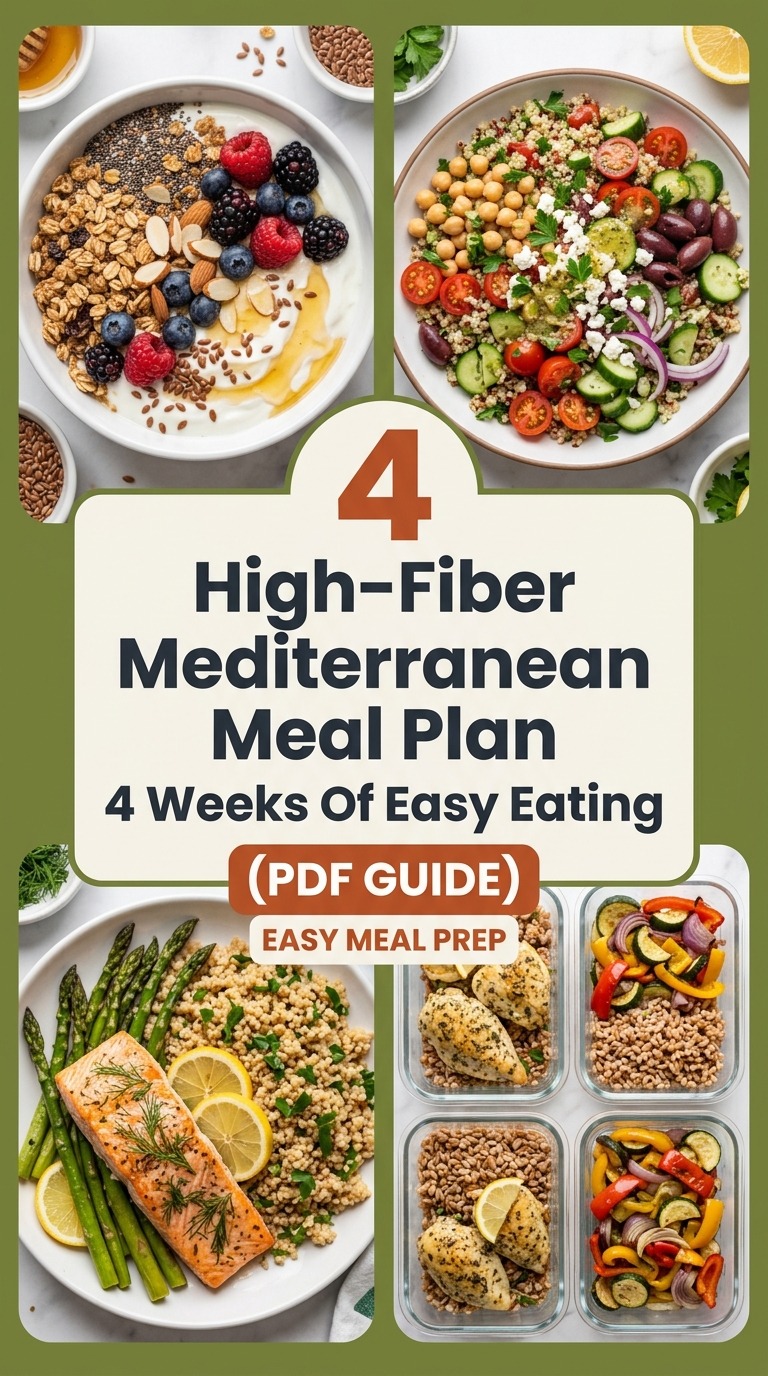
High-Fiber Mediterranean Meal Plan: 4 Weeks Of Easy Eating (PDF)
It was a Tuesday afternoon, and I was lying on the couch with a heating pad on my stomach, too tired to make dinner for the third time that week. My jeans hadn’t buttoned right in months. My brain felt like wet cotton. I kept blaming stress, age, hormones — basically everything except what I was actually eating.
That was three years ago. What changed everything wasn’t some extreme cleanse or a stack of expensive supplements. It was switching to a high-fiber Mediterranean meal plan and sticking with it long enough to actually feel the difference. The bloating eased. The afternoon crashes stopped. My joints stopped aching every morning like I was 80 years old.
If you’re dealing with inflammation, fatigue, or that constant heavy feeling that won’t quit — this four-week plan is what I wish someone had handed me back then. Here’s exactly what I’d eat.
Why High-Fiber Mediterranean Eating Works So Well Together
Fiber feeds the good bacteria in your gut, and your gut is basically running the show when it comes to inflammation, mood, and hormones. The Mediterranean way of eating layers fiber-rich foods — legumes, whole grains, vegetables, nuts — with anti-inflammatory fats like olive oil and omega-3s from fish. It’s not a diet in the restrictive sense. It’s just food that your body actually knows what to do with.
Research consistently links this eating style to lower markers of inflammation and improved hormone balance. For women in their 30s, 40s, and 50s, that’s not a small thing. That’s everything.
The goal across these four weeks is simple: crowd out the processed stuff by filling your plate with fiber-forward Mediterranean meals that take under 30 minutes most nights. No weird ingredients. No meals your family will refuse to touch.
Week 1: The Reset Week

Week one is about easing in without overwhelming yourself. Every meal is intentionally simple — minimal prep, maximum fiber payoff. Think of this as your baseline week.
Day 1: Gut-First Monday
Breakfast: Greek Yogurt Parfait with Walnuts and Figs — thick, creamy, with a honey drizzle and that satisfying crunch from walnuts. Takes 5 minutes to throw together. Layer the yogurt the night before so morning you doesn’t have to think. The figs alone give you a solid hit of soluble fiber, which is exactly what your gut needs first thing.
Lunch: White Bean and Spinach Soup — warm, hearty, with a garlic-and-lemon finish that wakes up your palate. This takes about 20 minutes using canned white beans. Make a double batch today because you’ll want it again by Wednesday. It links perfectly into the gut-healing Mediterranean soups style that anchors this whole plan.
Dinner: Baked Salmon with Roasted Chickpeas and Greens — crispy edges on the chickpeas, flaky salmon, a handful of arugula wilted in the pan drippings. Twelve minutes in the oven at 425°F. My husband asked for seconds the first time I made this, which is basically the highest compliment in our house. (He grew up on fried everything, so.)
Snack: Hummus with Sliced Cucumbers and Olives — the kind of snack that actually holds you until dinner. Buy good hummus or make it Sunday in 10 minutes flat.
Day 2: Slow and Steady
Breakfast: Overnight Oats with Chia Seeds and Berries — thick, cold, slightly jammy from the berries. Prep takes 3 minutes the night before. Chia seeds are quietly doing enormous work here — they’re one of the highest fiber-per-serving foods you can eat, and they keep you full until well past noon.
Lunch: Lentil Tabbouleh Bowl — chewy lentils, fresh parsley, lemon, and a glug of olive oil. Lentils are genuinely one of the best things you can eat for inflammation, and this version is zesty enough that it doesn’t taste like “health food.” Ready in 15 minutes using pre-cooked lentils.
Dinner: One-Pan Mediterranean Chicken Thighs with Artichokes — golden skin, tender meat, and artichoke hearts that soak up all the pan juices. Artichokes are one of the highest-fiber vegetables around, and they taste like they belong in a restaurant, not a Tuesday kitchen. One pan, 25 minutes.
Snack: A handful of almonds and a clementine. That’s it. (Yes, really — sometimes the best snack is the one that takes zero effort.)
Day 3: Leftovers Are Your Friends
Breakfast: Whole Grain Toast with Smashed White Beans and Olive Oil — creamy beans, peppery olive oil, maybe a sprinkle of red pepper flakes. Takes 8 minutes. Tastes like something you’d order at a brunch spot that has a 45-minute wait.
Lunch: Leftover lentil tabbouleh from Day 2 with an added handful of cherry tomatoes. Done.
Dinner: Shrimp and Farro Stew with Tomatoes and Herbs — farro has a chewy, nutty texture that holds up beautifully in broth. Shrimp cook in 4 minutes. The whole pot is ready in under 30. Farro gives you way more fiber than rice and is genuinely more interesting once you try it.
Snack: Medjool Dates with Almond Butter — rich, caramel-sweet, with a slight nuttiness that makes it feel like dessert. Two dates with a tablespoon of almond butter is the snack I reach for when my 4pm slump hits hardest.
One tool that made Week 1 significantly less chaotic: a good quality meal prep container set. I use glass ones with locking lids — they go straight from fridge to microwave and I don’t have to think about whether they’re leaching anything questionable into my food.
💾 Want this saved as a printable?
Download the High-Fiber Mediterranean Meal Plan PDF →
Full grocery list, meal prep schedule, and every recipe on one page. Most readers print this Sunday night before they shop.
Week 2: Building Momentum
By week two you’ll notice something: the grocery list gets shorter because you’re reusing staples smarter. This week adds more legume variety and a few Mediterranean classics that come together faster than you’d think.
Standout meals this week include a Chickpea and Roasted Red Pepper Stew that’s silky and slightly smoky — it reheats beautifully so make it on Sunday. There’s also a warm lentil salad with roasted beets that looks fancy but genuinely comes together in 20 minutes.
FYI — this is also the week most people notice their bloating starts to settle. Week two is when fiber intake stabilizes and your gut bacteria start catching up. Stay consistent and drink more water than you think you need.
A standout dinner this week: Baked Cod with Olive Tapenade and Roasted Vegetables. The tapenade is briny and rich, the cod is flaky and mild, and the whole thing goes in the oven together. Fifteen minutes of actual work, then you’re done. My sister texted me after trying this one: “I feel like I’m cheating somehow.” That’s the goal, honestly.
This is also a good week to look at the 7-day high-fiber Mediterranean meal prep plan if you want a structured Sunday prep session laid out step by step. Knowing your prep order saves more time than any kitchen gadget.
Week 3: The Fiber Sweet Spot
Week three is where things get genuinely enjoyable rather than just intentional. Your taste buds have adjusted. You’re not craving the same things you were on Day 1. Your energy is more even — not perfect, but noticeably steadier.
This week leans into heartier meals because colder evenings (or just colder moods) call for something that feels substantial. A Moroccan-Spiced Chickpea and Sweet Potato Stew with warm cumin and cinnamon is the kind of meal that makes the whole house smell like somewhere you want to be. Serve it over farro or whole wheat couscous for an extra fiber layer.
Lunch gets a serious upgrade with a White Bean and Tuna Salad with Capers and Lemon — tangy, hearty, ready in 8 minutes flat. I’ve made this at least twice a month for two years. It genuinely doesn’t get old.
This week’s breakfast star is a savory Mediterranean breakfast bowl — soft-cooked eggs, sautéed greens, a scoop of hummus, and everything bagel seasoning on top. It sounds like a lot but it’s 12 minutes and it holds you for hours. No mid-morning crash, no reaching for something you’ll regret.
For snacks this week, I rotate between roasted edamame with sea salt and sliced apple with tahini. Both hit that crunch-and-salt craving without sending your blood sugar on a field trip.
A second tool that earns its counter space this week: a quality immersion blender. I use mine for soups, hummus, and smoothies. You can use a regular blender but the cleanup makes me want to lie down.
Week 4: Full Rhythm

By week four, this doesn’t feel like a plan anymore. It feels like how you eat. That’s the whole point.
Week four introduces a few slightly more involved recipes — a Mediterranean Stuffed Pepper with Farro and Herbs, a slow-cooked White Bean Chicken Stew that can go in the crockpot before work — but nothing that requires culinary school. These are meals for when you have 10 extra minutes and want something that feels a little celebratory.
Dinners this week also pull from the anti-inflammatory soups collection, which pairs perfectly with a crusty whole grain bread and a glass of red wine if that’s your thing. (IMO the soup-and-bread combo is one of life’s underrated pleasures.)
By now your 30-day anti-inflammation journey is almost complete. Most women report that by week four, their sleep is better, their skin looks clearer, and that 3pm energy cliff they used to fall off has mostly flattened out. Not magic. Just consistent, fiber-forward eating with good fats and real food.
What Makes This Four Weeks So Much Easier
OXO Good Grips Salad Spinner — I know it sounds boring, but washing and drying greens in one move means I actually use them before they go slimy. I use mine four or five times a week. Without it, I was buying greens and throwing away half of them, which felt criminal.
Glass Meal Prep Containers (Set of 10) — Sunday prep only works if you have somewhere to put everything. These stack neatly, seal well, and reheat without issues. A cheap alternative: any lidded glass container you already own. Just go glass, not plastic, for reheating.
A Good Olive Oil (Extra Virgin, First Cold Press) — this one genuinely matters. The flavor difference between a good olive oil and a mediocre one is not subtle. I use it on literally everything — roasting, drizzling, dipping. It’s the one ingredient I don’t skimp on.
A 6-Quart Dutch Oven — soups, stews, and one-pot meals are the backbone of this plan. A heavy-bottomed pot distributes heat evenly and makes everything taste better. If you don’t have one, a large heavy pot works. But if you’re going to invest in one kitchen item this month, make it this.
Real Questions I Get About This Plan
Can I prep the whole week on Sunday?
Yes, and I’d strongly recommend it. Cook your grains in one big batch — farro, brown rice, or whole wheat couscous. Roast a tray of vegetables. Cook a pot of lentils or beans. Hard boil a few eggs. Wash and dry all your greens. That’s 90 minutes of Sunday work that eliminates about 6 evenings of “what am I making” panic. The anti-inflammatory meal prep guide breaks down the exact order if you need a game plan.
I hate fish — what do I swap?
Swap it for chicken thighs, tempeh, or a double portion of legumes. The plan works without fish. Omega-3s from fish are great for inflammation, but you can get plant-based omega-3s from walnuts, flaxseed, and chia seeds. Just make sure your swaps are protein-forward — it keeps you full and stabilizes blood sugar, which matters a lot for inflammation and hormones.
Will I lose weight doing this?
Possibly, but that’s not the main goal here and it shouldn’t be yours either. High-fiber eating naturally reduces overeating because you’re genuinely full. Less bloating often reads as weight loss on the scale even when fat loss hasn’t happened yet. If weight loss is a specific goal, the 14-day Mediterranean weight loss plan is more directly structured for that. This plan is about how you feel, first and foremost.
Can my family eat this too?
Every single meal in this plan has been eaten by my husband and my two kids — including the lentil dishes they were suspicious of at first. The key is seasoning confidently and not announcing “this is healthy” before anyone takes a bite. Kids especially follow your energy. If you plate it like it’s great, they mostly believe you. (Mostly.)
What if I have IBS or a sensitive stomach?
Start slow with the legumes — that’s where most people run into trouble when adding fiber quickly. Go from half portions to full over two weeks. Cook your own beans from scratch if canned ones bother you (the cooking liquid is where most of the gas-causing compounds live). And check out the 7-day gut-healing Mediterranean menu, which is specifically designed for sensitive stomachs with gentler fiber sources in the first few days.
One Last Thing Before You Start
Week one is the hardest — not because the food is hard, but because starting any change when you’re already tired feels like a lot. I know that feeling. I lived in it for years. But the version of you that’s been eating this way for four weeks doesn’t feel that way. She feels different in ways that are hard to describe until you’re there.
You don’t have to do this perfectly. You don’t have to nail every meal or refuse every piece of birthday cake. You just have to start, keep the high-fiber Mediterranean framework in mind, and give yourself four actual weeks to feel what consistent eating does.
That’s it. That’s the whole secret.
Pin this so you can find it when you need it.
Which day are you most excited to try? Tell me in the comments — I read every one.