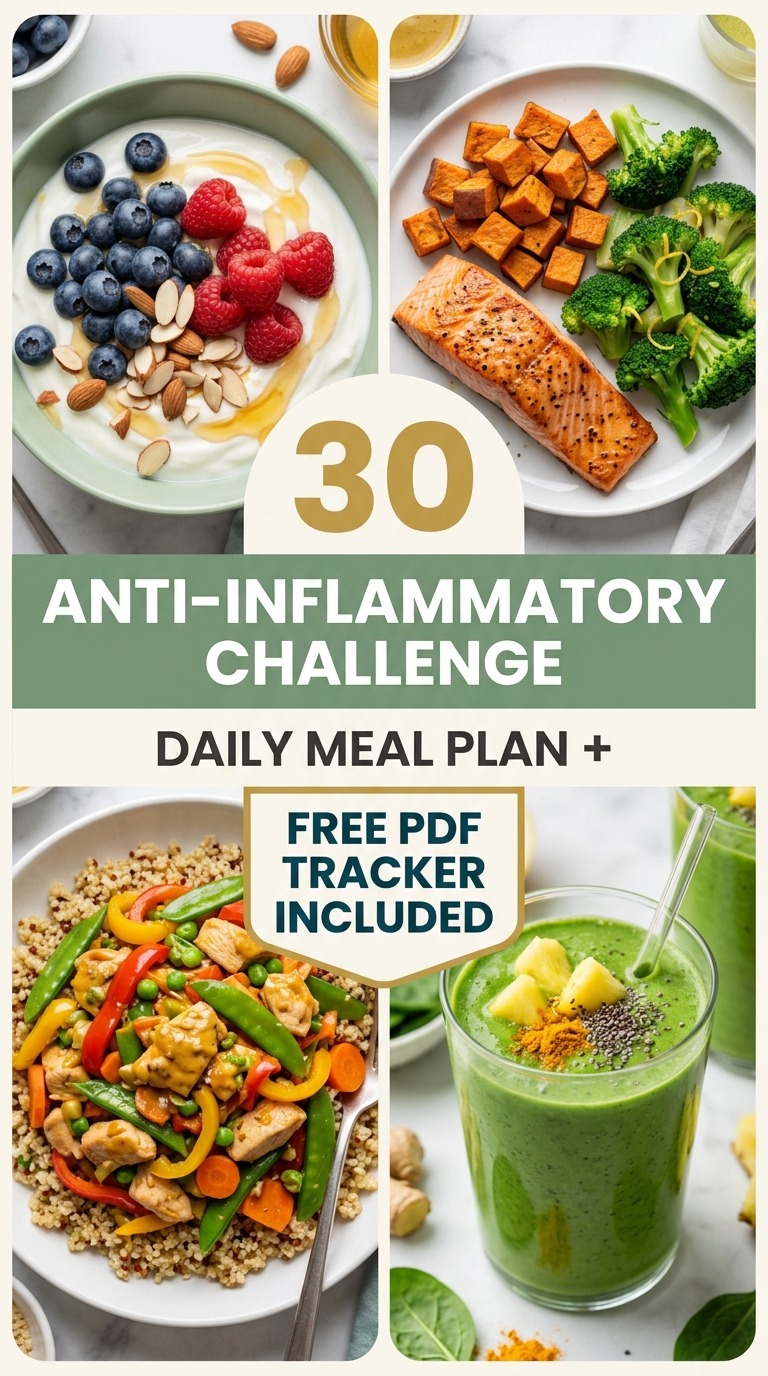
30-Day Anti-Inflammatory Challenge: Daily Meal Plan + Tracker (PDF)
It was a Tuesday morning, and I couldn’t button my jeans. Not because I’d gained weight — but because my belly was so bloated it looked like I’d swallowed a basketball overnight. I was tired, my joints ached, and I’d already had two cups of coffee by 8 a.m. with nothing to show for it. Sound familiar?
That was me three years ago. And the worst part? I didn’t know inflammation was behind all of it. The brain fog, the puffiness, the afternoon crashes — I thought I was just getting older. Turns out, I was eating in a way that kept my body in a constant low-grade fire.
This 30-day anti-inflammatory challenge is what I wish someone had handed me back then. It’s not a diet. There’s no calorie counting, no suffering through bland food, and no 6 a.m. green juice rituals (unless you’re into that). It’s a real, practical meal plan built around anti-inflammatory eating for busy women — Mediterranean-style, full of flavor, and actually doable on a weeknight.
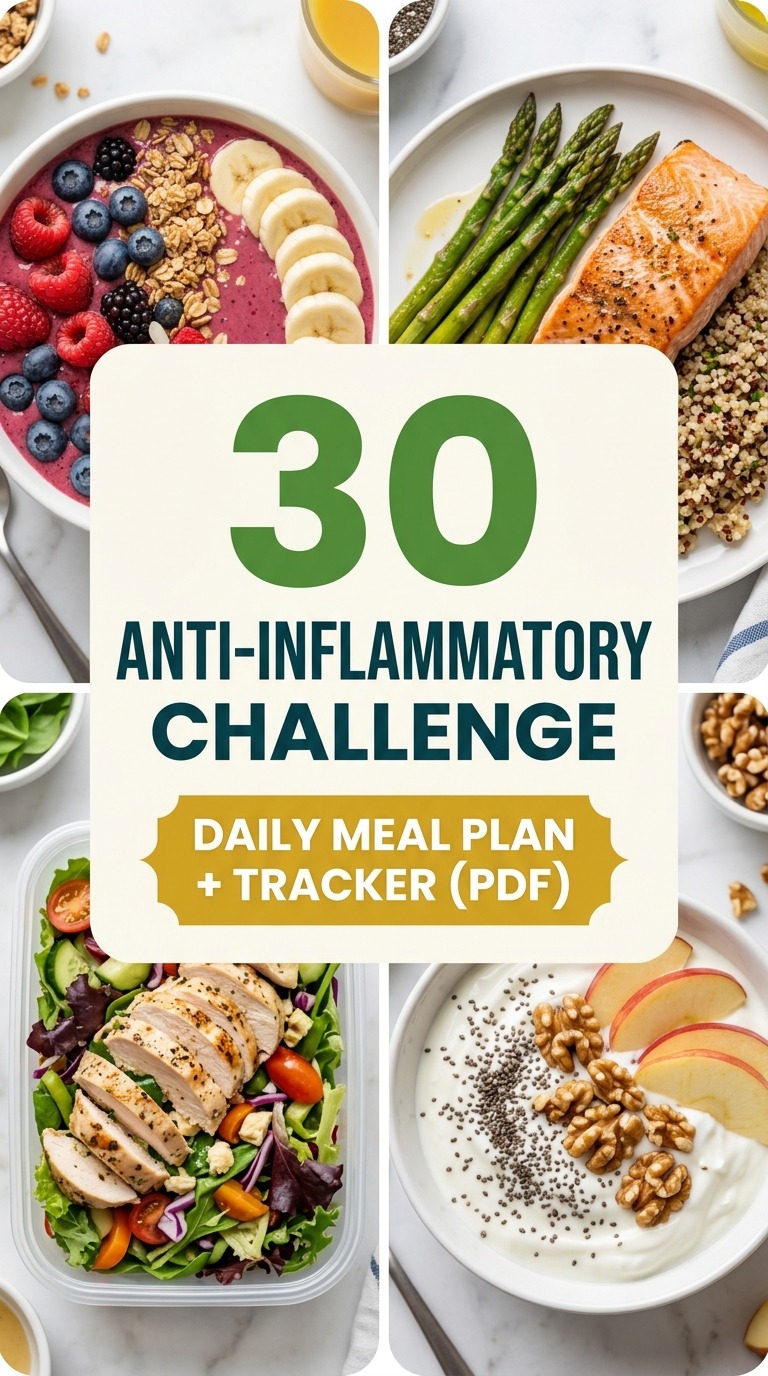
Here’s exactly what I’d eat.
What Is the 30-Day Anti-Inflammatory Challenge?
This challenge is 30 days of structured, Mediterranean-inspired eating designed to calm inflammation from the inside out. Each week has a theme, a grocery list, and a meal rhythm that gets easier as you go. By week two, most women tell me they stop needing the tracker — it becomes automatic.
The foods you’ll eat are built around research-backed anti-inflammatory ingredients — extra virgin olive oil, fatty fish, leafy greens, legumes, herbs, and whole grains. No exotic powders. Nothing you can’t find at a regular grocery store.
Each day below gives you a full meal layout: breakfast, lunch, dinner, and a snack. I also walk you through exactly what each meal tastes like and how long it takes. Because “quick and easy” means nothing without specifics.
Week 1: The Reset (Days 1–7)
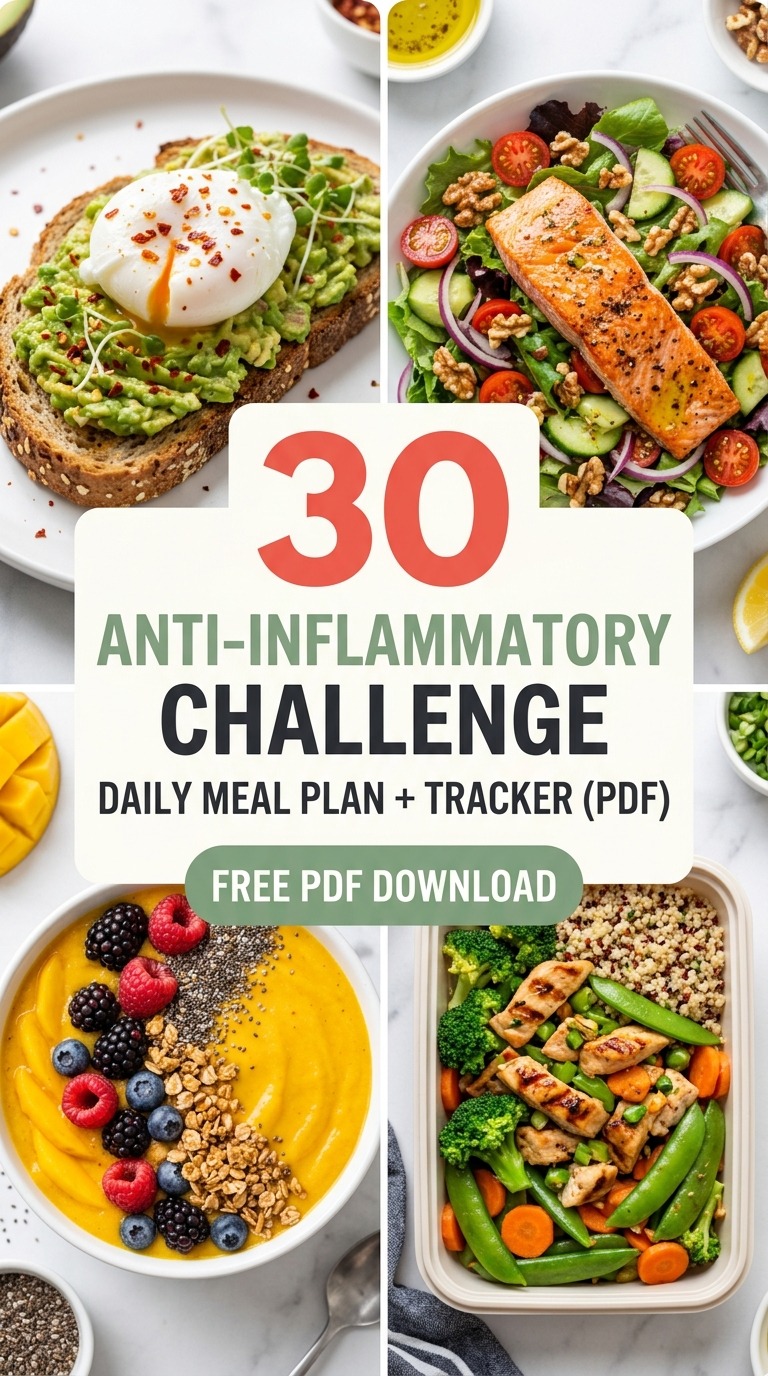
Week one is about clearing out the noise. Less processed food, more whole ingredients, and giving your gut a chance to breathe. Don’t expect miracles by Friday — but do expect less bloating by day 4 or 5. That part still gets me every time.
Day 1: Clean Start
Breakfast: Greek Yogurt Bowl with Berries and Walnuts
Creamy, slightly tangy, with little pops of sweetness from the berries and earthy crunch from the walnuts. Takes about 4 minutes to throw together. Use full-fat Greek yogurt — the fat keeps you full until noon and your hormones will thank you. This kicks off the challenge because it’s zero cooking and zero excuses. (I made this the morning after a birthday party where I’d eaten cake for dinner. No shame.)
Lunch: Chickpea and Cucumber Salad with Lemon-Herb Dressing
Bright, zesty, and surprisingly filling. The lemon dressing soaks into the chickpeas and makes everything taste fresh even if you packed it at 7 a.m. Takes 10 minutes. Rinse canned chickpeas well — it cuts down on the bloating that some people get. Chickpeas are a cornerstone of this whole challenge because they bring fiber and plant protein without making you feel heavy.
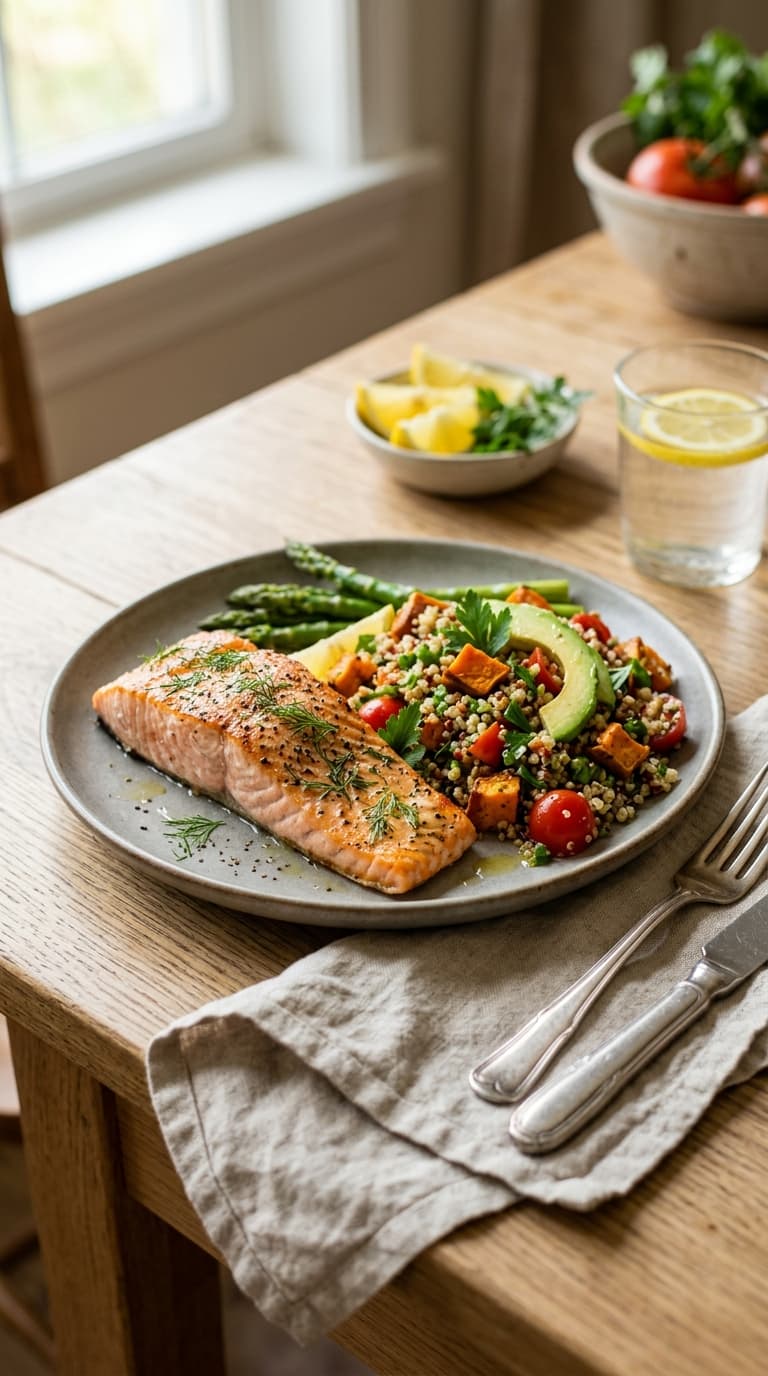
Dinner: Baked Salmon with Roasted Cherry Tomatoes and Olive Oil
The tomatoes get jammy and sweet in the oven while the salmon turns golden at the edges with a silky center. Ready in 22 minutes. Season with just salt, pepper, garlic, and a generous pour of good olive oil — don’t overthink it. Salmon twice a week is non-negotiable on this plan because of the omega-3s that directly fight inflammation. My husband asked for seconds and then immediately asked if we could have it again Thursday.
Snack: Sliced Apple with Almond Butter
Crisp, a little sweet, with that thick nutty richness from the almond butter. No prep. Eat it at your desk. Apples bring quercetin, which is one of those natural compounds shown to reduce inflammatory markers — without needing a supplement bottle.
Day 2: Fiber Forward
Breakfast: Oat Porridge with Ground Flaxseed and Sliced Banana
Warm, slightly sweet, with a nuttiness from the flaxseed that you won’t even notice until it’s gone. Takes 8 minutes. Make a double batch — cold leftover oats reheat beautifully the next morning. Flaxseed is doing quiet, important work here for your hormones and your gut lining.
Lunch: Red Lentil Soup with Cumin and Spinach
Earthy, warm, with a gentle heat from the cumin. This soup is thick enough to be satisfying but light enough that you won’t want a nap after. Make a big pot Sunday and you’ve got lunch Monday through Wednesday. Lentils are one of the most underrated anti-inflammatory foods — fiber, protein, and iron all in one pot.
Dinner: Turkey and Vegetable Stuffed Bell Peppers
Sweet roasted pepper shell with a savory, herb-flecked filling that stays juicy even after reheating. Takes 35 minutes total. Use ground turkey or sub with lentils for a fully plant-based version. The peppers are rich in vitamin C, which helps your body absorb the iron from the turkey — tiny detail, big payoff.
Snack: Hummus with Sliced Veggies
Smooth, garlicky hummus with the satisfying crunch of raw carrots and cucumber. Zero cooking. Pack it in a small container for work. FYI — store-bought hummus is fine here. This isn’t a cooking show.
💾 Want this saved as a printable?
Download the 30-Day Anti-Inflammatory Challenge PDF →
Full grocery list, meal prep schedule, and every recipe on one page. Most readers print this Sunday night before they shop.
Day 3: Gut Healing Focus
Breakfast: Scrambled Eggs with Turmeric and Sautéed Greens
Golden, pillowy eggs with wilted spinach and a faint earthy warmth from the turmeric. Takes 9 minutes flat. Add a crack of black pepper — it activates the curcumin in turmeric so your body actually absorbs it. This breakfast keeps you full and gives your gut lining a gentle morning wake-up.
Lunch: Quinoa Bowl with Roasted Zucchini, Olives, and Feta
The quinoa is nutty and chewy, the zucchini gets slightly caramelized at the edges, and the salty feta cuts through everything beautifully. Prep the quinoa and roast the zucchini Sunday and this “cooks” in two minutes. Olives bring oleic acid and polyphenols — two things your gut genuinely loves.
Dinner: White Bean and Kale Soup with Rosemary
Hearty, herby, and deeply comforting — the kind of soup that makes you feel like someone is taking care of you. Takes 25 minutes with canned beans. Make double and freeze half. This is pure gut-healing in a bowl: prebiotic fiber from the beans, anti-inflammatory compounds from the kale and rosemary. (My daughter calls this “the green soup” and actually requests it. True story.)
Snack: Tart Cherry and Ginger Smoothie
Slightly sweet, slightly spicy, with a deep berry color that looks impressive. Takes 3 minutes. Tart cherry has been studied for its role in reducing muscle inflammation — worth adding to your rotation especially if you’re active.
I use a high-speed personal blender every single morning for smoothies and dressings. It’s small enough to live on the counter and powerful enough to blend frozen fruit without sounding like a helicopter.
Week 2: Building the Rhythm (Days 8–14)
By now, the grocery list starts to repeat. You know what you’re buying, what to prep Sunday, and which meals your family will tolerate without complaint. This week introduces a few more layered flavors and some slow-cooker options for the nights when standing over a stove sounds impossible.
If you’re already feeling the difference — less bloat, steadier energy, maybe sleeping a little better — that’s not a coincidence. That’s your body responding to consistent anti-inflammatory eating for women doing exactly what it’s supposed to do.
This week I’d also recommend keeping a simple daily notes column in your tracker. Not calories — just two words about how you feel. “Less puffy.” “Good energy.” “Slept well.” After 14 days, reading it back is genuinely motivating.
Week 3: Deepening the Practice (Days 15–21)
Week three is where this stops feeling like a challenge and starts feeling like your normal. You’ve built the habits. The pantry is stocked. You know your go-to breakfasts and your reliable dinners. This week we add a few hormone-supporting meals that are especially useful for women dealing with perimenopause, PMS, or thyroid issues.
IMO, this is the best week of the whole 30 days. The food gets richer, the flavors get bolder, and you start to trust yourself in the kitchen a little more. Check out the 14-day anti-inflammation hormone balancing plan if you want to go deeper on this angle after the challenge ends.
Week 4: Making It Stick (Days 22–30)
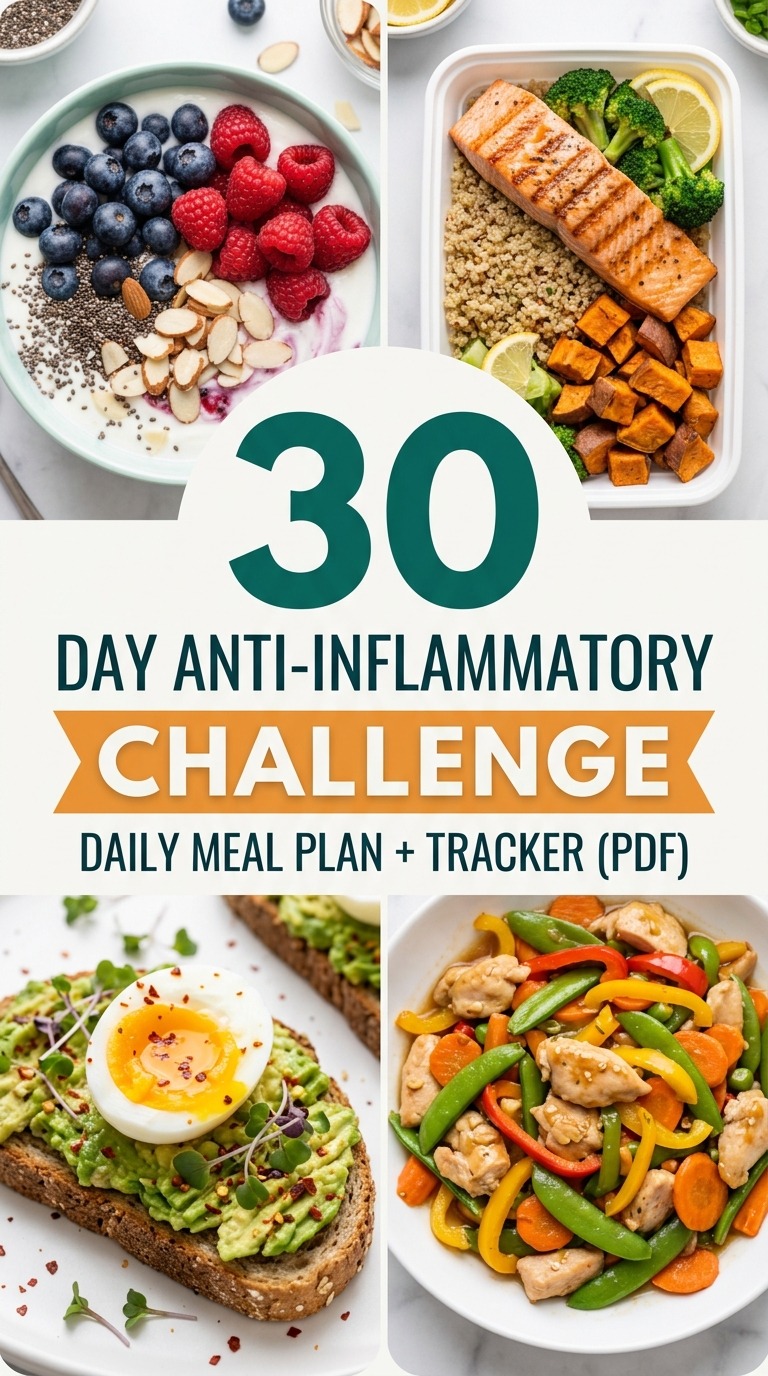
The final stretch. This week is about locking in the meals you loved and figuring out your personal version of this plan. Not every recipe will land for every person — and that’s fine. By day 25, most women I’ve heard from have identified their five or six favorite meals and they just rotate those.
The goal was never perfection. It was consistency. And by day 30, eating this way stops feeling like effort and starts feeling like self-respect.
What Makes This Week So Much Easier
OXO Good Grips Salad Spinner
I wash and spin greens every Sunday and store them in the spinner itself. Dry greens last twice as long in the fridge and make salads take 90 seconds instead of 10 minutes of washing and patting dry. If you don’t have one, a clean dish towel works — but once you go spinner, you don’t go back.
Le Creuset 5.5 Qt Dutch Oven
Every soup, every braise, every batch of lentils in this plan was made in mine. It distributes heat evenly so nothing scorches on the bottom, and it goes from stove to oven without drama. A heavy-bottomed stainless pot works as a substitute, but even heat matters more than you’d think.
Glass Meal Prep Containers (Set of 10)
The only containers I trust. They don’t stain from tomato sauce, they go straight from fridge to microwave, and you can actually see what’s inside without opening everything. If you’re doing Sunday prep, having 10 matching containers changes the whole experience.
Microplane Zester
Lemon zest shows up in this plan constantly — and it makes a bigger flavor difference than you’d expect. A zester also works for ginger, garlic, and hard cheeses. Tiny tool, enormous impact. Use the back of a knife to grate ginger as a workaround if needed.
Your Questions, Answered
Can I prep this whole challenge on Sundays?
Yes — and I’d actually recommend it. Set aside two hours on Sunday: cook a big pot of grains (quinoa or farro), roast two sheet pans of vegetables, make one batch of soup, and hard-boil some eggs. That covers breakfast and lunch for most of the week. Dinners generally take under 30 minutes when the building blocks are already done. The Mediterranean make-ahead recipes guide has the full Sunday prep system laid out if you want a visual walk-through.
I can’t stand fish — what do I swap?
Chicken thighs work almost everywhere salmon appears in this plan. So do white beans or lentils if you want to stay plant-based. The key anti-inflammatory fats in fish can also come from walnuts, flaxseed, and chia seeds — so load up on those. You won’t get the exact same omega-3 profile, but you’ll still be eating in a profoundly anti-inflammatory way. Don’t let one ingredient derail the whole thing.
Will I lose weight doing this?
Probably — but not because you’re restricting. When inflammation goes down, so does water retention and the kind of hormonal bloating that makes the scale lie to you. Many women drop a size without the number on the scale moving much at first. Weight loss is a possible side effect, not the point. The point is feeling like yourself again — clear-headed, energetic, comfortable in your body. If weight loss is also a goal, the 14-day Mediterranean weight loss plan pairs well with this challenge.
Can my family eat this too?
Absolutely — and most families do once they realize it’s not “diet food.” The soups, the sheet pan dinners, the grain bowls — they’re all crowd-pleasers. Kids might need the spice dialed back on a few dishes. For picky eaters, serve components separately so everyone can build their own plate. My family of four eats almost every meal from this plan, and nobody has complained once. (Okay, my son complained once about the kale soup. He ate it anyway.)
What if I have a thyroid condition or autoimmune issue?
This plan is genuinely well-suited to both — Mediterranean eating has been studied in the context of autoimmune and thyroid-related inflammation with promising results. That said, I’m not a doctor and I’d never tell you to replace medical advice with a meal plan. Run this by your provider before starting, especially if you’re on thyroid medication or managing an autoimmune flare. The hormone balancing meal plan has more specific guidance for thyroid and hormonal conditions.
Starting Is the Hardest Part
Day one is awkward. You’ll open the fridge unsure of what you’re doing, wonder if you bought the right olive oil, and probably forget to defrost the salmon. That’s normal. Do it anyway.
By day five, it clicks. By day fourteen, it’s automatic. And by day thirty, you’ll look back at Tuesday-morning-basketball-belly you and feel genuinely proud of the distance you’ve covered.
You don’t need to be perfect. You need to be consistent enough, most of the time, for long enough. That’s it. That’s the whole challenge.
Pin this so you can find it when you need it.
Which day are you most excited to try? Tell me in the comments — I read every one.
Meta description: Start the 30-day anti-inflammatory challenge with a full Mediterranean meal plan, daily tracker, and free printable PDF. Real food, real results, no perfection required.