
30 Mediterranean Breakfast Recipes to Start the Day Right
Look, I’m not going to tell you that your morning bagel is a disaster waiting to happen. But after spending years experimenting with Mediterranean breakfasts, I can honestly say there’s something different about starting your day with olive oil, fresh herbs, and foods that don’t make you crash by 10 AM.
The Mediterranean approach to breakfast isn’t some strict rulebook you need to follow religiously. It’s more like a flexible framework that happens to be backed by actual science—studies from Mayo Clinic consistently show this eating pattern reduces the risk of heart disease, diabetes, and even cognitive decline. Pretty solid resume for an eating style that also tastes incredible.
What makes these 30 recipes special is that they’re actually doable. No obscure ingredients that expire before you use them again. No recipes that require waking up at 5 AM to prep. Just real food that happens to align with one of the healthiest dietary patterns on the planet.

Why Mediterranean Breakfasts Actually Work
Here’s the thing about traditional American breakfasts—they’re often loaded with refined carbs and sugar that spike your blood glucose faster than you can say “pancake stack.” I learned this the hard way after years of feeling sluggish by mid-morning despite eating what I thought was a “good breakfast.”
Mediterranean breakfasts flip the script entirely. Instead of relying on sugary cereals and processed foods, they emphasize whole grains, healthy fats, lean proteins, and tons of produce. According to research from Harvard, this combination helps stabilize blood sugar levels and keeps you satisfied for hours.
The beauty is in the balance. You’re getting complex carbohydrates from whole grain bread or oats, protein from eggs or Greek yogurt, healthy fats from olive oil or nuts, and fiber from fruits and vegetables. It’s not rocket science, but it is science-backed nutrition that actually makes you feel good.
The Core Components of a Mediterranean Breakfast
Let me break down what you’ll actually find in these 30 recipes without making it sound like a chemistry lecture. Every great Mediterranean breakfast hits these key notes:
Whole grains form the foundation—think steel-cut oats, whole wheat bread, or ancient grains like farro and quinoa. These provide sustained energy without the crash. I personally keep a quality airtight container for storing my oats because nothing’s worse than stale grains ruining your morning vibe.
Healthy fats come primarily from extra virgin olive oil, but also nuts, seeds, and sometimes avocado. The Mediterranean diet gets about 35-40% of calories from fat, but it’s mostly the good kind that actually supports heart health. I drizzle olive oil on basically everything now—toast, eggs, even stirred into yogurt. Get yourself a good pour spout bottle and your life changes.
Protein sources include eggs, Greek yogurt, cheese, and occasionally fish. These keep you full and help stabilize blood sugar. Greek yogurt is seriously a game-changer—double the protein of regular yogurt means you’re not hunting for snacks an hour later.
Fresh produce isn’t optional. Tomatoes, cucumbers, peppers, leafy greens, and fresh fruits show up constantly. This is where you get most of your vitamins, minerals, and those fancy antioxidants everyone talks about. Pro move: keep cherry tomatoes on hand because they last forever and require zero prep.
If you’re looking to build this into a complete lifestyle approach, check out these anti-inflammatory meal plans that extend beyond just breakfast.
Egg-Based Mediterranean Breakfasts
1. Classic Greek Shakshuka
Shakshuka is basically eggs poached in a spiced tomato sauce, and it’s way easier than it sounds. The version I make uses fresh tomatoes, bell peppers, onions, and a blend of cumin and paprika. The key is getting the sauce right before you crack in the eggs—you want it thick enough that the eggs don’t just sink to the bottom.
I use a cast iron skillet for this because it goes from stovetop to oven seamlessly, plus it gives you those gorgeous crusty edges everyone fights over. Get Full Recipe.
2. Spanish Tortilla with Potatoes and Peppers
A proper Spanish tortilla is an egg and potato cake that’s served at room temperature—weird but amazing. The trick is slicing the potatoes paper-thin so they cook evenly. Some people use a mandoline slicer for this, but honestly, a sharp knife and patience work fine. You’re essentially making a frittata that’s dense, satisfying, and travels well.
3. Turkish Menemen (Scrambled Eggs with Tomatoes)
Menemen is what happens when scrambled eggs meet a tomato sauce party. The eggs stay creamy while absorbing all these incredible flavors from fresh tomatoes, green peppers, and Turkish spices. It’s one of those dishes where the sum is way greater than its simple parts.
4. Greek Egg and Spinach Pita Pockets
These are basically breakfast sandwiches but infinitely better because pita bread > regular bread, and also you’re stuffing them with scrambled eggs, sautéed spinach, feta cheese, and a sprinkle of oregano. The whole thing comes together in about 10 minutes if you’ve got your mise en place sorted.
5. Baked Eggs in Tomato Cups
Hollow out some large tomatoes, crack an egg into each one, sprinkle with herbs and cheese, then bake. It sounds fancy but it’s literally that simple. These are Instagram-worthy without trying, which is a nice bonus when you’re hosting brunch.
For more protein-packed breakfast ideas that complement these recipes, explore these high-protein Mediterranean plans.
Yogurt and Grain-Based Breakfasts
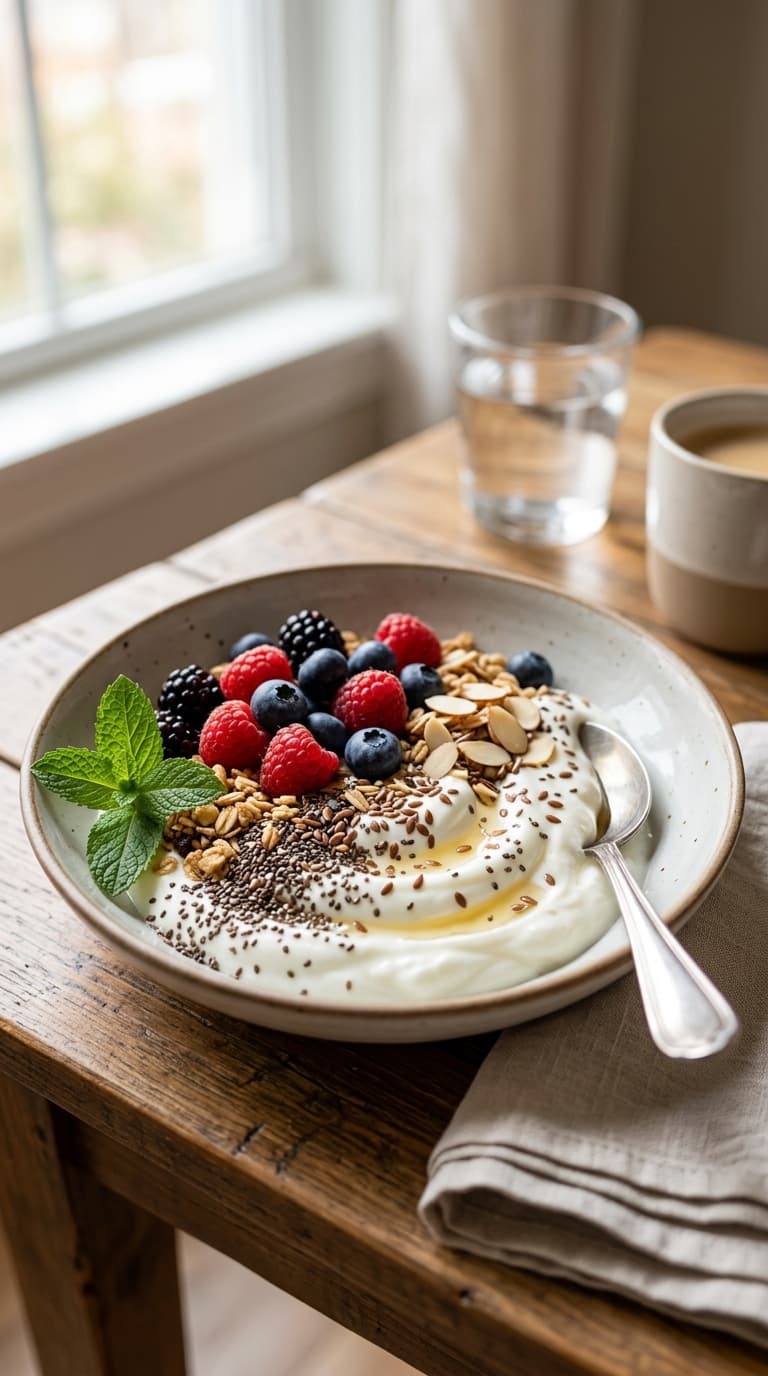
6. Greek Yogurt Parfait with Honey and Walnuts
This is probably the easiest entry point into Mediterranean breakfasts. Layer thick Greek yogurt with honey, crushed walnuts, and fresh berries. The walnuts add omega-3s and that satisfying crunch that makes breakfast feel complete. I keep a small jar of local honey on my counter specifically for this—it’s worth the upgrade from supermarket honey.
7. Overnight Oats with Figs and Pistachios
Overnight oats are meal prep gold. Mix rolled oats with Greek yogurt, milk (dairy or plant-based), chopped dried figs, and pistachios the night before. By morning, everything’s soft and combined into this creamy, naturally sweet breakfast that doesn’t need any added sugar. The figs do all the heavy lifting flavor-wise.
8. Quinoa Breakfast Bowl with Pomegranate
Quinoa for breakfast might sound weird until you try it. Cook it in almond milk instead of water, then top with pomegranate seeds, sliced almonds, and a drizzle of honey. It’s got this nutty, slightly sweet thing going on that’s completely different from oatmeal but equally satisfying.
9. Labneh (Strained Yogurt) with Za’atar and Olive Oil
Labneh is Greek yogurt’s thicker, tangier cousin. Spread it on whole grain toast, drizzle with olive oil, and sprinkle with za’atar (a Middle Eastern spice blend that’s herbaceous and slightly citrusy). This combination is ridiculously simple but somehow tastes like you’re sitting at a café in Tel Aviv.
10. Chia Pudding with Orange and Dates
Mix chia seeds with almond milk and let them sit overnight. They absorb the liquid and turn into this pudding-like texture. Top with fresh orange segments, chopped dates, and a handful of sliced almonds. The dates provide natural sweetness while the orange adds brightness. Store your chia seeds in a quality mason jar to keep them fresh.
Kitchen Tools That Make Mediterranean Breakfasts Easier
After making these recipes dozens of times, here are the tools I actually reach for consistently:
Quality Cast Iron Skillet
Non-negotiable for shakshuka and frittatas. Goes from stovetop to oven, gives you perfect crispy edges, and lasts forever. Mine’s 10 years old and still performs like new.
Olive Oil Pour Spout
Sounds trivial but totally transforms how you cook. No more glugging oil everywhere or using way too much. The controlled pour is weirdly satisfying.
Glass Meal Prep Containers
For overnight oats, chia pudding, and pre-portioned ingredients. Glass > plastic because it doesn’t stain or hold odors, plus you can reheat directly in them.
Digital Mediterranean Meal Planning Guide
A comprehensive PDF with grocery lists, prep schedules, and timing guides. Takes the guesswork out of planning your week.
Mediterranean Spice Blend Set
Pre-mixed za’atar, ras el hanout, and Greek seasoning blends. Digital guide included with pairing suggestions for different breakfast recipes.
Breakfast Meal Prep Master Course
Video tutorials showing exactly how to prep five different Mediterranean breakfasts in under an hour. Includes printable shopping lists and storage guides.
Bread and Toast-Based Breakfasts
11. Avocado Toast Mediterranean Style
Take your basic avocado toast and give it a Mediterranean makeover. Mash avocado with lemon juice and olive oil, spread on whole grain toast, then top with cherry tomatoes, crumbled feta, and a sprinkle of za’atar. The feta’s saltiness cuts through the avocado’s richness perfectly.
12. Pan con Tomate (Spanish Tomato Bread)
This Spanish classic is proof that simple can be spectacular. Toast bread (preferably sourdough), rub it with a cut garlic clove, then rub it with a halved ripe tomato. The tomato basically melts into the toast. Drizzle with olive oil, add a pinch of salt, and you’re done. Get Full Recipe.
13. Turkish Simit with Labneh and Cucumber
Simit is a sesame-crusted bread ring that’s slightly sweet and super crunchy. Spread it with labneh and top with thinly sliced cucumber and fresh dill. If you can’t find simit, a good sesame bagel works in a pinch.
14. Greek Dakos (Barley Rusk with Tomato)
Dakos starts with barley rusks (basically really hard bread) that you soften with water, then top with grated tomato, crumbled feta, olive oil, and oregano. The rusk soaks up the tomato juice while maintaining some texture. It’s one of those traditional dishes that sounds weird but makes total sense when you try it.
15. Whole Grain Toast with Almond Butter and Figs
Spread almond butter on toasted whole grain bread, top with sliced fresh figs, and drizzle with honey. The combination of nutty, sweet, and slightly floral from the figs is basically breakfast perfection. I keep a jar of quality almond butter in my pantry at all times—it’s more versatile than peanut butter and has a better fatty acid profile.
Speaking of breakfast variety, these Mediterranean breakfast bowl ideas offer even more creative morning options.
Vegetable-Forward Breakfasts
16. Roasted Red Pepper and Feta Frittata
Frittatas are the ultimate flexible breakfast. This version combines roasted red peppers (jarred works fine, no judgment), crumbled feta, and fresh herbs. The key to a good frittata is starting it on the stovetop and finishing it in the oven—gives you that perfect texture throughout.
17. Zucchini and Herb Pancakes (Kolokythokeftedes)
These Greek zucchini fritters are savory pancakes made with grated zucchini, feta, fresh herbs, and just enough flour to hold them together. They’re crispy on the outside, tender inside, and way more interesting than regular pancakes. Serve with a dollop of Greek yogurt.
18. Spinach and Cheese Börek Rolls
Börek is a Turkish pastry that can be breakfast, lunch, or dinner depending on the filling. For breakfast, stuff phyllo dough with sautéed spinach and feta, roll it up, and bake until golden. They look impressive but are honestly pretty forgiving to make.
19. Tomato and Onion Omelette
This simple omelette focuses on perfectly cooked tomatoes and caramelized onions. The secret is cooking the onions low and slow until they’re sweet and jammy, then adding the tomatoes just long enough to soften them. Get Full Recipe.
20. Grilled Eggplant with Tahini and Herbs
Slice eggplant, brush with olive oil, grill or broil until soft, then drizzle with tahini sauce and sprinkle with fresh parsley and mint. This is one of those breakfasts that doesn’t fit the American mold at all, but it’s satisfying and nutritious in a completely different way.
For those focusing on reducing inflammation through diet, these anti-inflammatory eating plans provide additional breakfast options and meal strategies.
Smoothies and Lighter Options
21. Greek Yogurt Smoothie with Berries and Honey
Blend Greek yogurt, frozen mixed berries, a banana, honey, and a splash of almond milk. The Greek yogurt makes this way more substantial than juice-based smoothies—it’s thick, creamy, and actually keeps you full. I use a powerful blender because fighting with frozen fruit at 7 AM is not the vibe.
22. Mediterranean Green Smoothie
Sounds virtuous, tastes good—promise. Blend spinach, cucumber, green apple, fresh mint, lemon juice, and a bit of honey. The apple and honey make it sweet enough that you don’t feel like you’re drinking a salad, while the cucumber keeps it refreshing.
23. Date and Almond Milk Smoothie
Dates are nature’s candy and make incredible natural sweeteners for smoothies. Blend pitted dates, almond milk, banana, almond butter, and a pinch of cinnamon. This tastes like a milkshake but is actually nutritious—rare combo.
24. Orange and Pomegranate Juice Bowl
This is basically a thick smoothie you eat with a spoon. Blend oranges and pomegranate juice until smooth, pour into a bowl, then top with granola, fresh berries, and coconut flakes. It’s beautiful, refreshing, and feels special without being complicated.
25. Fresh Fruit Salad with Mint and Honey
Chop whatever fruits are in season, toss with fresh mint, a drizzle of honey, and a squeeze of lemon. The mint and lemon brighten everything up. This is my go-to when it’s too hot to think about cooking anything.
If smoothies are your thing, check out these Mediterranean smoothie recipes that go beyond basic fruit blends.
Grain and Legume-Based Breakfasts
26. Foul Medames (Egyptian Fava Beans)
This Egyptian breakfast staple is basically stewed fava beans with garlic, lemon, and olive oil. Sounds humble, tastes incredible. Serve with pita bread for scooping. The beans provide plant-based protein and fiber that keeps you satisfied for hours. Get Full Recipe.
27. Chickpea Flour Pancakes with Za’atar
These are like savory crepes made with chickpea flour (also called besan or garbanzo bean flour). Mix the flour with water, salt, and za’atar, then cook like regular pancakes. They’re gluten-free, protein-rich, and have this nutty flavor that’s completely different from wheat-based breakfasts.
28. Barley Porridge with Dried Fruits
Cook pearl barley in milk (or plant milk) until creamy, then stir in chopped dried apricots, raisins, and a touch of honey. Barley has way more texture than oatmeal and a slightly nutty taste. Top with toasted almonds for crunch.
29. Farro Breakfast Bowl with Roasted Vegetables
Cook farro until tender, then top with roasted vegetables (I do cherry tomatoes, zucchini, and red onion), a poached egg, and drizzle with olive oil. This is essentially a savory grain bowl that happens to work brilliantly for breakfast. IMO, savory breakfasts are underrated.
30. Lentil and Herb Breakfast Patties
Mix cooked lentils with eggs, breadcrumbs, fresh herbs, and spices, form into patties, and pan-fry until crispy. These are meal-prep friendly and reheat beautifully. Serve with yogurt sauce and sliced tomatoes. Store leftovers in a stackable container set to maximize fridge space.
For comprehensive meal planning that includes these types of grain-based breakfasts, explore this high-fiber Mediterranean plan.
Making Mediterranean Breakfasts Work in Real Life
The biggest question I get is whether these breakfasts are actually realistic for busy mornings. Fair question—nobody has time to make shakshuka from scratch on a Tuesday at 6:45 AM.
Here’s my honest take: prep is everything. The recipes that work best are either quick to execute (like Greek yogurt with toppings) or meal-prep friendly (like overnight oats or frittata). The ones that require active cooking time, like shakshuka or pancakes, are better saved for weekends or when you have a bit more breathing room.
The other key is stocking your kitchen properly. When you’ve always got Greek yogurt, eggs, whole grain bread, olive oil, and a few key vegetables on hand, you can throw together a Mediterranean breakfast without special grocery runs. I keep airtight glass storage containers with pre-washed greens, cut vegetables, and portioned nuts so everything’s grab-and-go.
Also, not every breakfast needs to be elaborate. Some mornings it’s just whole grain toast with labneh and tomatoes. That’s completely valid and still hits all the nutritional marks. The Mediterranean diet isn’t about perfection—it’s about patterns.
One practical strategy is batching components. Cook a big batch of quinoa or farro on Sunday, portion it out, and use it throughout the week with different toppings. Same with hard-boiled eggs, roasted vegetables, and homemade labneh. You’re not making everything from scratch daily; you’re assembling from prepared components.
If you’re struggling with the planning aspect, these meal prep guides walk through exactly how to batch-cook breakfast ingredients efficiently.
The Science Behind Why This Works
I’m not going to bore you with a nutrition lecture, but it’s worth understanding why Mediterranean breakfasts feel different. According to Mayo Clinic research, the Mediterranean eating pattern is associated with reduced inflammation, better heart health, and improved cognitive function.
The breakfast component specifically matters because it sets your metabolic tone for the day. When you start with complex carbohydrates, healthy fats, and adequate protein, your blood sugar stays stable instead of spiking and crashing. This means you’re not reaching for sugary snacks by 10 AM or feeling that mid-morning energy crash.
The emphasis on whole foods also means you’re getting way more micronutrients—vitamins, minerals, and phytonutrients that your body actually needs to function optimally. Greek yogurt provides probiotics for gut health. Olive oil delivers polyphenols with anti-inflammatory properties. Whole grains offer fiber that feeds beneficial gut bacteria.
Plus, there’s something to be said for starting your day with food that tastes good and feels nourishing rather than something you’re choking down because it’s “healthy.” The Mediterranean approach makes eating well actually enjoyable, which is probably why it’s one of the few dietary patterns people can actually stick with long-term.
For those dealing with specific health concerns, these anti-inflammatory meal plans provide targeted breakfast strategies.
Ingredient Swaps and Modifications
Not everyone can or wants to eat every ingredient in these recipes, and that’s totally fine. Mediterranean cooking is actually pretty flexible once you understand the principles.
Dairy-free? Most Greek yogurt can be swapped for coconut yogurt or cashew-based alternatives. Just check that you’re getting something with decent protein content. For cheese, nutritional yeast or cashew-based alternatives work in many applications, though they won’t melt the same way. These dairy-free Mediterranean recipes offer more swap suggestions.
Gluten-free? Replace whole wheat bread with certified gluten-free options—there are some decent brands now that don’t taste like cardboard. For grains, quinoa and rice are naturally gluten-free. Chickpea flour pancakes are already GF. Check out these gluten-free Mediterranean options for more ideas.
Egg-free? This is trickier since eggs feature heavily, but chickpea flour scrambles are a legitimate substitute. Chia or flax eggs work in pancake recipes. For protein, lean harder on Greek yogurt, nuts, and legume-based dishes.
Nut-free? Replace nuts with seeds (sunflower, pumpkin, hemp) which provide similar healthy fats and protein. Tahini (sesame paste) is a good substitute for nut butters in most applications.
The core principle—whole foods, healthy fats, adequate protein, lots of produce—can be maintained even with modifications. Don’t let dietary restrictions stop you from trying this approach.
For plant-based variations, explore these vegan Mediterranean recipes that maintain the same nutritional principles.
Frequently Asked Questions
Can I meal prep Mediterranean breakfasts ahead of time?
Absolutely. Overnight oats, chia pudding, frittatas, and grain bowls all prep beautifully. Cook grains and roast vegetables on Sunday, portion them into containers, and you’ve got mix-and-match breakfast components all week. Greek yogurt parfaits can be assembled the night before, though add granola right before eating so it doesn’t get soggy. Hard-boiled eggs last five days in the fridge.
Are Mediterranean breakfasts good for weight loss?
They can be, mainly because they’re satisfying and nutrient-dense without being calorie-dense. The combination of protein, healthy fats, and fiber keeps you full longer, which naturally reduces overall calorie intake throughout the day. Research shows the Mediterranean pattern supports sustainable weight management better than restrictive diets. Just watch portion sizes on nuts and olive oil since they’re calorie-dense despite being healthy.
What if I don’t like olives or olive oil?
Olive oil is pretty central to Mediterranean cooking, but you can substitute with other healthy oils like avocado oil or grapeseed oil for cooking. For drizzling, try tahini or nut-based dressings. As for olives, they’re not required in breakfast recipes—just skip them. The core principles of whole grains, produce, and lean protein still apply without olives.
How much does it cost to eat Mediterranean breakfasts?
It varies, but it’s generally comparable to or cheaper than processed breakfast foods once you get into a routine. Greek yogurt and eggs are affordable proteins. Buying whole grains in bulk saves money. Seasonal produce is cheaper than out-of-season. The main “splurge” is good olive oil, but a bottle lasts weeks. FYI, frozen vegetables and fruits work great and are often cheaper than fresh.
Can kids eat these breakfasts?
Definitely. Most kids love Greek yogurt parfaits, pancakes, and toast-based options. The vegetable-forward dishes might require some adaptation—try blending spinach into smoothies or mixing finely chopped vegetables into eggs where they’re less obvious. The beauty of these recipes is they’re real food without added sugar or weird additives, which is ideal for kids. Start with familiar formats like pancakes or smoothies and gradually introduce new flavors.
Final Thoughts
These 30 Mediterranean breakfast recipes aren’t about following some rigid meal plan or transforming your entire life overnight. They’re options—real, practical options that happen to be backed by solid nutritional science and taste good.
The Mediterranean approach to breakfast works because it’s flexible enough to fit different schedules, preferences, and dietary needs while still delivering consistent nutritional benefits. Whether you’re making a quick Greek yogurt parfait on a Tuesday morning or spending Sunday afternoon prepping frittatas for the week, you’re investing in food that actually supports your health.
Start with one or two recipes that appeal to you. Get comfortable with those, then branch out. Stock your kitchen with the basics—Greek yogurt, eggs, whole grains, olive oil, whatever produce you actually like—and you’ll find these breakfasts become second nature rather than some elaborate production.
The goal isn’t perfection. It’s just eating a bit better, feeling a bit better, and maybe discovering that breakfast can be something you actually look forward to instead of just fuel you throw down your throat while running out the door.