

7-Day High-Fiber Anti-Inflammatory Plan To Reduce Bloating
It was a Tuesday morning and I was standing in my kitchen, jeans unbuttoned before 9am, staring at a stomach that looked three months pregnant. I hadn’t eaten anything crazy. A bowl of oatmeal. Half a banana. And yet there I was — bloated, tired, and honestly a little defeated. Sound familiar? That tight, heavy, “why does my body hate me” feeling had become my normal. I didn’t know it then, but chronic low-grade inflammation was running the show. Once I switched to a high-fiber Mediterranean approach — real food, anti-inflammatory ingredients, nothing fancy — the bloating started fading within four days. Not four weeks. Four days. Here’s exactly what I’d eat.
Why Fiber and Anti-Inflammatory Foods Work Together Against Bloating
Here’s the thing most people get wrong: they think bloating is just about cutting carbs or going low-FODMAP forever. But for a lot of women, especially those of us dealing with hormonal shifts or stress, the real issue is gut inflammation. When your gut lining is irritated, everything swells. Gas builds up. Nothing moves right.
Soluble fiber feeds the good bacteria that calm that inflammation down. Anti-inflammatory foods — think olive oil, leafy greens, fatty fish, legumes — give your gut lining the tools it needs to heal. Together? They’re a quiet little revolution. FYI, this isn’t a cleanse or a detox. It’s just seven days of eating in a way that actually works with your body.

Day 1: Reset and Rebuild

Breakfast
Warm Lemon Chia Oat Bowl — This one tastes like a hug. Creamy, slightly tangy from the lemon zest, with that gentle chew from the chia seeds. It takes about 8 minutes flat, and you can prep the dry mix on Sunday so you’re just adding hot water in the morning. The soluble fiber in oats and chia is your gut’s best friend for smoothing out that morning bloat. (I ate this four mornings in a row my first week and didn’t get bored once.)
Lunch
Chickpea and Cucumber Herb Salad — Crispy cucumber, creamy chickpeas, fresh dill, and a sharp lemon-olive oil dressing that coats everything beautifully. Ready in 10 minutes, no cooking required. Chickpeas are loaded with resistant starch, which feeds beneficial gut bacteria without spiking blood sugar. Make double — the leftovers get even better the next day as the herbs settle in.
Dinner
Baked Salmon with Roasted Fennel and White Beans — Flaky, warm salmon sitting on top of caramelized fennel with silky white beans soaking up all the pan juices. Takes 28 minutes. Fennel is a natural bloat-fighter, and the omega-3s in salmon work directly against the inflammatory pathways causing your symptoms. My husband asked for seconds the very first time I made this.
Snack
Walnut and Date Energy Bites — Nutty, chewy, a little sweet without any refined sugar. Two of these and you’re full. Walnuts bring anti-inflammatory polyphenols and the dates give you a gentle fiber hit. Prep a batch Sunday and they sit in the fridge all week.
Day 2: Go Green
Breakfast
Spinach and Feta Egg Muffins — Soft inside, slightly golden on the edges, with salty feta running through every bite. Bake a full tray in 20 minutes on Sunday and reheat two each morning — this is the move if your mornings are chaotic. Eggs give you anti-inflammatory choline, and the spinach adds magnesium, which helps relax the gut muscles that cause cramping and bloating. (Game-changer for me, honestly.)
Lunch
Lentil and Roasted Red Pepper Soup — Thick, smoky, warming. Lentils are one of the highest-fiber legumes on the planet and they’re remarkably gentle on a sensitive gut when cooked well. This soup takes about 25 minutes and reheats perfectly, so make a big pot. One bowl covers a full third of your daily fiber target.
Dinner
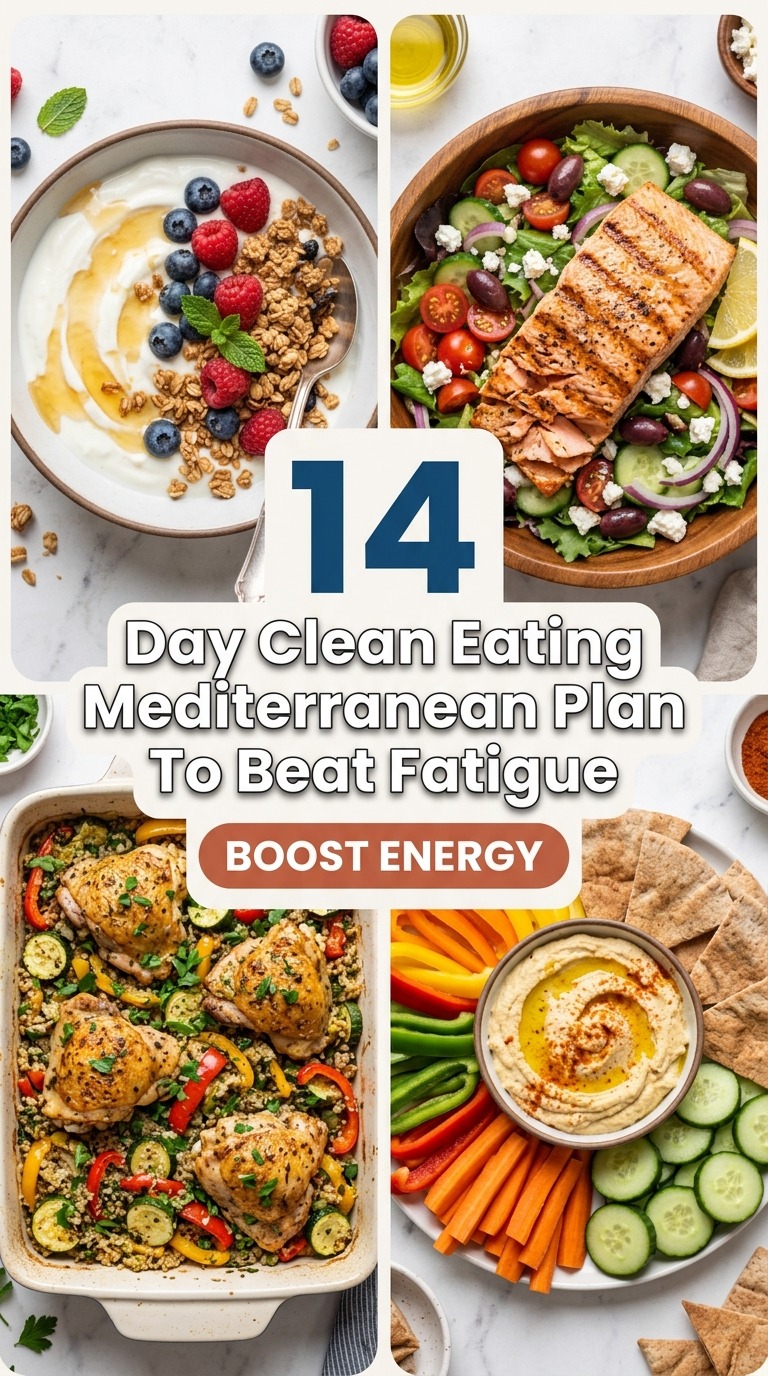
Mediterranean Sheet Pan Chicken with Zucchini and Olives — Crispy-edged chicken thighs, tender zucchini, and briny olives all roasting together in one pan. The olive oil and herbs do the heavy lifting here — 12 minutes of prep, then the oven handles the rest. Olive oil is one of the most studied anti-inflammatory fats in the world, and it helps your body actually absorb the fat-soluble nutrients from all those vegetables.
Snack
Hummus with Sliced Bell Peppers — Creamy, garlicky hummus with crisp, sweet pepper strips. Takes literally 2 minutes to put together. The fiber combo here is solid, and bell peppers sneak in a massive hit of vitamin C, which supports the adrenal function that gets wrecked by chronic inflammation.
Day 3: Slow and Steady
Breakfast
Greek Yogurt with Flaxseed, Blueberries, and Honey — Tangy yogurt, sweet-tart blueberries, and a crunch of golden flaxseed on top. Takes 3 minutes. Flaxseed is one of the richest sources of lignans — plant compounds that specifically help with hormonal inflammation. The probiotics in Greek yogurt start rebalancing your gut flora from the first spoonful. (Trust me on this one — the texture combination alone is worth it.)
Lunch
Quinoa Tabbouleh with Cherry Tomatoes and Mint — Bright, zesty, full of fresh herb flavor. Quinoa adds complete protein alongside the fiber, which means you stay full and your blood sugar stays flat — no 3pm energy crash. Make it the night before and the flavors deepen beautifully. This is the lunch I used to bring to work and have three coworkers ask me where I ordered it from.
Dinner
Slow-Cooked White Bean and Kale Stew — Hearty and deeply savory, with the kale wilting down into soft ribbons and the beans turning almost velvety. Let this one go in your slow cooker all day — 6 hours on low and dinner is waiting for you. Kale brings a powerful anti-inflammatory compound called sulforaphane that specifically targets gut inflammation.
Snack
Sliced Apple with Almond Butter — Crispy, fresh apple with thick, rich almond butter. The pectin in apples is a prebiotic fiber that feeds the same good bacteria your gut needs to calm inflammation. Keep almond butter portioned in small jars in the fridge so you can grab and go in 60 seconds.
I use a glass meal prep container set for everything on this plan — the ones with locking lids so nothing leaks in your bag. Worth every penny, and you’ll use them every single week.
💾 Want this saved as a printable?
Download the 7-Day High-Fiber Anti-Inflammatory Plan PDF →
Full grocery list, meal prep schedule, and every recipe on one page. Most readers print this Sunday night before they shop.
Day 4: Protein Forward

Breakfast
Smoked Salmon and Avocado Toast on Rye — Silky salmon, rich avocado, and a squeeze of lemon on dense, chewy rye bread. Rye has significantly more fiber than regular whole wheat and a lower glycemic impact. Ready in 7 minutes. The omega-3s from the salmon start working on inflammation before you’ve even finished your coffee. Sprinkle red pepper flakes if you want a little kick.
Lunch
Warm Lentil and Roasted Beet Salad — Earthy lentils, sweet roasted beets, and a sharp red wine vinegar dressing with fresh thyme. Beets contain betaine, which supports liver function and helps your body process the hormones that drive inflammation when they build up. Roast the beets on Sunday — they reheat beautifully mid-week.
Dinner
Herb-Crusted Cod with Artichoke Hearts and Capers — The crust is golden and aromatic, the fish flakes apart, and the artichokes add this slightly nutty, tender bite underneath. Cod is mild enough that even fish-skeptics usually like it. Artichokes are one of the highest-fiber vegetables available, with about 10 grams per medium artichoke — and they specifically support bile production, which helps reduce bloating after meals. 30 minutes start to finish.
Snack
Handful of Pistachios and a Pear — Crunchy, satisfying, and sweet. Pistachios are one of the prebiotic-rich nuts, meaning they feed your gut bacteria rather than just passing through. A medium pear has about 5.5 grams of fiber. Together they keep you full for hours without any of the heaviness you’d get from a processed snack.
Day 5: Mediterranean Classics
Breakfast
Shakshuka with Spinach and Whole Grain Flatbread — Eggs poached in a spiced tomato and pepper sauce, with wilted spinach stirred through. It sounds fancy but it’s one pan and 15 minutes. The lycopene in cooked tomatoes is a serious anti-inflammatory compound, and when it’s cooked in olive oil, your body absorbs it up to four times more effectively. The flatbread scoops up every last bit of that sauce — which is honestly the best part.
Lunch
Falafel Wrap with Tahini Slaw — Crispy falafel, shredded cabbage in a lemony tahini dressing, tucked into a warm whole wheat pita. Takes about 20 minutes if you bake the falafel from frozen (yes, that counts). Cabbage is a natural gut-healer — it contains L-glutamine, which helps repair the gut lining. IMO, this is the most satisfying lunch of the whole week.
Dinner
Baked Eggplant with Herbed Tomato Sauce and Chickpeas — The eggplant goes silky and almost creamy in the oven, and the tomato sauce gets thick and glossy around the chickpeas. Deeply warming and filling. Eggplant contains nasunin, an antioxidant compound that reduces inflammation in the gut lining specifically. Serve it over a spoonful of plain Greek yogurt for a cool, tangy contrast.
Snack
Cucumber Rounds with Olive Tapenade — Cool, crisp cucumber with salty, briny tapenade. Five-minute assembly, no cooking. Olives are rich in oleocanthal — a compound that works similarly to ibuprofen on inflammatory pathways in the body. (Yes, really.) Keep a jar of good tapenade in the fridge all week and you’ll reach for this constantly.
If you’re planning ahead, a high-quality olive oil dispenser with pour spout is the one kitchen tool I use every single day on this plan. It makes using the right amount of olive oil feel effortless rather than like a guessing game.
Day 6: Light and Bright
Breakfast
Mango Turmeric Smoothie with Hemp Seeds — Bright golden-orange, slightly sweet from the mango, with a warm, earthy undertone from the turmeric. Takes 4 minutes in a blender. Turmeric is one of the most extensively researched anti-inflammatory compounds in nutritional science, and pairing it with black pepper (add a pinch) increases absorption dramatically. Hemp seeds add fiber and complete plant protein without changing the flavor.
Lunch
Brown Rice Bowl with Roasted Vegetables and Tahini Drizzle — Chewy brown rice, caramelized roasted peppers, zucchini, and red onion, finished with a nutty, creamy tahini drizzle. The fiber in brown rice is gentler on the gut than white rice and helps regulate the digestive transit time that causes bloating when it’s off. Prep your rice and roast your vegetables in one Sunday session and assemble bowls all week.
Dinner
One-Pan Sardines with White Beans and Wilted Greens — I know what you’re thinking. Bear with me. When sardines are done right — with good olive oil, garlic, lemon, and fresh parsley — they’re rich and satisfying, nothing like the canned fish smell you might be picturing. They’re also one of the most anti-inflammatory foods in existence, loaded with omega-3s and vitamin D. This comes together in 18 minutes and costs almost nothing.
Snack
Roasted Edamame with Sea Salt and Lemon Zest — Slightly crispy on the outside, tender inside, with that bright lemon cutting through the salt. Takes 15 minutes in the oven. Edamame gives you plant protein plus fiber plus isoflavones — compounds that specifically help with hormonal inflammation that many women in their 30s and 40s start experiencing.
Day 7: Finish Strong
Breakfast
Overnight Barley with Pomegranate and Almonds — Set this up Saturday night. In the morning it’s thick and creamy with chewy barley grains, jewel-bright pomegranate seeds, and crunchy almonds on top. Barley contains beta-glucan — the same type of fiber studied specifically for its ability to reduce systemic inflammation markers. The pomegranate adds a tart, fruity sweetness that makes it feel like a treat.
Lunch
Mediterranean Tuna and Cannellini Bean Salad — Flaky tuna, creamy white beans, sliced red onion, capers, and a lemony olive oil dressing. Takes 8 minutes. This is the lunch I’ve been eating on repeat for two years and I still look forward to it. Cannellini beans are one of the highest-fiber legumes available, and tuna adds lean protein that keeps your blood sugar steady all afternoon.
Dinner
Whole Roasted Cauliflower with Harissa and Herbed Yogurt — Golden, crispy-edged cauliflower with a smoky, slightly spicy harissa crust and cool herbed yogurt dolloped over the top. It looks impressive and takes very little active work — mostly oven time. Cauliflower contains glucosinolates that support your liver’s ability to process inflammatory compounds, making this the perfect way to close out the week.
Snack
Dark Chocolate with Fresh Raspberries — Rich, slightly bitter chocolate with bright, tart raspberries. Two squares of 85% dark chocolate plus a handful of raspberries. Raspberries are one of the highest-fiber fruits available — about 8 grams per cup — and dark chocolate’s flavonoids reduce inflammation markers in the bloodstream. This is your reward for a genuinely great week. You earned it.
What Makes This Week So Much Easier

OXO Good Grips Salad Spinner — I wash and spin all my greens on Sunday. They stay crisp in the fridge all week and I actually use them instead of letting them wilt. If you don’t have one, pat greens dry with a clean kitchen towel and store with a paper towel in the bag.
Lodge Cast Iron Skillet — Every sear, every crispy edge on this plan comes from mine. If you don’t have cast iron, a heavy stainless steel pan works. Non-stick is fine but you won’t get the same golden crust on your fish or chicken.
Immersion Blender — For the soups and the turmeric smoothie. Saves washing a full blender every time. I’ve had mine for six years. If you don’t have one, a regular blender works — cool your soup slightly before blending to avoid a pressure explosion situation.
Glass Storage Containers with Locking Lids — Meal prep only works if storage is easy. I use a set with four sizes — everything goes straight from oven to fridge to microwave without transferring. Plastic containers work too but I find glass keeps food fresher and doesn’t absorb smells.
Your Questions Answered
Can I prep this whole week on Sunday?
Mostly yes. Cook your grains (barley, quinoa, brown rice) in big batches. Roast a tray of mixed vegetables. Hard-boil eggs, prep your smoothie packs in freezer bags, and portion your snacks. The soups and stews reheat perfectly. Fresh salads are the one thing I’d assemble day-of so nothing gets soggy — but the components can all be prepped ahead. Most people spend about 90 minutes on Sunday and coast through the whole week. Check out the full meal prep schedule if you want a step-by-step Sunday game plan.
I can’t stand fish — what do I swap?
Completely fine. Swap salmon for chicken thighs roasted in olive oil and lemon. Swap sardines for white beans with extra garlic and herbs — same fiber, similar anti-inflammatory fats from the olive oil. Swap cod for tofu or tempeh with the same herb crust. The plan still works beautifully. The omega-3 piece is the one worth noting — if you’re skipping all fish, consider adding more walnuts and flaxseed through the week to cover that gap.
Will I lose weight doing this?
Possibly, but that’s not the primary goal here. What most women notice first is that their stomach looks visibly flatter by day four because the bloating reduces. Clothes fit differently. Energy improves. Some women do lose a few pounds in the first week — mostly water weight tied to inflammation going down. If weight loss is a specific goal for you, the 14-day Mediterranean weight loss plan builds on this foundation with more specific calorie guidance.
Can my family eat this too?
Every single meal on this plan is family-friendly. The flavors are warm and familiar — nothing weird or intimidating. For kids, serve the shakshuka with less spice. The sheet pan chicken and the bean stew are the crowd favorites in my house. If your family wants more volume, add extra pita, rice, or crusty sourdough on the side. You cook one meal, everyone eats well, and you don’t have to make two separate dinners. Win.
What if I have IBS or a sensitive gut?
Start with smaller portions of the legume-heavy meals and build up over a few days — your gut needs time to adjust to increased fiber if it’s not used to it. Cook legumes from dry rather than canned when possible, and rinse canned beans thoroughly. If you’re managing a specific condition, the 7-day gut healing Mediterranean menu is designed with extra sensitivity in mind and may be a better starting point. And always loop in your doctor or a registered dietitian when making changes for a diagnosed condition.
One Last Thing
Starting something new on a Monday when you’re already tired and bloated and running late is genuinely hard. I’m not going to pretend it’s not. But you don’t need a perfect week. You need a first meal. Pick Day 1 breakfast, make the chia oat bowl tomorrow morning, and see how you feel. That’s it. One meal changes nothing. Seven days of them changes everything.
You’ve got this.
Pin this so you can find it when you need it. Which day are you most excited to try? Tell me in the comments — I read every one.
Meta description: A 7-day high-fiber anti-inflammatory plan to reduce bloating with Mediterranean meals, real tips, and a free printable PDF grocery list. Start today.