
7-Day Mediterranean Detox Plan to Reset Your Body
Look, I’m not here to sell you some magical unicorn juice that’ll transform your body overnight. But if you’ve been feeling bloated, sluggish, and generally like a garbage truck just ran over your digestive system, a Mediterranean detox might be exactly what you need.
Here’s the thing about detoxes that most people get wrong: your body already knows how to detox itself. The Mayo Clinic points out that our liver and kidneys are pretty incredible at their jobs. What you’re really doing with a Mediterranean-style reset is giving your system the nutrients it needs to do that job better while cutting out the junk that’s been gumming up the works.
The Mediterranean approach isn’t about starvation or drinking nothing but lemon water for a week. It’s about eating real food—the kind your great-grandmother would actually recognize—and letting your body remember what it feels like to run on premium fuel instead of whatever processed nonsense has been filling your pantry.
<
Why Mediterranean Instead of Other Detox Plans?
I’ve tried my fair share of “detox” plans over the years. You know the ones—those that promise miracles but leave you hungry, cranky, and dreaming about pizza by day two. The Mediterranean approach is different because it’s not really a diet at all.
Research backs this up pretty solidly. According to Harvard’s Nutrition Source, the Mediterranean diet has shown remarkable benefits for cardiovascular health and reducing inflammation. In one study of nearly 26,000 women, those following a Mediterranean pattern had 25% less risk of developing cardiovascular disease over 12 years.
What makes this eating pattern work for detoxing is its anti-inflammatory nature. When you load up on olive oil, leafy greens, fatty fish, and whole grains, you’re giving your body compounds that actively reduce inflammation—one of the root causes of that bloated, sluggish feeling we’re trying to shake off.
The fiber content alone is worth mentioning. Unlike those juice cleanses that strip away all the good stuff, Mediterranean eating keeps you full of prebiotic fibers that feed the beneficial bacteria in your gut. Those little guys are doing some heavy lifting when it comes to keeping your digestive system running smoothly.
The Science Behind Your 7-Day Reset
Let me get nerdy for a second because understanding why this works makes it easier to stick with it. Your gut microbiome—that’s the collection of bacteria, fungi, and other microorganisms living in your intestines—plays a massive role in everything from digestion to immune function to even your mood.
When you eat a typical Western diet heavy in processed foods, refined sugars, and unhealthy fats, you’re essentially feeding the wrong bacteria. These unfriendly microbes produce inflammatory compounds that can lead to all sorts of issues: bloating, brain fog, skin problems, you name it.
The Mediterranean reset flips the script. By focusing on whole foods rich in polyphenols, omega-3 fatty acids, and complex carbohydrates, you’re creating an environment where beneficial bacteria thrive. Studies published in peer-reviewed journals show that even short-term dietary changes can shift your microbiome composition.
Here’s what happens during your seven days: Your body starts reducing systemic inflammation, your gut lining gets a chance to repair itself, and your liver—which processes everything you eat—gets to work with quality ingredients instead of constantly filtering out garbage.
For a deeper dive into gut-healing principles, check out this 7-Day Gut Healing Mediterranean Menu that complements this detox approach perfectly.
What You’ll Actually Eat (No Starvation Required)
Forget everything you think you know about detox diets. You’re not living on celery juice and prayer. This is real food that actually tastes good and keeps you satisfied.
Day 1-2: The Foundation Phase
These first two days are about establishing your baseline. You’ll focus on simple, clean Mediterranean staples: grilled fish or chicken, roasted vegetables drizzled with olive oil, fresh salads, and whole grains like quinoa or farro.
Start your morning with warm lemon water—not because it’s some magical detox elixir, but because it helps wake up your digestive system and gets things moving. Follow that with a breakfast that includes protein and healthy fats. Think Greek yogurt with berries and walnuts, or a vegetable omelet cooked in quality extra virgin olive oil.
I’m obsessed with using this cast iron skillet for my morning eggs—it heats evenly and nothing sticks if you season it right. Total game-changer.
Day 3-4: Deepening the Reset
By day three, your body’s starting to adjust. This is when most people notice their energy starting to stabilize, though you might still get some afternoon slumps as your system recalibrates.
Increase your vegetable intake during these days. We’re talking at least half your plate covered in colorful vegetables at every meal. The fiber helps sweep things through your digestive tract, and the variety of plant compounds supports different beneficial bacteria.
Add more fermented foods like kimchi, sauerkraut, or kefir. These provide probiotics that help repopulate your gut with friendly bacteria. If you’re new to fermented foods, start small—like a tablespoon with lunch—because they can cause some temporary gas as your system adjusts.
Speaking of fermented foods, I store all mine in these glass storage containers because plastic can leach chemicals you don’t want anywhere near your detox plan.
Looking for more structured meal ideas? The 14-Day High Fiber Mediterranean Plan offers great examples of how to build these meals with maximum nutritional impact.
Day 5-7: The Reset Completion
You’re in the home stretch, and honestly, by this point most people don’t want to stop. Your taste buds have started to reset too—foods that seemed bland at the beginning now taste vibrant and flavorful.
These final days are about refinement. Your portions should feel natural now, not forced. You should be waking up without that groggy feeling. Your digestion should be more regular (if you know what I mean).
Continue emphasizing wild-caught fish, legumes, nuts, and loads of vegetables. Add in some complex carbs like sweet potatoes or whole grain pasta if you’re feeling like you need more energy for workouts.
One thing I’ve learned: a good quality chef’s knife makes all the vegetable chopping way less of a chore. I put this off for years thinking it didn’t matter, but holy cow, it actually does.
If you’re noticing benefits and want to continue with anti-inflammatory eating, the 7-Day Mediterranean Anti-Inflammation Meal Plan is a natural next step. Get Full Recipe for dozens of inflammation-fighting dishes that follow this same philosophy.
Sample Day on the Mediterranean Detox
Let me walk you through what a typical day actually looks like because “eat Mediterranean” is kind of vague if you’re just starting out.
Morning (7:00 AM): Warm water with lemon. Give it 20 minutes before eating.
Breakfast (7:30 AM): Greek yogurt bowl with fresh berries, ground flaxseed, chopped walnuts, and a drizzle of honey. Or try a vegetable frittata with tomatoes, spinach, and feta cheese. Herbal tea or black coffee if you need it—no judgment here.
Mid-Morning (10:30 AM): A handful of almonds and a piece of fruit. Nothing fancy, just something to tide you over until lunch.
Lunch (12:30 PM): Mediterranean salad with mixed greens, chickpeas, cucumber, tomatoes, olives, and grilled chicken or salmon. Dress it with olive oil, lemon juice, and herbs. Serve with a small portion of whole grain bread if you’re actually hungry.
Afternoon (3:30 PM): Sliced vegetables with hummus or a small portion of mixed nuts.
Dinner (6:30 PM): Grilled fish (salmon, mackerel, or sardines) with roasted vegetables and quinoa. Season everything generously with herbs—don’t be shy about garlic, oregano, and fresh lemon.
Evening (8:00 PM): Herbal tea. Chamomile or peppermint work great for winding down.
The portions aren’t massive, but they’re satisfying. You shouldn’t feel stuffed after meals, just comfortably full. If you’re still hungry, add more vegetables—they’re your free food on this plan.
For specific recipes that fit this framework perfectly, check out this clean eating collection with complete meal breakdowns.
Meal Prep Essentials Used in This Plan
Tools & Products That Make This Easier
Look, you don’t need to buy everything on this list. But after doing this plan multiple times, these are the things that genuinely made my life easier and the process more enjoyable.
Physical Products:
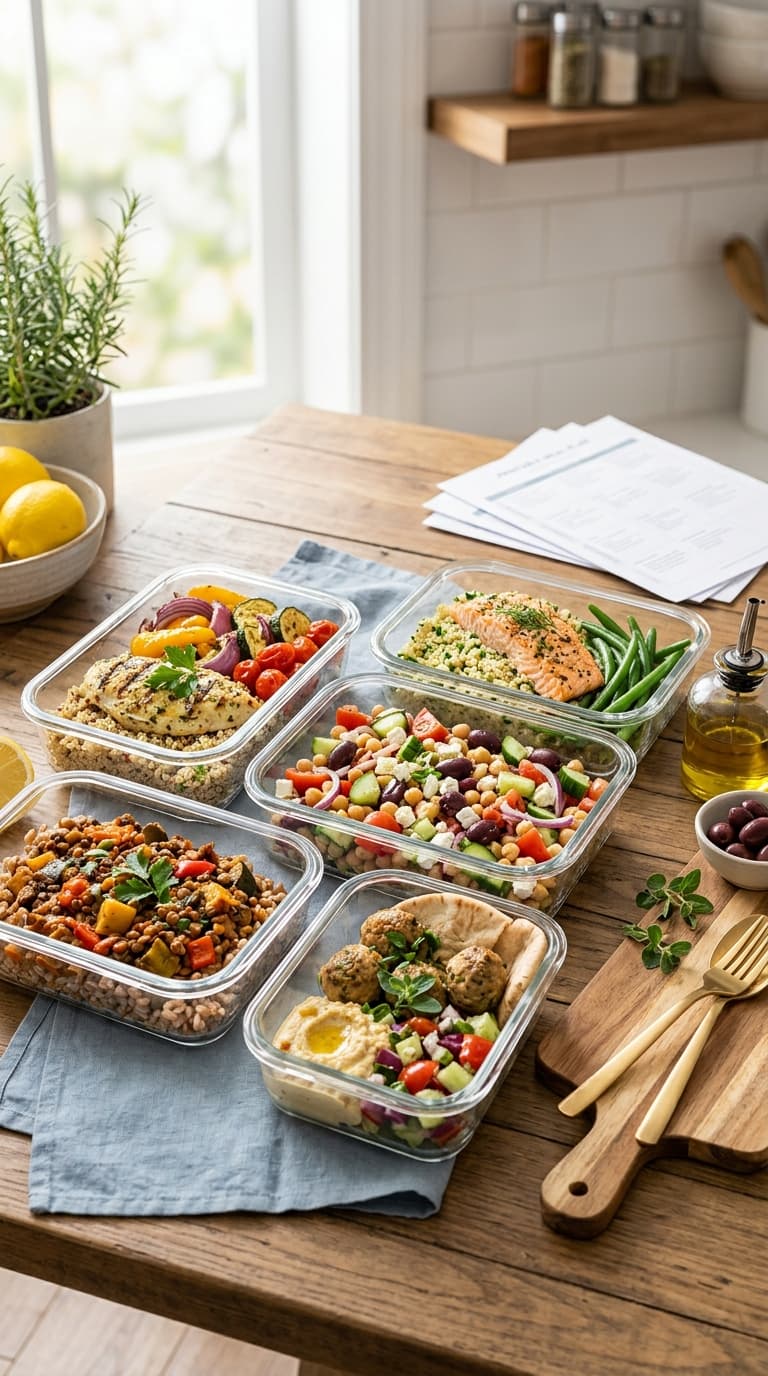
- Glass meal prep containers (set of 10) – Because plastic containers are gross for storing anything acidic like tomato-based dishes. These are microwave-safe, dishwasher-safe, and they don’t stain or hold smells.
- Quality olive oil dispenser – Makes drizzling the right amount of olive oil so much easier. I use way less oil now because I can actually control the pour instead of that glugging mess straight from the bottle.
- Salad spinner – Sounds bougie, I know. But wet lettuce is sad lettuce, and this thing dries greens in like 10 seconds. Plus you can use the bowl for serving.
Digital Resources:
- 30-Day Mediterranean Wellness Plan – If you want to extend beyond the 7-day reset, this comprehensive guide includes shopping lists, meal plans, and lifestyle tips.
- 14-Day Anti-Inflammatory Eating Plan for Women – Specifically designed to address hormonal inflammation and energy balance.
- Mediterranean High-Fiber Meal Prep Guide – Shows you how to batch-cook for the week while maintaining variety and nutrition.
The meal prep containers especially are a total game-changer. I prep big batches of grains, roasted vegetables, and proteins on Sunday, portion them out, and grab-and-go all week. It’s the difference between actually following through on the plan and ordering takeout on Tuesday.
Common Mistakes That’ll Derail Your Reset
I’ve screwed this up enough times to know exactly where people go wrong. Let me save you some frustration.
Going Too Restrictive Too Fast
The biggest mistake I see is people treating this like a punishment. They cut out everything enjoyable and white-knuckle their way through the week, miserable the entire time. Then they “finish” the detox and immediately revert to their old habits.
That’s not a reset—that’s just temporary suffering. The Mediterranean approach works because it’s sustainable. You’re not cutting out entire food groups or living on 800 calories a day. You’re just eating better quality food and letting your body adjust.
Not Drinking Enough Water
Seriously, drink more water. I thought I was drinking enough water until I actually tracked it and realized I was barely hitting half of what I needed. Aim for at least eight glasses daily, more if you’re active or it’s hot out.
Water helps your kidneys flush out waste, keeps your digestion moving, and honestly just makes you feel better. Get yourself a good water bottle that you actually like carrying around. Mine has time markers on the side which sounds dorky but genuinely helps me stay on track.
Skipping the Prep Work
If you don’t prep, you will fail. That’s not me being dramatic—that’s just reality. When you’re tired and hungry after work, you’re not going to chop vegetables and cook from scratch. You’re going to order food or grab whatever’s quickest.
Spend two hours on Sunday doing the following: wash and chop vegetables, cook grains, roast proteins, make dressings. Store everything in those glass containers I mentioned. During the week, assembling meals becomes a five-minute job instead of a 45-minute ordeal.
For women dealing with specific inflammatory issues, the Anti-Inflammation Hormone Balancing Plan addresses these challenges with targeted meal strategies.
Forgetting About Sleep and Stress
You can eat perfectly and still feel like garbage if you’re sleeping four hours a night and stressed to the max. Your body does most of its repair work while you sleep, and chronic stress triggers inflammatory responses that undermine everything else you’re doing.
Aim for seven to nine hours of quality sleep. Wind down without screens for the last hour before bed. Try some gentle stretching or meditation—yes, even if you think meditation is woo-woo nonsense. Ten minutes of deep breathing actually helps.
What to Expect During Your 7 Days
Let’s talk about what actually happens during this week because it’s not all sunshine and rainbows, especially at the beginning.
Days 1-3: The Adjustment
If you’ve been eating a lot of processed foods or sugar, you might feel a bit rough during the first couple of days. Headaches are common as your body adjusts to lower sugar and caffeine intake. You might feel more tired than usual.
This is normal and it passes. Your body is recalibrating. Stay hydrated, get enough sleep, and push through. By day three, things typically start improving.
Some people experience increased bathroom trips during this phase as all that fiber starts working its magic. This is your digestive system waking up and doing what it’s supposed to do.
Days 4-5: The Breakthrough
This is when most people start noticing real changes. Energy levels stabilize and often increase. That mid-afternoon crash you’ve been living with? Probably gone or at least significantly better.
Your skin might start looking clearer. Bloating typically decreases noticeably. You might find yourself sleeping better and waking up more refreshed. Food starts tasting better as your taste buds reset from the constant bombardment of artificial flavors and excess salt.
Days 6-7: The New Normal
By the end of the week, you should feel legitimately different. Not like you’ve discovered the fountain of youth, but like your body’s running the way it’s supposed to instead of constantly fighting inflammation and poor nutrition.
Most people report feeling lighter (not necessarily weight loss, just less bloated and heavy), more clear-headed, and more energized. Your digestion should be more regular. You might notice joint pain or muscle aches have decreased.
Looking for more breakfast-focused approaches? Try the High-Fiber Breakfast Plan that can extend your morning nutrition game beyond this week.
Beyond the 7 Days: Making It Stick
Here’s the truth: seven days is enough to reset your system and show you how much better you can feel, but it’s not enough to create lasting change. The real magic happens when you take the principles from this week and integrate them into your regular life.
That doesn’t mean eating perfectly 100% of the time. It means making better choices more often. It means understanding that food is fuel and medicine, not just entertainment or stress relief.
The 80/20 Approach
I follow what I call the 80/20 rule: eat in line with Mediterranean principles 80% of the time, and leave 20% for flexibility. Had pizza with friends on Friday night? Cool, back to your normal eating Saturday morning. No guilt, no shame, just consistency over time.
This approach is way more sustainable than trying to be perfect all the time. Perfection leads to burnout and binge cycles. Consistency leads to actual lifestyle change.
Keep the Good Habits
Some habits from this week are worth keeping permanently:
- Starting your day with lemon water
- Eating vegetables with every meal
- Using olive oil as your primary fat
- Choosing whole grains over refined ones
- Eating fish at least twice weekly
- Limiting processed foods and added sugars
If you’re specifically targeting inflammation long-term, the 30-Day Anti-Inflammation Challenge provides a structured approach to maintaining these principles.
Building Your Personal Version
The Mediterranean diet isn’t a rigid prescription—it’s a framework. Customize it based on your preferences, schedule, and goals. Don’t like fish? Focus more on legumes and nuts for protein. Vegetarian? There are plenty of plant-based Mediterranean options that work just as well.
The key is understanding the principles: whole foods over processed, healthy fats, lots of vegetables, moderate protein, complex carbs, minimal sugar. How you execute those principles can be flexible.
Shopping List for Success
Having the right ingredients on hand makes or breaks this plan. Here’s what you need to stock up on before you start.
Pantry Staples:
- Extra virgin olive oil (get the good stuff in a dark bottle)
- Whole grains: quinoa, farro, brown rice, whole grain pasta
- Canned tomatoes (no added sugar)
- Legumes: chickpeas, lentils, white beans, black beans
- Nuts and seeds: almonds, walnuts, flaxseeds, chia seeds
- Herbs and spices: oregano, basil, rosemary, garlic, turmeric
- Vinegars: balsamic, red wine, apple cider
Fresh Produce:
- Leafy greens: spinach, kale, arugula, romaine
- Vegetables: tomatoes, cucumbers, bell peppers, zucchini, eggplant, broccoli
- Fruits: berries, apples, citrus fruits, bananas
- Fresh herbs: parsley, cilantro, basil
- Garlic and onions (buy these in bulk)
Proteins:
- Wild-caught fish: salmon, sardines, mackerel
- Free-range chicken or turkey
- Eggs (pasture-raised if possible)
- Greek yogurt (full-fat, plain)
- Feta or goat cheese
Fermented Foods:
- Sauerkraut or kimchi
- Kefir
- Miso paste
- Naturally fermented pickles
FYI, I get most of my bulk items like nuts and grains from online bulk retailers because it’s way cheaper than buying small packages at the grocery store. The upfront cost seems higher, but it works out to like half the price per pound.
For budget-conscious planning, check out the High-Fiber Budget Meal Plan which shows how to eat well without breaking the bank.
Dealing with Social Situations
One week isn’t that long, but chances are you’ll have at least one social situation where food is involved. Here’s how to handle it without being that annoying person who makes everything difficult.
Restaurant Strategies
Most restaurants have Mediterranean-friendly options even if they’re not Mediterranean restaurants. Look for grilled fish or chicken, request olive oil instead of butter, ask for extra vegetables, choose salads with oil and vinegar dressing.
Don’t make a huge production of it. Just order what works for you and move on. Nobody actually cares what you’re eating as much as you think they do.
Social Gatherings
If you’re going to someone’s house, offer to bring a dish. Make it something that fits the plan—a big Mediterranean salad, roasted vegetables, hummus and vegetable platter. That way you know there’s at least one thing you can eat freely.
If you can’t control the menu, do the best you can. Load up on vegetables and proteins, go easy on the bread and dessert, and don’t stress about one meal. This is about overall patterns, not perfect execution every single time.
Tracking Your Progress (Without Losing Your Mind)
Some people love tracking every detail. Others find it obsessive and counterproductive. Figure out which camp you’re in and adjust accordingly.
What’s Worth Tracking:
- How you feel energy-wise each day
- Sleep quality and duration
- Digestive changes (regularity, bloating, etc.)
- Mood and mental clarity
- Physical symptoms like joint pain or skin issues
What’s Probably Not Worth Tracking:
- Calories (Mediterranean eating is about quality, not obsessive calorie counting)
- Weighing yourself daily (weight fluctuates for a million reasons)
- Exact macro ratios (seriously, this is supposed to be sustainable)
A simple journal where you jot down a few notes each evening works perfectly. Note what you ate, how you felt, and any observations. After seven days, you’ll have a clear picture of what changed.
Frequently Asked Questions
Can I drink coffee during the Mediterranean detox?
Yes, but stick to black coffee or add just a splash of milk. Skip the sugar and flavored creamers. If you’re used to multiple cups daily, consider reducing to one or two during the detox week. Coffee itself isn’t the enemy—it’s what we add to it that usually causes problems. Green tea is actually a great alternative if you want to switch things up, as it provides gentle caffeine plus beneficial antioxidants.
Will I lose weight on this 7-day plan?
Probably, but that’s not really the point. Most people lose a few pounds, largely from reduced bloating and water retention. The Mediterranean approach isn’t designed as a crash diet—it’s about resetting your system and reducing inflammation. Any weight loss is a side effect of eating better quality food and cutting out processed junk. If weight loss is your primary goal, this can be a great starting point, but think of it as establishing sustainable habits rather than a quick fix.
What if I’m vegetarian or vegan?
The Mediterranean detox works perfectly for plant-based eaters. Simply swap fish and poultry for legumes, tofu, tempeh, and additional nuts and seeds. Focus on getting protein from beans, lentils, chickpeas, and quinoa. Make sure you’re eating a wide variety of vegetables and including healthy fats from avocados, olive oil, nuts, and seeds. The principles remain the same—whole foods, lots of plants, healthy fats, minimal processing.
How is this different from other detox diets?
Most “detox” diets are based on restriction and deprivation—juice cleanses, extreme calorie cutting, eliminating entire food groups. The Mediterranean approach is about addition, not subtraction. You’re adding more vegetables, healthy fats, whole grains, and quality proteins. You’re not starving yourself or living on liquids. This makes it sustainable and actually enjoyable, unlike those miserable cleanses that leave you hangry and dreaming about real food.
Can I exercise during the detox week?
Absolutely, and you should. This isn’t a starvation plan, so you’ll have plenty of energy for normal physical activity. Stick to your regular workout routine or use this week to establish a new exercise habit. Just listen to your body—the first couple of days you might feel slightly lower energy as you adjust, so maybe skip the ultra-intense workouts and focus on moderate activity like walking, yoga, or light strength training. By days 4-5, you should feel energized enough for more vigorous exercise.
Final Thoughts: This Is Just the Beginning
Look, seven days isn’t going to completely transform your life. Anyone who tells you otherwise is selling something. What it will do is show you how different you can feel when you give your body what it actually needs instead of just whatever’s convenient.
The Mediterranean detox works because it’s not really a detox at all—it’s just eating the way humans are supposed to eat. Real food, mostly plants, healthy fats, reasonable portions. Nothing revolutionary, just sensible.
What you do after these seven days matters more than the week itself. If you go back to your old eating habits, you’ll go back to feeling how you felt before. But if you take even some of these principles and weave them into your regular routine, you’ll notice lasting changes.
IMO, that’s the real value here. It’s not about perfection or rigid rules. It’s about establishing a baseline of what “feeling good” actually feels like, so you have something to compare against when you inevitably slide back into old habits. And when you notice yourself feeling sluggish again, you’ll know exactly what to do to reset.
Start simple. Pick one thing from this plan and commit to it for a month. Maybe it’s adding vegetables to every meal. Maybe it’s switching to olive oil. Maybe it’s meal prepping on Sundays. One change, done consistently, creates momentum for more changes.
Your body wants to feel good. It wants to run efficiently. Sometimes it just needs you to stop putting obstacles in its way and give it the tools it needs to do its job. That’s all this detox really is—removing the obstacles and providing the tools.
Now go stock your fridge with actual food and see how you feel in a week. I’m betting you’ll be surprised.