
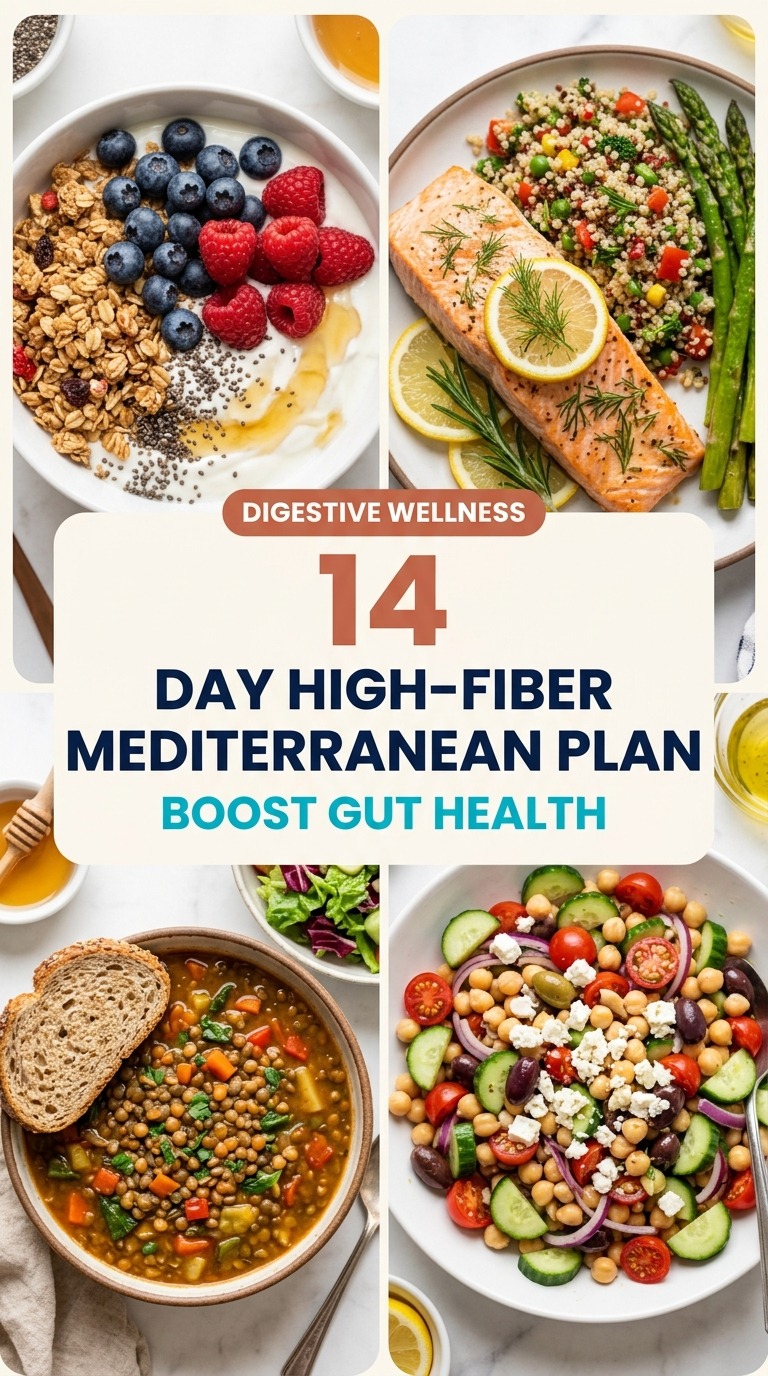
14-Day High-Fiber Mediterranean Plan For Digestive Health
It was a Tuesday morning and I was sitting on the bathroom floor, bloated beyond reason, wearing yesterday’s jeans because nothing else fit comfortably. My stomach looked like I’d swallowed a balloon. I was exhausted, inflamed, and honestly a little embarrassed that I — someone who cooked for a living — had let my gut get this bad. That was three years ago. What turned things around wasn’t a cleanse or a pill. It was two weeks of eating high-fiber Mediterranean food, consistently, with zero drama.
If you’re dealing with that same sluggish, puffy, uncomfortable feeling — the kind that makes you dread getting dressed — this plan is for you. Fourteen days of real food, real fiber, and meals that actually taste like something worth eating. Here’s exactly what I’d eat.
How This 14-Day High-Fiber Mediterranean Plan Works
The idea is simple. Every day, you eat meals built around fiber-rich plant foods — legumes, whole grains, vegetables, fruit — combined with healthy fats and lean proteins in the Mediterranean style. gut-healing Mediterranean principles aren’t complicated. You’re crowding out the junk and feeding the good bacteria in your gut instead.

Each day has a theme to keep you focused. Each meal has a purpose. And yes, there’s a grocery list PDF below so you don’t have to think too hard on Sunday evening.
Week One: Building the Foundation

Day 1: Start With Simplicity
Breakfast: Warm Lemon Oat Bowl with Figs and Walnuts
This bowl is nutty, warm, and faintly sweet — the figs almost melt into the oats. Takes about 8 minutes from pot to table. Make a double batch and refrigerate half for Day 3. Oats are one of the best sources of beta-glucan fiber, which literally sweeps your digestive tract clean. (I eat this four days a week and I’m not sorry.)
Lunch: White Bean and Roasted Tomato Salad
Creamy white beans, blistered cherry tomatoes, a sharp drizzle of good olive oil, and fresh basil. Takes 15 minutes if you roast the tomatoes while you make breakfast. The beans bring 7 grams of fiber per half cup — a quiet workhorse of this plan. Use canned beans, rinse them well, and don’t let anyone tell you that’s cheating.
Dinner: Grilled Sardines with Herbed Quinoa and Cucumber
Crispy-edged sardines with quinoa that’s fluffy and flecked with parsley and mint. Ready in 20 minutes flat. Sardines are one of the most anti-inflammatory proteins you can put on a plate — high omega-3, low cost, zero fuss. My kids call them “tiny fish” and eat them without complaint. That’s a win.
Snack: Sliced Pear with Almond Butter
Crisp, cool pear with thick almond butter. Five minutes, no stove. Pears are one of the highest-fiber fruits you’ll find, especially when you eat the skin. This combo keeps blood sugar steady through the afternoon slump.
Day 2: Go Heavy on Greens
Breakfast: Spinach and Egg White Frittata with Za’atar
Silky egg whites, bright spinach, and that earthy, herby punch of za’atar. Bakes in 18 minutes. Slice it into wedges and pack the leftovers for tomorrow’s lunch — they hold beautifully in the fridge. Spinach adds magnesium, which your digestive muscles need to actually function right.
Lunch: Lentil Tabbouleh with Lemon and Herbs
This is tabbouleh but heartier, with green lentils stirred through for protein and fiber. Bright, zesty, a little herby — my husband asked for seconds the first time I made it. Prep the lentils Sunday and this comes together in 10 minutes. Mediterranean lentil recipes are genuinely some of the easiest ways to hit your daily fiber goals.
Dinner: Baked Salmon with Roasted Asparagus and Freekeh
Salmon with a golden crust, tender asparagus with caramelized tips, and chewy freekeh with a smoky depth. Takes 30 minutes total. Freekeh is a high-fiber ancient grain that most grocery stores carry now — look near the quinoa. The fiber in asparagus acts as a prebiotic, meaning it feeds your gut bacteria directly.
Snack: Hummus with Rainbow Veggie Sticks
Thick, creamy hummus — make it yourself on Sunday (takes 5 minutes in a blender) — with crunchy carrots, red pepper strips, and cucumber. The chickpeas in hummus bring resistant starch, which your gut absolutely loves. I keep a jar in the fridge all week.
Day 3: Legume Power Day
Breakfast: Chickpea Scramble with Turmeric and Kale
Mashed chickpeas scrambled like eggs, golden with turmeric, with wilted kale folded through. Warm and hearty. Takes 12 minutes flat. This one surprised me — it’s actually filling. FYI, turmeric is one of the most studied anti-inflammatory compounds in food. A pinch of black pepper makes it absorb better.
Lunch: Greek-Style Stuffed Bell Peppers with Brown Rice
Soft roasted peppers filled with herby brown rice, olives, and a crumble of feta. The feta is salty and sharp against the sweet pepper. Takes 35 minutes but most of that is oven time — you’re not standing there. Prep the filling the night before and it drops to 10 minutes of active work.
Dinner: Tuscan White Bean Soup with Crusty Whole-Grain Bread
Thick, velvety soup with cannellini beans, rosemary, and a swirl of olive oil on top. The broth goes silky from the beans breaking down slightly. Takes 25 minutes. This soup alone has about 14 grams of fiber per bowl. (Yes, really.) Pair it with seeded whole-grain bread for even more gut-feeding goodness.
Snack: Fresh Figs with Ricotta and Honey
Halved figs, a spoonful of ricotta, a drizzle of raw honey. Sweet, creamy, and takes about 3 minutes to plate. Figs are one of the highest-fiber fruits on earth. They also contain ficin, a natural enzyme that supports digestion.
I personally use a high-speed blender with a tamper for soups and hummus every single week — it gets the texture silky smooth in about 60 seconds flat. A regular blender works, but you may need to blend in batches.
💾 Want this saved as a printable?
Download the 14-Day High-Fiber Mediterranean Plan PDF →
Full grocery list, meal prep schedule, and every recipe on one page. Most readers print this Sunday night before they shop.
Day 4: Whole Grain Focus
Breakfast: Barley Porridge with Pomegranate and Pistachios
Creamy, slightly chewy porridge with jewel-red pomegranate seeds and crunchy pistachios on top. Barley has the highest beta-glucan content of any whole grain. Takes 20 minutes on the stovetop or 5 minutes if you use quick barley. The pomegranate seeds burst when you bite them — it’s almost fun to eat.
Lunch: Farro Bowl with Roasted Beets and Goat Cheese
Chewy farro, earthy sweet beets, and creamy goat cheese with a balsamic drizzle. Takes 25 minutes. Roast extra beets for Day 6’s salad. Farro has about 7 grams of fiber per cooked cup — significantly more than white rice or pasta. It’s become my go-to grain base for the whole week.
Dinner: Herb-Crusted Cod with Bulgur and Green Beans
Flaky, tender cod with a crispy herb crust, nutty bulgur, and snappy green beans. Dinner hits the table in 22 minutes. Bulgur is one of the fastest-cooking high-fiber grains you can find — it rehydrates in hot water in 15 minutes. Mediterranean fish recipes are genuinely weeknight-friendly.
Snack: Apple Slices with Tahini Drizzle
Crisp apple, nutty tahini, a tiny pinch of cinnamon. Takes two minutes. Apples contain pectin, a type of soluble fiber that specifically feeds the beneficial bacteria Lactobacillus and Bifidobacterium. Don’t overthink it — it’s just really good.
Day 5: Anti-Bloat Day
Breakfast: Ginger and Fennel Smoothie Bowl with Kiwi
Cool, slightly spicy from ginger, with a light anise note from fennel. Topped with sliced kiwi and a handful of hemp seeds. Takes 8 minutes. Fennel is a natural digestive soother — it relaxes the gut muscles and reduces that trapped-gas feeling. I started making this during a particularly rough bloat week and I’ve never stopped.
Lunch: Mediterranean Cucumber and Chickpea Salad with Dill
Cool, crunchy, and covered in fresh dill with a lemon-olive oil dressing. Takes 10 minutes, no cooking required. The chickpeas bring fiber, the cucumbers add water content, and the dill has natural carminative properties — meaning it literally helps reduce gas. IMO this is the most underrated lunch in the plan.
Dinner: Zucchini and Lentil Soup with Mint Oil
Smooth, herby, with a vibrant green mint oil drizzled over the top. Takes 30 minutes. Mint relaxes the digestive tract, and lentils add 16 grams of fiber per cooked cup. Check out the gut-healing Mediterranean soups collection for more ideas like this one.
Snack: Edamame with Sea Salt and Lemon
Warm, salty, with a squeeze of lemon. Takes 5 minutes from frozen. Edamame has 9 grams of fiber per cup and is one of the most satisfying snacks in this plan — you eat it slowly, one by one, which helps you not inhale an entire bag of chips instead.
A wide-mouth glass meal prep container set has genuinely changed how I handle this plan. I layer salads and grain bowls the night before, and lunch is zero stress in the morning.
Day 6: Mediterranean Classics
Breakfast: Whole-Grain Pita with Smashed Avocado and Dukkah
Warm pita, thick smashed avocado, and that crunchy, nutty Egyptian spice blend on top. Takes 7 minutes. Avocado delivers about 10 grams of fiber per whole fruit — and the fat in it helps absorb fat-soluble vitamins from everything else you eat today.
Lunch: Roasted Beet and Arugula Salad with Lentils and Lemon
Peppery arugula, sweet beets from Day 4, earthy lentils, and a sharp lemon dressing. Takes 10 minutes since the beets are already done. This hits every note — bitter, sweet, sour — and fills you up without weighing you down. The arugula adds gut-supportive glucosinolates.
Dinner: Chicken Souvlaki with Tzatziki and Whole-Wheat Pita
Charred, lemony chicken on skewers with cool tzatziki and soft whole-wheat pita. Takes 25 minutes. The Greek yogurt in tzatziki brings live probiotic cultures to the table — which work alongside all the prebiotic fiber you’ve been eating this week. This is one of those meals where the whole family shows up to the table willingly.
Snack: Handful of Mixed Nuts and Dried Apricots
No prep, no cooking. Grab a handful and go. Dried apricots are surprisingly high in fiber and sorbitol, a natural compound that keeps digestion moving. Pair with almonds or walnuts for a fat-and-fiber combination that actually holds you over.
Day 7: Rest and Replenish
Breakfast: Greek Yogurt Parfait with Berries, Flaxseed, and Granola
Thick, tangy yogurt layered with blueberries, a tablespoon of ground flaxseed, and crunchy Mediterranean-style granola. Takes 5 minutes. Flaxseed is one of the single most powerful foods for digestive health — it adds both soluble and insoluble fiber, plus lignans that support hormonal balance.
Lunch: Big Mediterranean Veggie Wrap with Hummus and Tabbouleh
A whole-grain wrap stuffed with hummus, tabbouleh, roasted red pepper, and greens. Takes 10 minutes. Use leftover tabbouleh from Day 2. Everything in this wrap feeds your gut and nothing in it makes you feel heavy afterward — which is exactly what Day 7 is supposed to feel like.
Dinner: One-Pan Baked Cod with Chickpeas, Tomatoes, and Olives
Everything goes in one pan, into a 400°F oven, and comes out 25 minutes later looking like you tried hard. Flaky cod, creamy chickpeas, burst tomatoes, and briny olives. Clean-up takes less than 5 minutes. This one is a permanent fixture in my weekly rotation now — it earns its spot every time.
Snack: Sliced Mango with Chili Lime Salt
Sweet, juicy mango with a kick of chili and brightness from lime. Takes 3 minutes. Mango contains amylase enzymes that help break down carbohydrates and support smoother digestion. It’s also just a really good snack and you deserve one after a solid week of eating well.
An adjustable mandoline slicer cuts prep time in half when you’re working through this many vegetables. I use mine almost every day. A sharp chef’s knife works fine — just slower.
Week Two: Deepening the Habit
Week two isn’t about trying harder — it’s about noticing. By Day 8, most women tell me the bloating has eased, their energy feels steadier, and they’re not reaching for coffee at 3pm out of desperation. Keep the momentum going with these seven days.
Days 8–14: Theme Overview
Day 8 — Fermented Foods Focus: Add miso, kefir, and olives to meals. Probiotics meet prebiotics.
Day 9 — High-Volume, Low-Stress Day: Big salads, hearty soups, minimal cooking time.
Day 10 — Protein and Fiber Balance: Grilled chicken, salmon, and legumes at every meal.
Day 11 — Anti-Inflammatory Spice Day: Turmeric, ginger, cinnamon, and cumin woven through everything.
Day 12 — Slow Cooker Day: Set it in the morning, come home to a full meal. Use the high-fiber slow cooker meal ideas for inspiration.
Day 13 — Seafood and Sea Vegetables: Salmon, sardines, wakame, and seaweed snacks.
Day 14 — Celebration and Reset: Your favorite meals from the week, repeated. No new recipes.
The full Day 8–14 meals with exact recipes are in the PDF. You’ve got the pattern now — you could honestly build your own day at this point.
What Makes This Week So Much Easier
- OXO Good Grips Salad Spinner — I use this every single day for washing greens, herbs, and vegetables. Wet greens wilt fast and ruin salads. This one dries everything in about 10 spins. A clean dish towel works in a pinch, but it’s slower and messier.
- Le Creuset Dutch Oven (5.5 qt) — My soups, stews, and bean dishes have lived in this pot for four years. The heat distribution is even, nothing burns on the bottom, and it goes from stovetop to oven without switching pans. A heavy-bottomed stockpot works too.
- Fine Mesh Strainer Set — Essential for rinsing canned beans, draining grains, and washing small seeds. Sounds boring. Changed my prep life. A colander with large holes lets everything fall through — this doesn’t.
- Glass Storage Containers with Locking Lids — I prep components on Sunday: cooked grains, roasted vegetables, washed greens, soaked beans. Everything goes in glass containers. This system is how I actually follow a two-week plan without burning out by Wednesday.
Frequently Asked Questions

Can I prep this whole plan on Sunday?
Yes — and honestly, that’s the only way I make it through the week without ordering takeout. Cook a big batch of grains (quinoa, farro, barley), roast two sheet pans of vegetables, make a large pot of soup or beans, and wash and dry all your greens. It takes about 90 minutes on Sunday and makes the whole week feel manageable. The Mediterranean make-ahead recipe guide has the exact framework I use for this.
I hate lentils — what do I swap?
Swap any lentil dish with chickpeas, white beans, or black beans at a 1:1 ratio. The fiber counts are similar and the texture difference is big enough that you won’t notice you’re eating the same base. Edamame also works in salads where lentils appear. You’re not locked in — this plan bends.
Will I lose weight doing this?
Possibly — but that’s not the primary goal here. High-fiber Mediterranean eating tends to reduce water retention, which can cause the scale to drop in the first week. Beyond that, satiety increases significantly on this plan, so most people naturally eat less without counting anything. Check out the 14-day Mediterranean weight loss plan if that’s your primary focus — it’s built differently.
Can my family eat this too?
Absolutely, and most of them won’t even realize it’s a “health plan.” The dinners in particular are designed to work for the whole table — souvlaki, baked cod, stuffed peppers, soup with bread. Add more bread or rice on the side for kids or partners who need the extra calories. Nothing here requires a separate meal for anyone.
What if I have IBS or a sensitive gut?
Start slower. In the first week, reduce the portion of legumes by half and cook them very thoroughly — this breaks down the oligosaccharides that trigger IBS symptoms. Avoid raw onion and garlic initially, and use garlic-infused olive oil instead. Many women with IBS do really well on this plan once they ease into the fiber gradually rather than jumping to full portions on Day 1. Talk to your doctor if you have a formal diagnosis before making big dietary shifts.
You’ve Got This — Start Sunday
Starting is the hardest part. Not the cooking, not the grocery list, not even the two weeks — the actual moment of deciding to begin. That Tuesday on my bathroom floor was my beginning. Yours might be right now, reading this. Fourteen days of high-fiber Mediterranean eating will not fix everything, but it will show you what your body feels like when you actually feed it well. That feeling changes things.
Print the plan Sunday night. Shop Monday morning. Start there.
Pin this so you can find it when you need it.
Which day are you most excited to try? Tell me in the comments — I read every one.
Meta description: A 14-day high-fiber Mediterranean plan for digestive health — real meals, exact times, and a free printable PDF. Built for busy women who want less bloating and more energy.