
14-Day Mediterranean Anti-Inflammatory Meal Plan + Shopping List (PDF)
It was a Tuesday morning. I was standing in my kitchen in yesterday’s clothes, bloated from a dinner I thought was “healthy,” running on four hours of broken sleep, and seriously questioning why my body felt like it belonged to someone twenty years older. My joints ached. My brain was foggy. My stomach looked six months along. I was 38 years old and I felt wrecked.
That was the moment I stopped googling “why am I always tired” and started actually changing what I ate. Not a detox. Not a cleanse. Just real Mediterranean food — the kind my Greek neighbor Elena had been eating her whole life while looking absolutely radiant at 61.
Two weeks later, the bloating was gone. The afternoon crashes stopped. My husband said I seemed like myself again. I wasn’t doing anything extreme — I was eating salmon, lentils, olive oil, and real vegetables. That’s it.
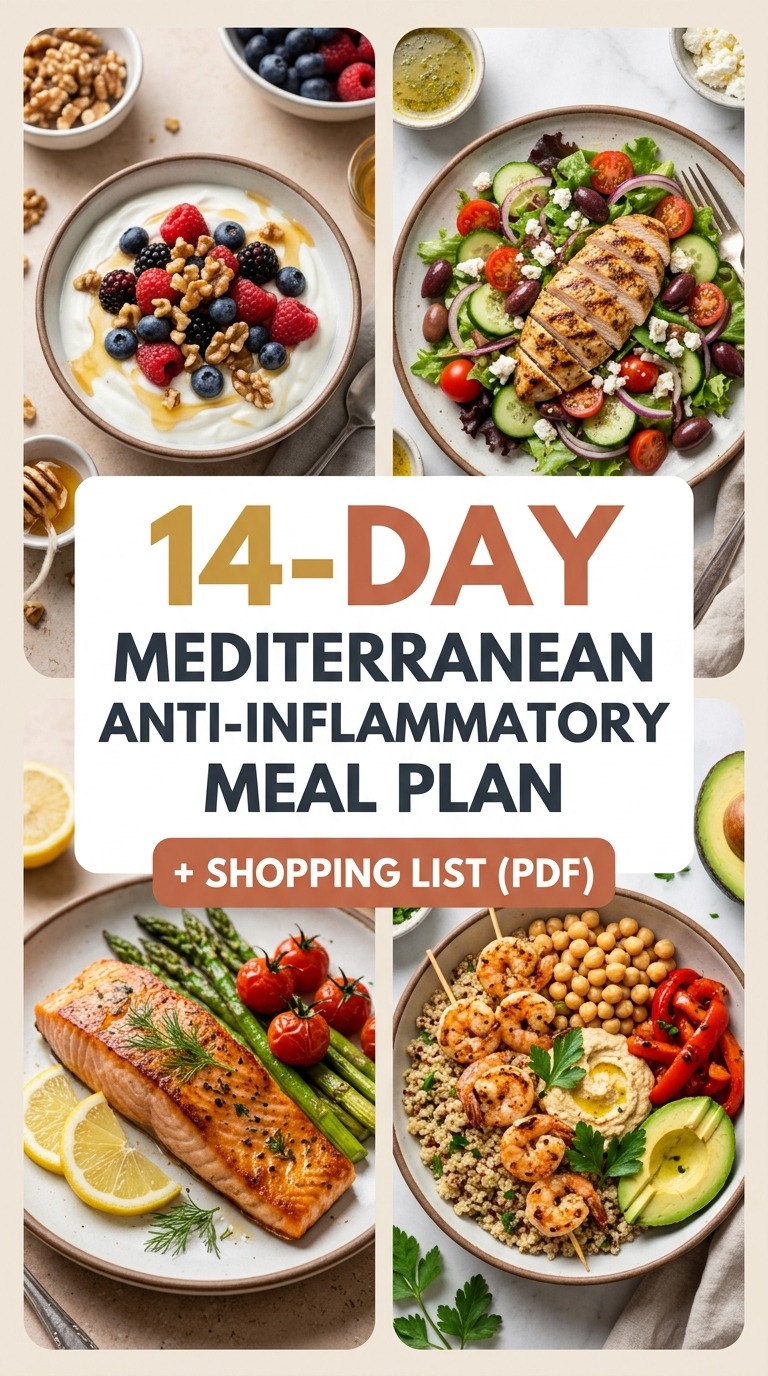
This 14-day Mediterranean anti-inflammatory meal plan is exactly what I did. Here’s exactly what I’d eat.
Week 1: Reset and Rebuild
Day 1: Fresh Start
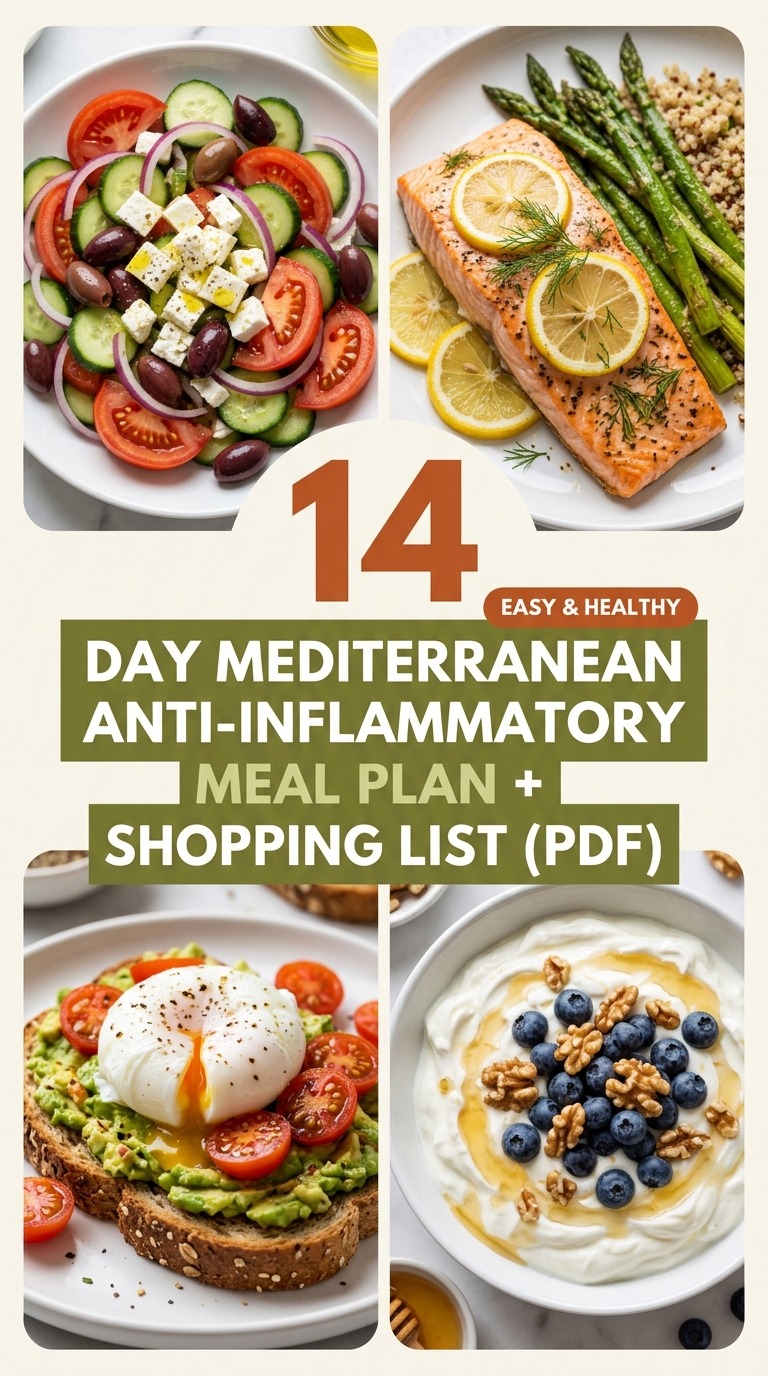
Breakfast: Lemon Herb Greek Yogurt Bowl with Walnuts and Honey
Creamy, cool, and just tangy enough to wake you up without coffee (though I still had coffee — let’s be real). Layer full-fat Greek yogurt with crushed walnuts, a drizzle of raw honey, and fresh lemon zest. Takes about 4 minutes to throw together. Make a double portion and refrigerate the second one for tomorrow’s snack. Greek yogurt gives you gut-friendly probiotics that start calming inflammation from day one. (I ate this three days in a row and didn’t get bored once.)
Lunch: Chickpea and Cucumber Mediterranean Salad
Crunchy, zesty, and somehow filling enough that you won’t raid the snack drawer at 3pm. Toss canned chickpeas with diced cucumber, cherry tomatoes, red onion, Kalamata olives, and a lemon-olive oil dressing. Ready in 10 minutes flat. Chickpeas are one of the best high-fiber foods for reducing inflammation, and they keep you full for hours. (My kids actually ate this without complaining, which felt like a miracle.)
Dinner: Baked Salmon with Roasted Cherry Tomatoes and Capers
The salmon comes out with crispy edges and a silky center — not dry, not fishy, just right. Roast it at 400°F for 14 minutes alongside halved cherry tomatoes and a handful of capers. Omega-3s in salmon are one of the most well-researched tools for calming systemic inflammation. Make an extra fillet to flake into tomorrow’s lunch salad. (The capers are non-negotiable — they add a briny punch that makes the whole thing taste fancy with zero extra work.)
Snack: Sliced Bell Peppers with Hummus and Za’atar
Crispy, bright, and satisfying in a way that rice cakes never are. Dip thick-cut bell pepper strips into store-bought hummus and dust with za’atar. Takes 2 minutes. Bell peppers are loaded with vitamin C, which supports your body’s natural anti-inflammatory response. Keep a container of pre-sliced peppers in the fridge for the whole week.
Day 2: Build the Momentum
Breakfast: Avocado Toast on Whole Grain with Soft-Boiled Egg and Chili Flakes
Warm, hearty toast topped with creamy smashed avocado, a perfectly jammy egg, and a hit of heat from chili flakes. This takes 8 minutes including the egg. Whole grain bread keeps blood sugar stable, which directly affects how inflamed your body runs throughout the day. Soft-boil a batch of 6 eggs on Sunday and you’re set for days. (The chili flakes are where all the personality lives — don’t skip them.)
Lunch: Leftover Salmon Flake Bowl with Farro and Arugula
Peppery arugula, nutty farro, and that extra salmon fillet from last night — this is the lunch that makes meal prep feel genius. Dress it with olive oil, lemon juice, and a pinch of sea salt. Assembly takes 5 minutes if your farro is pre-cooked. Farro has more fiber and protein than white rice, and it’s one of those grains that actually keeps inflammation markers lower. (I started cooking big batches of farro every Sunday and it changed my whole week.)
Dinner: One-Pan Lemon Herb Chicken Thighs with White Beans and Spinach
Everything goes in one pan and comes out tasting like something from a restaurant. The chicken skin gets golden and crispy, the beans soak up all the lemon-herb juices, and the spinach wilts down into something silky and warm. Total cook time: 32 minutes. White beans are an underrated anti-inflammatory powerhouse — check out these anti-inflammatory recipes if you want more ideas like this one. Double the chicken for tomorrow’s wrap.
Snack: A Small Handful of Mixed Almonds and Dark Chocolate Chips
Warm, rich dark chocolate with the crunch of almonds — this is a snack, not a punishment. Use 70% or higher cacao for maximum anti-inflammatory flavonoids. Pre-portion into small bags on Sunday so you’re not standing at the pantry eating straight from the bag. (I learned that lesson the hard way.)
Day 3: Find Your Rhythm
Breakfast: Warm Turmeric Oatmeal with Berries and Hemp Seeds
Golden, slightly spiced, and genuinely comforting on a cold morning. Stir a half teaspoon of turmeric and a pinch of black pepper into your oats while cooking — the pepper activates the curcumin so your body actually absorbs it. Top with frozen blueberries (thawed overnight) and hemp seeds. Takes 7 minutes. This is one of those breakfasts that looks boring but works incredibly hard for you. (I’ve eaten this probably 300 times and I’m still not tired of it.)
Lunch: Leftover Chicken and White Bean Wrap with Tzatziki
Tear up that extra chicken from last night, wrap it in a whole wheat pita with white beans, cucumber, and a generous smear of tzatziki. Cool, creamy, with a slight tang from the yogurt sauce. Takes 6 minutes. This is why you cooked double the chicken — lunch practically makes itself. Tzatziki adds probiotics that keep your gut microbiome happy, which is directly connected to how inflamed you feel overall.
Dinner: Lentil and Tomato Mediterranean Soup with Crusty Whole Grain Bread
This soup is thick, savory, and so warm it feels like a hug from the inside. Red lentils break down into a creamy base without any blending — the texture is velvety and rich. Simmer with canned tomatoes, cumin, coriander, and a finishing drizzle of good olive oil. Total cook time: 25 minutes. Make a big pot — it gets better the next day. FYI, lentils are one of the highest-fiber legumes you can eat, and they’re directly tied to lower inflammatory markers in the blood.
Snack: Olive Tapenade on Whole Grain Crackers
Salty, briny, and deeply satisfying in a way you won’t expect from something this fast. Spread store-bought olive tapenade generously on whole grain crackers. Two minutes, no cooking, zero cleanup. Olives are rich in oleocanthal, which works similarly to ibuprofen in the body when consumed regularly. Keep a jar in the fridge at all times.
I personally use a good quality extra virgin olive oil for all my cooking and finishing — it genuinely makes a difference in both flavor and the anti-inflammatory effect. Look for cold-pressed, single-origin if your budget allows.
💾 Want this saved as a printable?
Download the 14-Day Mediterranean Anti-Inflammatory Meal Plan PDF →
Full grocery list, meal prep schedule, and every recipe on one page. Most readers print this Sunday night before they shop.
Week 1, Days 4–7: Keep the Momentum Going

Days 4 through 7 follow the same formula — rotate proteins between salmon, sardines, eggs, and chicken. Keep lentils and chickpeas as your base carbs. Build every plate around olive oil, leafy greens, and real vegetables. If you want a full 7-day Mediterranean anti-inflammation plan as a reference, that page lays out the exact same structure for week one. Use it alongside this plan for variety.
A few affiliate products I genuinely use through these days: a high-quality glass meal prep container set that goes from fridge to oven to table without drama, and a good cast iron skillet that makes one-pan dinners actually one pan. Both are investments that pay off fast when you’re cooking this consistently.
Week 2: Deepen the Results
Day 8: The Midpoint Reset
Breakfast: Smoked Salmon and Avocado Egg Scramble
Silky scrambled eggs folded with thin ribbons of smoked salmon and creamy avocado chunks. The smoke flavor makes it feel indulgent even at 7am. Takes 10 minutes. Double omega-3 hit from both the eggs (use pasture-raised if you can) and the salmon. This breakfast is one of the best things you can eat for hormonal inflammation — relevant if you’re in your 40s and noticing your body reacts differently to stress. (My energy on days I eat this is noticeably steadier.)
Lunch: Warm Farro Bowl with Roasted Red Pepper, Feta, and Olives
Nutty farro topped with smoky roasted peppers, creamy crumbled feta, and plump olives — this is a bowl with personality. The feta adds a salty bite that makes every forkful interesting. Takes 12 minutes if your farro is prepped. This is the kind of lunch that makes your coworkers ask what you’re eating. If you’re managing hormonal issues alongside inflammation, check out the 14-day hormone-balancing anti-inflammation plan — it layers directly onto what we’re doing here.
Dinner: Baked Cod with Herb Crust and Roasted Zucchini
The herb crust is crispy on top, the cod underneath is flaky and tender. Roasted zucchini picks up caramelized edges at 425°F that make it taste completely different from steamed. Total cook time: 22 minutes. White fish is easier on digestion than red meat and still delivers solid anti-inflammatory protein. This is a perfect mid-week dinner when you want something light but not sad. (My husband asked for seconds, which is always the sign a recipe stays in rotation.)
Snack: Fresh Fig with Ricotta and a Drizzle of Honey
Sweet, creamy, and genuinely feels like dessert. Slice fresh or dried figs, top with a small spoon of whole-milk ricotta, and drizzle lightly with raw honey. Figs are high in fiber and magnesium — both relevant for women dealing with stress-related inflammation. Takes 3 minutes. If figs aren’t in season, use sliced pears instead.
Day 9–14: Scale What Works
By day nine, you’ll notice something: this isn’t hard anymore. You’re not craving the things you thought you’d miss. The bloating has quieted. Your mornings feel different — not perfect, but better. That shift is real, and it’s worth protecting.
For the final six days, keep building on the same foundations. Rotate your proteins: sardines on day 10 (yes, sardines — don’t knock them until you try them with lemon and capers on toast), shrimp on day 12, eggs on day 13. For a gut-specific focus during this stretch, the 7-day gut healing Mediterranean menu pairs perfectly with what you’re already doing in week two.
Add a quality turmeric and black pepper supplement to your morning routine during week two if you want to accelerate results — I started taking one around day 10 and noticed the difference in my joint stiffness within four days. IMO it’s worth it, especially if your inflammation is showing up as aches.
What Makes This Week So Much Easier
A Good Citrus Juicer — I use fresh lemon juice on almost everything in this plan. Squeezing lemons by hand every day is a small but real annoyance that makes people skip steps. A simple handheld juicer fixes that completely. If you don’t have one, just buy two extra lemons and roll them hard before cutting — you’ll get more juice.
A Large Glass Meal Prep Container (Leak-Proof) — Batch cooking farro, chickpeas, and salad bases on Sunday only works if you have somewhere good to store them. Glass containers keep flavors clean and let you see exactly what’s in your fridge so nothing gets forgotten. I use mine every single week.
Cold-Pressed Extra Virgin Olive Oil (Large Bottle) — You go through more olive oil than you think on this plan, and the quality genuinely matters. A large bottle also costs less per ounce. Look for a harvest date on the label — fresher is always better for both flavor and anti-inflammatory compounds.
A Sharp Chef’s Knife — Chopping vegetables with a dull knife is the reason people stop cooking. A sharp knife makes prep faster, safer, and honestly more enjoyable. If replacing your knife isn’t in the budget right now, get your current one sharpened. Most kitchen stores do it for a few dollars.
Your Real Questions, Answered Honestly
Can I prep this whole plan on Sunday?
You can prep most of it, yes — and I’d encourage you to. Cook a big batch of farro and lentils, hard-boil six eggs, wash and chop all your vegetables, and mix your olive oil dressings in small jars. That’s maybe 90 minutes of Sunday work that makes every weekday morning and lunch feel effortless. You won’t cook dinners in advance (they’re better fresh), but having everything else ready means dinner comes together in under 30 minutes every night. The Mediterranean high-fiber meal prep plan has a detailed Sunday prep timeline if you want to follow one.
I hate fish — what do I swap?
Completely valid. Swap every fish portion with chicken thighs, white beans, or eggs. The plan works just as well — you’ll lose some of the omega-3 density, but you can compensate with walnuts, flaxseed, and a good fish oil supplement if you’re willing to take one. Lentils can also replace fish in any bowl-style meal. Don’t force yourself to eat something you genuinely can’t stand — that’s how people abandon plans by day four.
Will I lose weight doing this?
Possibly — but that’s not the main point, and I don’t want to promise something I can’t guarantee. What I can tell you is that when inflammation drops, bloating decreases, and most women feel and look less puffy within a week. If weight loss is a goal alongside reducing inflammation, the 14-day Mediterranean weight loss plan is specifically structured for that. This plan is built around how you feel, not the scale.
Can my family eat this too?
Yes — and they probably will without realizing it’s an “anti-inflammatory meal plan.” The food is real, flavorful, and satisfying. Kids can be a tougher crowd on things like olives and capers, but the chicken dishes, salmon, and oatmeal bowls go over well in most households. Cook the family’s portion first, then add the extra toppings (capers, tapenade, za’atar) to yours after. The 14-day Mediterranean family meal plan is designed specifically for cooking for a household — worth bookmarking.
What if I have a thyroid condition or hormonal imbalance?
Talk to your doctor before making significant dietary changes — that’s not a disclaimer, that’s actual advice. That said, Mediterranean eating is one of the most widely studied dietary patterns for hormonal health, and it’s generally considered safe and supportive for most thyroid and hormonal conditions. The anti-inflammatory foods in this plan (especially omega-3s, magnesium-rich leafy greens, and turmeric) are often recommended alongside conventional treatment. If hormonal balance is a specific goal, pair this with the anti-inflammatory meals for hormone balance guide for extra support.
Start Sunday. That’s It.
Starting is always the weirdest part. You’ll stand in the grocery store holding a jar of tahini wondering if this is actually going to make a difference. It will. Not on day one — but by day four or five, something shifts. The heaviness starts to lift. The afternoon energy crash gets shorter. You stop feeling like your own body is working against you.
You don’t need to do this perfectly. You need to do it consistently. Pick one week, stock your kitchen with the basics, and start with Day 1’s lemon yogurt bowl. That’s the whole plan.
Pin this so you can find it when you need it. Which day are you most excited to try? Tell me in the comments — I read every one.
Meta description: A 14-day Mediterranean anti-inflammatory meal plan with daily meals, real tips, and a printable PDF shopping list — for women ready to beat bloating and fatigue.