
7-Day Mediterranean High-Fiber Meal Prep Plan
Meal prep sounds great in theory—spending a few hours on Sunday to coast through the week with zero stress. But then reality hits. You’re staring at wilted lettuce by Wednesday, your grains turned into hockey pucks, and that “fresh” fish smells questionable. The whole thing falls apart, and you’re back to takeout by Thursday.
Here’s where the Mediterranean approach to high-fiber meal prep changes everything. These ingredients actually hold up. Whole grains stay fresh. Legumes get better with time. Roasted vegetables keep their texture. And the high fiber content means you stay full for hours without that desperate 3 PM hunger that derails your entire afternoon.
This 7-day plan delivers 30-35 grams of fiber daily while being ridiculously meal-prep-friendly. Everything stores well, reheats properly, and tastes just as good on day five as it did on day one. No specialized cooking skills required, no obscure ingredients that expire before you use them, and no spending your entire weekend in the kitchen.

Why Mediterranean Plus High-Fiber Equals Meal Prep Gold
The Mediterranean diet naturally leans fiber-rich with its emphasis on vegetables, legumes, and whole grains. But when you specifically plan for meal prep, you need foods that not only pack fiber but also store and reheat beautifully.
According to research on dietary fiber, most people barely hit 15 grams daily when they need 25-35 grams. That fiber gap contributes to digestive issues, blood sugar swings, constant hunger, and increased disease risk. The Mediterranean approach closes that gap naturally without making you feel like you’re choking down sawdust.
What makes this meal prep strategy brilliant is that high-fiber foods are naturally filling and stable. Cooked quinoa lasts five days in the fridge. Lentil soup actually improves overnight as flavors meld. Chickpea salad stays crisp for days. Roasted vegetables maintain their texture when stored properly. You’re not fighting against food science—you’re working with it.
Plus, fiber slows digestion, which means prepped meals keep you satisfied for 4-5 hours. You’re not getting hungry an hour after eating your carefully prepped lunch. That alone makes meal prep worth the effort.
The Sunday Prep Session: Your Blueprint
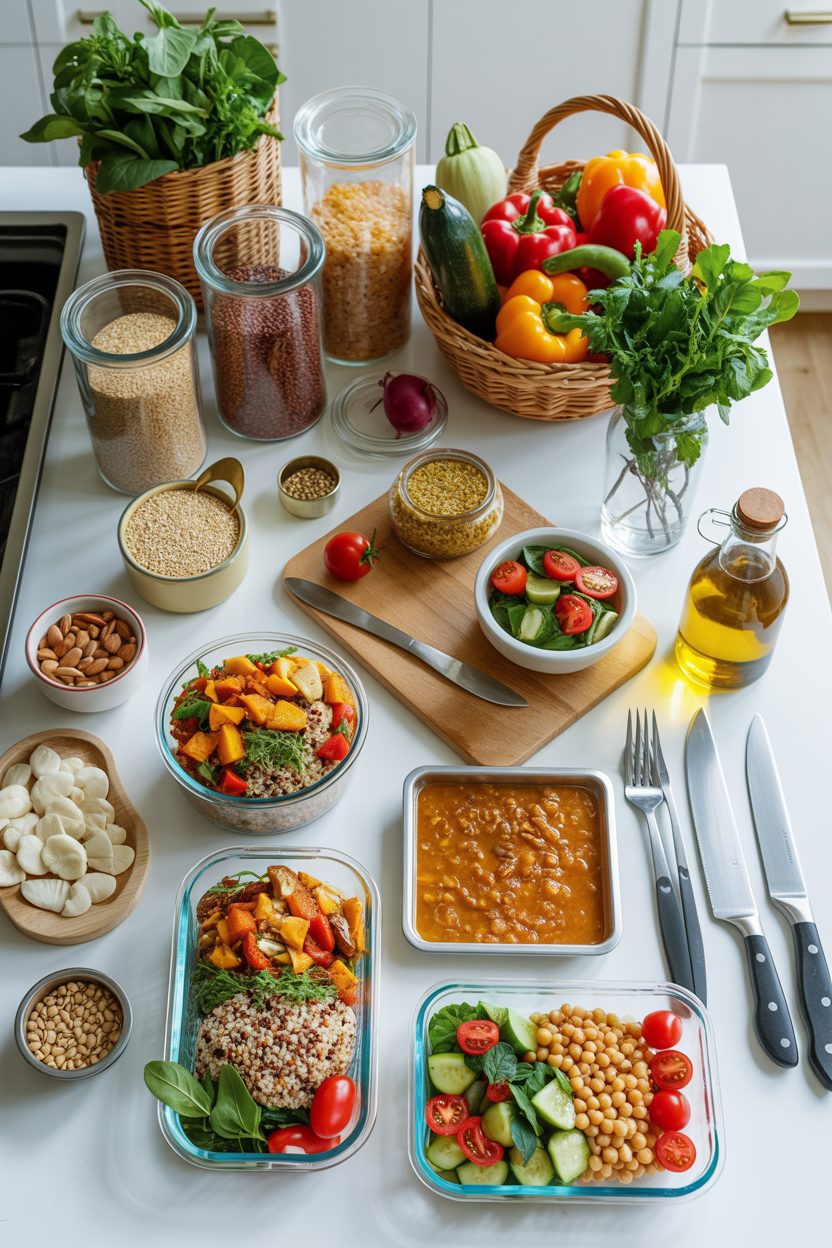
Let’s break down exactly what you’re doing during your 2-hour Sunday session. This isn’t some vague “prep what you can” situation—it’s a specific, efficient workflow.
Hour 1: Grains, Legumes, and Proteins (mostly hands-off cooking)
- Start cooking 3 cups dry quinoa (makes about 9 cups cooked)
- Get 2 cups dry brown rice going (makes about 6 cups cooked)
- Cook 1.5 cups dry farro (makes about 4.5 cups cooked)
- Simmer 1 cup dry lentils in broth (makes about 3 cups cooked)
- Bake 6 chicken breasts seasoned simply with olive oil, garlic, and herbs
Most of this happens simultaneously. You’re starting everything, setting timers, and moving to chopping while things cook. I use this rice cooker for perfect grains every time—set it and forget it while handling other tasks.
Hour 2: Vegetables, Assembly, and Storage
- Roast 3 large sheet pans of mixed vegetables (peppers, zucchini, eggplant, broccoli, cauliflower)
- Make 1 large pot of lentil or white bean soup
- Prep raw vegetables for snacks (carrots, bell peppers, cucumber)
- Mix a large batch of olive oil and lemon dressing
- Assemble 5 ready-to-eat salads in jars
- Hard boil a dozen eggs
- Portion everything into containers with labels
The key is grouping similar tasks. All your chopping happens at once. All your roasting happens simultaneously on different racks. You’re maximizing oven space and minimizing cleanup. These rimmed baking sheets are perfect for roasting—they don’t warp, and cleanup is stupid easy.
Your 7-Day High-Fiber Meal Plan
Day 1: Monday
Breakfast: Overnight oats with chia seeds, sliced banana, walnuts, and cinnamon (12g fiber)
Lunch: Mediterranean quinoa bowl with roasted vegetables, chickpeas, spinach, and lemon-tahini dressing (14g fiber)
Dinner: Baked chicken breast with lentil soup and a side salad (10g fiber)
Snacks: Apple with almond butter, carrot sticks with hummus (6g fiber)
Total Fiber: 42g
Monday sets the tone. You’re grabbing overnight oats from the fridge, assembling your quinoa bowl from prepped components, and reheating soup for dinner. Zero cooking required. The high fiber keeps you satisfied all day, and you’re cruising through Monday without decision fatigue.
The overnight oats are criminally easy—literally just oats, chia seeds, almond milk, and whatever toppings you want. Get Full Recipe if you want exact ratios, but honestly, you can eyeball it.
Day 2: Tuesday
Breakfast: Greek yogurt parfait with granola, mixed berries, and ground flaxseed (8g fiber)
Lunch: White bean and kale soup with whole grain crackers and cherry tomatoes (13g fiber)
Dinner: Farro salad with roasted eggplant, cherry tomatoes, feta, and fresh basil (11g fiber)
Snacks: Handful of almonds, bell pepper strips with hummus (5g fiber)
Total Fiber: 37g
Tuesday’s lunch comes straight from the pot you made Sunday. The farro salad takes maybe 5 minutes to assemble from your prepped grains and roasted vegetables. You’re eating real food that tastes fresh without actually cooking anything.
If you’re loving these grain-based salads, you might also enjoy Mediterranean farro variations or ancient grain bowl combinations that use similar prep techniques.
Day 3: Wednesday
Breakfast: Whole grain toast with mashed avocado, cherry tomatoes, and everything bagel seasoning (9g fiber)
Lunch: Chickpea salad with cucumbers, red onion, Kalamata olives, and lemon dressing in a whole wheat pita (15g fiber)
Dinner: Baked chicken with roasted Brussels sprouts and brown rice (10g fiber)
Snacks: Fresh pear, handful of walnuts (6g fiber)
Total Fiber: 40g
Wednesday is when people typically start abandoning meal prep because their food quality drops. Not here. The chickpea salad actually gets better as it marinates. The Brussels sprouts reheat beautifully—just a quick zap in the microwave or 5 minutes in a hot oven. Your brown rice is perfectly fluffy because you stored it properly with a damp paper towel on top.
Day 4: Thursday
Breakfast: Smoothie with spinach, banana, frozen berries, Greek yogurt, chia seeds, and almond butter (10g fiber)
Lunch: Lentil soup with a large mixed green salad and olive oil dressing (12g fiber)
Dinner: Mediterranean grain bowl with quinoa, roasted vegetables, white beans, and tahini sauce (14g fiber)
Snacks: Orange slices, handful of pistachios (5g fiber)
Total Fiber: 41g
Thursday’s smoothie uses your prepped ingredients—just throw everything in the blender. I keep this high-speed blender on my counter because it pulverizes chia seeds and frozen berries without leaving chunks. The investment pays off when you’re making smoothies multiple times weekly.
The grain bowl is your prepped components coming together in a different combination. Same ingredients as earlier in the week, totally different meal. That’s the beauty of component-based meal prep.
Speaking of versatile grain bowls, check out Buddha bowl variations or try protein-packed bowl ideas that keep meal prep interesting week after week.
Day 5: Friday
Breakfast: Steel-cut oats with sliced apple, cinnamon, and chopped pecans (11g fiber)
Lunch: Farro salad with roasted peppers, artichoke hearts, chickpeas, and fresh parsley (13g fiber)
Dinner: Grilled chicken with white bean and vegetable soup, side of whole grain bread (11g fiber)
Snacks: Sliced cucumber with tzatziki, handful of almonds (4g fiber)
Total Fiber: 39g
Friday marks five days of eating well without cooking during the week. Your prepped food still tastes fresh because Mediterranean ingredients hold up. The soup might have thickened slightly—just add a splash of broth or water when reheating. The farro absorbs flavors beautifully after sitting for days.
Day 6: Saturday
Breakfast: Whole grain pancakes with fresh berries and a dollop of Greek yogurt (8g fiber)
Lunch: Mediterranean lentil bowl with roasted vegetables, spinach, and lemon-tahini dressing (15g fiber)
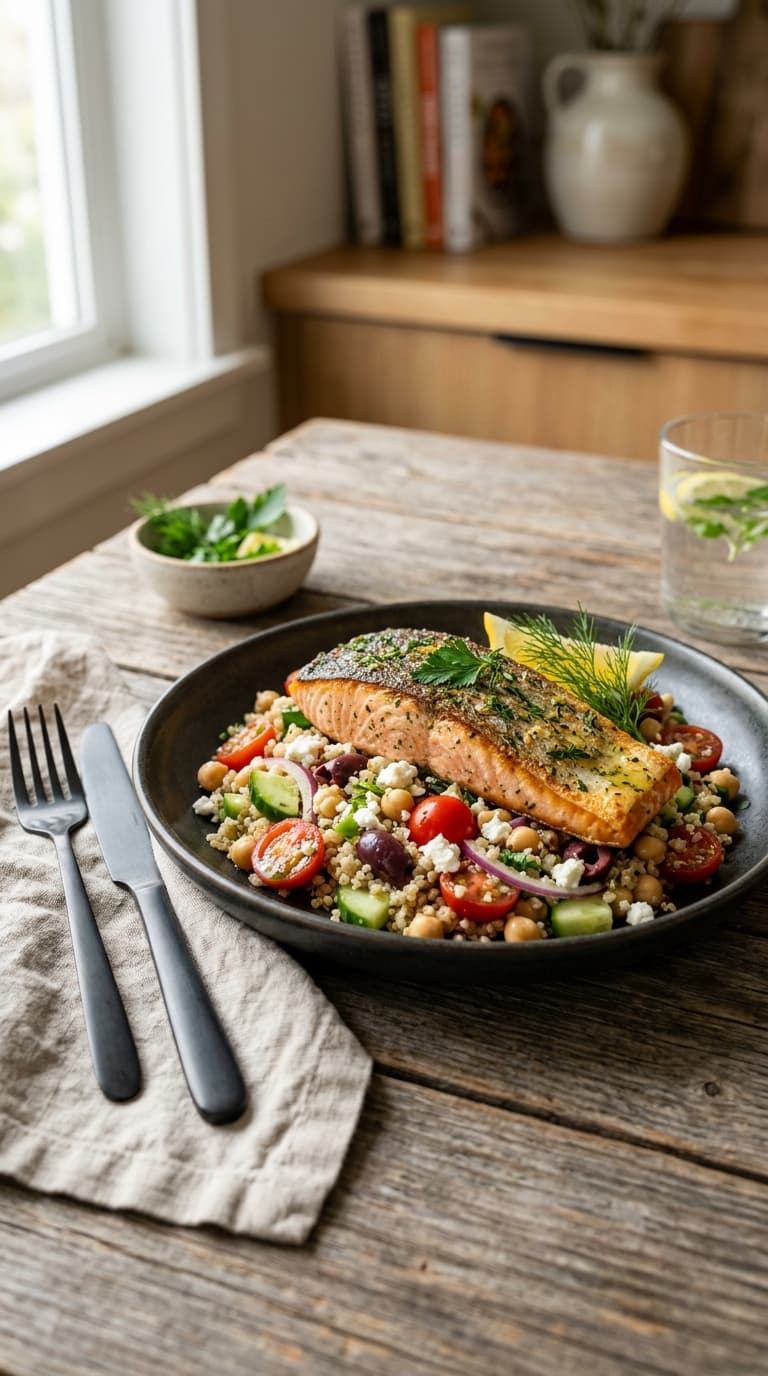
Dinner: Baked salmon with roasted broccoli and quinoa (10g fiber)
Snacks: Fresh grapes, handful of walnuts (5g fiber)
Total Fiber: 38g
Saturday’s fresh salmon is your break from reheated meals. You’re cooking dinner fresh, but breakfast and lunch still come from your prep. This balance keeps meal prep from feeling monotonous while maintaining the convenience factor.
Day 7: Sunday
Breakfast: Greek yogurt bowl with granola, pomegranate seeds, and honey (7g fiber)
Lunch: Chickpea and vegetable soup with whole grain sourdough (12g fiber)
Dinner: Grilled chicken with roasted cauliflower and brown rice (10g fiber)
Snacks: Apple with peanut butter, baby carrots (6g fiber)
Total Fiber: 35g
Sunday winds down your prepped food. Tonight you’re doing your next prep session while dinner cooks. The cycle continues, but you’ve just completed a full week of high-fiber eating without daily cooking stress.
The Fiber All-Stars in This Plan
Let me break down the ingredients carrying the fiber load so you understand what you’re eating and why:
Whole Grains: Quinoa, farro, and brown rice each deliver 5-7 grams of fiber per cooked cup. They provide both soluble and insoluble fiber, supporting different aspects of digestive health.
Legumes: Chickpeas, lentils, and white beans pack 10-15 grams per cup. They’re also loaded with plant-based protein and resistant starch that feeds beneficial gut bacteria.
Leafy Greens: Spinach, kale, and mixed greens contribute fiber plus vitamins and minerals. They bulk up meals without adding many calories.
Cruciferous Vegetables: Broccoli, Brussels sprouts, and cauliflower provide fiber and compounds that support detoxification and reduce inflammation.
Nuts and Seeds: Walnuts, almonds, chia seeds, and flaxseeds add fiber, healthy fats, and protein. They’re perfect for snacks or topping meals.
Fruits: Berries, apples, and pears deliver fiber along with antioxidants. Eating them with skin on maximizes fiber content.
Avocados: One avocado has about 10 grams of fiber plus heart-healthy monounsaturated fats that support nutrient absorption.
This combination gives you diverse fiber types—soluble, insoluble, and resistant starch. That variety supports a healthy gut microbiome better than just loading up on one type of fiber.
Storage Strategies That Actually Work
FYI, proper storage makes or breaks meal prep success. Here’s exactly how to store each component:
Cooked Grains:
- Store in airtight containers with a damp paper towel on top to prevent drying
- Keep refrigerated for up to 5 days
- Reheat with a splash of water or broth
- Freeze portions in freezer bags for up to 3 months if you prep extra
Cooked Legumes:
- Store in their cooking liquid to maintain moisture and flavor
- Refrigerate in airtight containers for 5-7 days
- They actually improve in flavor as they sit
Roasted Vegetables:
- Let cool completely before storing to prevent condensation and sogginess
- Store in containers lined with paper towels to absorb excess moisture
- Keep refrigerated for 4-5 days
- Reheat in the oven or air fryer rather than microwave for best texture
Soups and Stews:
- Store in individual portions for easy grabbing
- Leave headspace if freezing (liquids expand)
- Refrigerate for 5 days or freeze for up to 3 months
- IMO, soup tastes better on day 3 than day 1
Proteins:
- Slice or portion before storing for easier use
- Keep refrigerated for 3-4 days maximum
- Store separately from sauces to prevent sogginess
Fresh Components:
- Store greens washed and dried with paper towels
- Keep chopped raw vegetables in containers with damp paper towels
- Don’t dress salads until serving
- Store dressings separately in small jars
I use these glass containers with snap lids for everything. They’re completely worth the investment—they don’t stain, don’t absorb odors, stack without toppling, and go from fridge to microwave safely.
For bulk grain storage, these airtight containers keep everything fresh and visible. You can see at a glance what needs replenishing.
Adapting for Different Dietary Needs
This plan is ridiculously flexible. Here’s how to modify it:
For Vegans:
- Replace Greek yogurt with coconut or soy yogurt
- Swap chicken for tofu, tempeh, or extra legumes
- Use tahini, hummus, or nut-based dressings instead of dairy-based options
- Double up on beans and lentils for protein
For Gluten-Free:
- All the grains listed (quinoa, rice) are naturally gluten-free
- Replace farro with more quinoa or rice
- Choose gluten-free bread and crackers
- Everything else is already gluten-free
For Higher Protein Needs:
- Add an extra protein source to each meal
- Include more Greek yogurt, eggs, and fish
- Top grain bowls with extra chickpeas or grilled chicken
- Add hemp seeds or protein powder to smoothies
For Lower Fiber Needs (if transitioning):
- Start with 20-25g daily and work up gradually
- Choose white rice over brown initially
- Include more cooked vegetables than raw
- Add fiber sources slowly to allow gut adjustment
For Budget-Conscious Eating:
- Buy dried beans and cook them yourself
- Choose seasonal produce for roasting
- Buy grains in bulk—they’re stupid cheap per serving
- Skip exotic ingredients and stick to basics
The core principles remain the same regardless of modifications. You’re batch cooking components and assembling them throughout the week.
For more budget-friendly Mediterranean options, explore affordable meal prep ideas or check out bulk cooking strategies that stretch your grocery budget.
The Mid-Week Assessment
Wednesday or Thursday is make-or-break for meal prep. Here’s how to evaluate and adjust:
Quality Check:
- Are your greens still fresh? If wilting, use them immediately in cooked dishes
- Do proteins smell and look good? When in doubt, throw it out
- Have grains dried out? Add moisture when reheating
- Is soup too thick? Thin with broth or water
Variety Check:
- Feeling bored? Remix components in different combinations
- Use different seasonings—Mediterranean spices, Asian flavors, Mexican spices all work with these base ingredients
- Add fresh herbs to brighten up reheated meals
- Include a fresh element at each meal (cherry tomatoes, cucumber, fresh herbs)
Energy Check:
- Still feeling satisfied between meals? Fiber is doing its job
- Getting hungry quickly? Add more healthy fats (olive oil, nuts, avocado)
- Feeling too full? Reduce portions slightly
- Energy stable? Keep doing what you’re doing
Adjustment Options:
- Make a quick fresh salad to accompany reheated grains
- Throw together a fast stir-fry with your prepped vegetables
- Make fresh fish or eggs for dinner while using prepped sides
- Mix in fresh ingredients to refresh your containers
The goal isn’t rigid adherence to every prepped meal. It’s having components ready so healthy eating remains easy even when life gets chaotic.
Common Meal Prep Mistakes to Avoid
Let me save you from the mistakes everyone makes initially:
Mistake 1: Prepping too much variety. Stick to 3-4 base recipes max. Too many different meals creates confusion and wasted food. Get Full Recipe for a few solid base options and rotate those.
Mistake 2: Not labeling containers. That mystery grain could be quinoa or farro, and you won’t remember by Thursday. Label everything with contents and date.
Mistake 3: Overdressing salads. Dress only what you’re eating that day. Pre-dressed salads turn to mush.
Mistake 4: Cooking everything to the same texture. Some vegetables should be al dente for reheating. Fully cooked becomes mushy after storage and reheating.
Mistake 5: Ignoring food safety. Cool hot food quickly, refrigerate within 2 hours, and don’t keep proteins longer than 3-4 days.
Mistake 6: Meal prepping foods you don’t actually like. If you hate Brussels sprouts, don’t prep 5 days of Brussels sprouts. Prep foods you genuinely enjoy eating.
Mistake 7: Forgetting about seasoning. Reheated food needs extra seasoning. Keep salt, pepper, lemon, and fresh herbs handy for boosting flavor.
Mistake 8: Not having backup options. Life happens. Keep frozen vegetables, canned beans, and quick-cooking grains for when meal prep fails.
I keep this label maker in the kitchen specifically for meal prep. Sounds extra, but knowing exactly what’s in each container and when you made it prevents food waste.
Beyond Sunday: Quick Weeknight Additions
Meal prep handles most of your week, but sometimes you want something fresh or need to supplement. These 15-minute additions use your prepped components:
Quick Stir-Fry: Sauté your prepped vegetables with garlic and ginger, add cooked chicken or chickpeas, serve over prepped brown rice. 15 minutes max.
Fast Frittata: Beat eggs, add prepped vegetables and feta, bake 20 minutes. Serves 4-6 and works for any meal.
Sheet Pan Dinner: Fresh fish or chicken with your prepped vegetables, roast everything at 425°F for 20 minutes. Serve over prepped grains.
Loaded Sweet Potato: Bake sweet potatoes, top with prepped chickpeas, vegetables, and tahini sauce. Filling and fast.
Grain Bowl Remix: Same prepped components, different sauce or seasonings. Mediterranean one night, Asian-inspired the next, Mexican-style another night.
Quick Soup: Sauté aromatics, add prepped vegetables and grains, pour in broth, simmer 15 minutes. Dinner that feels fresh with minimal effort.
Breakfast Scramble: Scramble eggs with prepped vegetables, serve over prepped grains or with whole grain toast.
The key is having components ready so even “cooking” dinner takes 15-20 minutes instead of an hour.
Related Recipes You’ll Love
Looking for more meal prep inspiration? Here are some recipes that work beautifully with this system:
More Grain-Based Options: Try Mediterranean grain salad variations, ancient grain bowl combinations, or quinoa-based meal prep ideas that follow similar principles.
Legume-Focused Meals: Explore high-protein lentil dishes, chickpea-based recipes, or white bean meal prep options that stay fresh all week.
Vegetable-Forward Dishes: Check out sheet pan roasted vegetables, Mediterranean vegetable mains, or veggie-packed soups perfect for batch cooking.
Complete Meal Prep Plans: Browse 14-day meal prep strategies, budget-friendly batch cooking, or family-style meal prep ideas for more comprehensive planning.
Conclusion
Seven days of high-fiber Mediterranean eating without daily cooking stress—that’s what this meal prep system delivers. You’re getting 30-40 grams of fiber daily, which supports digestive health, blood sugar control, satiety, and disease prevention. And you’re doing it with foods that actually store well and taste good reheated.
The Sunday prep session takes 2 hours. That’s it. Two hours on Sunday gives you five full days of ready-to-eat meals. The other two days you’re cooking fresh or using up the last of your prepped components. Even on those days, you’re starting with prepped grains, vegetables, and proteins that make cooking exponentially faster.
This isn’t about perfection or eating the exact same thing at the exact same time every day. It’s about having components ready so healthy eating remains the easy choice even when you’re exhausted, stressed, or short on time. The high fiber keeps you satisfied, so you’re not constantly thinking about food or making poor choices because you’re ravenous.
Start this Sunday. Block out two hours, put on some music or a podcast, and prep your week. By next Sunday, you’ll have completed seven days of high-fiber eating without the daily cooking grind. Your energy, digestion, and stress levels will thank you for it.