
23 High-Fiber Breakfasts for All-Day Energy
Here’s the thing most people don’t realize: what you eat in the morning sets the tone for your entire day. According to Harvard Health, fiber passes through your body without being broken down, which means it keeps you full longer and helps stabilize your blood sugar. Translation? No more mid-morning snack attacks or energy crashes.
Most adults need between 25-38 grams of fiber daily, but the average American? We’re barely hitting 15 grams. That’s a massive gap. But don’t worry—I’m not here to lecture you. I’m here to share 23 breakfast ideas that’ll actually make you excited to eat more fiber.
Why Fiber at Breakfast Actually Matters
Ever wonder why some breakfasts leave you starving an hour later while others keep you going until lunch? Fiber is your secret weapon. Research published in the Journal of the American Board of Family Medicine found that people who ate high-fiber breakfasts had significantly better fullness ratings throughout the day compared to those who ate low-fiber options.
But it’s not just about feeling full. Fiber supports your gut health, helps manage your weight, and even reduces your risk of heart disease. The Mayo Clinic notes that fiber can help lower blood pressure and cholesterol levels too. Pretty impressive for something that used to bore me to tears, right?
The best part? You don’t need to completely overhaul your breakfast routine. Small swaps make huge differences.
High-Fiber Meal Planning Made Simple
Tired of guessing which foods have the most fiber? This High-Fiber Food Tracker & Meal Planner takes the guesswork out completely. It’s a digital planner that tracks your daily fiber intake, suggests high-fiber swaps for common foods, and includes 50+ pre-planned high-fiber breakfast combinations.
What makes it actually useful: it breaks down soluble vs insoluble fiber in each meal, so you know you’re getting both types. Plus it has a weekly meal prep section that shows you exactly what to cook on Sunday to set yourself up for the week. No more morning panic about what to eat.
The Foundation: Understanding Fiber Types
Before we dive into the recipes, let me break down what you’re actually eating. There are two types of fiber, and you need both.
Soluble Fiber
Soluble fiber dissolves in water and forms a gel-like substance in your digestive system. This slows down digestion and helps you feel full longer. You’ll find it in oats, apples, berries, and beans. Think of it as the fiber that keeps your energy steady and prevents those blood sugar spikes.
Insoluble Fiber
Insoluble fiber doesn’t dissolve—it adds bulk to your stool and helps everything move through your digestive system efficiently. Whole grains, nuts, and vegetables with skins are your go-to sources. This is the fiber that keeps things, well, regular.
The magic happens when you combine both types in one meal. That’s what these breakfast ideas do naturally.
23 High-Fiber Breakfasts That’ll Change Your Mornings
1. Classic Overnight Oats with Berries and Chia
This is my ride-or-die breakfast. Mix half a cup of rolled oats with a cup of almond milk, add a tablespoon of chia seeds and top with mixed berries. Let it sit overnight. In the morning, you’ve got about 12 grams of fiber waiting for you. I prep five jars on Sunday and thank myself all week. Get Full Recipe
The chia seeds do double duty here—they add fiber and create this pudding-like texture that’s oddly satisfying. I use these glass meal prep jars because they’re the perfect size and I can see what flavor I grabbed without opening them.
Glass Meal Prep Containers with Lids (Set of 10)
If you’re serious about overnight oats or meal prepping breakfasts, these are non-negotiable. I’ve tried the cheap plastic ones that warp in the dishwasher and the fancy ones that cost $8 per container. These hit the sweet spot.
- Airtight lids that actually seal (no yogurt explosions in your bag)
- Microwave and dishwasher safe
- 16 oz size perfect for single breakfast portions
- Clear glass so you can see what’s inside
Check Price on Amazon
2. Avocado Toast on Whole Grain Bread
Yeah, I know—avocado toast is everywhere. But there’s a reason it’s popular. Half an avocado on two slices of whole grain bread gives you about 10 grams of fiber. Add an egg for protein and you’re golden.
The trick is actually buying decent bread. Look for options with at least 3 grams of fiber per slice. I swear by this bread knife for getting clean slices without smooshing everything.
3. Greek Yogurt Parfait with Granola and Nuts
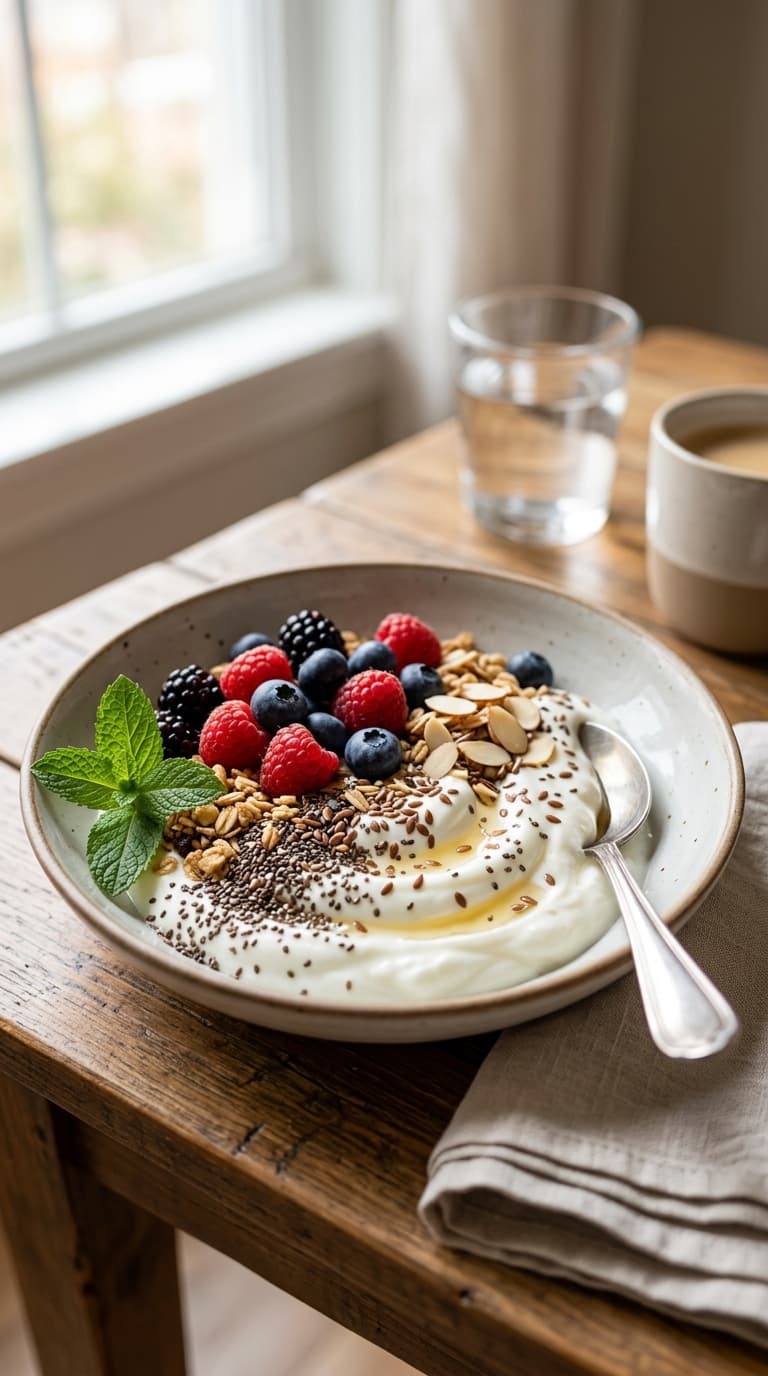
Layer Greek yogurt with high-fiber granola, sliced almonds, and berries. You’re looking at 8-10 grams of fiber depending on your granola choice. The protein from the yogurt keeps you satisfied while the fiber does its magic.
Pro tip: make your own granola. It’s cheaper and you control the sugar content. I use this silicone baking mat for zero sticking and zero cleanup.
4. Smoothie Bowl Loaded with Greens and Seeds
Blend spinach, frozen berries, half a banana, and almond milk until smooth. Pour into a bowl and top with hemp seeds, chia seeds, sliced fruit, and granola. This gives you 10-12 grams of fiber and tastes nothing like health food.
I use this high-speed blender because it actually pulverizes the spinach instead of leaving chunks. Nobody wants chunky smoothies.
NutriBullet Pro 900W Personal Blender
This is the blender that converted me to the smoothie life. It’s not the cheapest option, but after burning through two cheaper blenders in a year, I finally invested in this one three years ago and it’s still going strong.
- 900 watts of power crushes frozen fruit and ice without struggling
- Compact design doesn’t take up half your counter
- Easy to clean—everything’s dishwasher safe
- Comes with multiple cup sizes for different portions
Why it’s worth it: Those cheap blenders leave chunks of spinach and chia seeds. This one makes everything silky smooth in under 30 seconds. No more grainy smoothies.
View Current Deal
Speaking of breakfast ideas, you might also love this 7-Day Anti-Inflammatory Smoothie Meals Plan that takes the guesswork out of your morning routine.
5. Whole Grain Pancakes with Almond Butter
Use whole wheat flour or add ground flaxseed to your regular pancake recipe. Top with almond butter instead of syrup and add sliced bananas. You’ll get 7-8 grams of fiber and feel like you’re having a treat, not eating healthy.
The almond butter adds healthy fats and extra fiber. I keep this jar of almond butter in my pantry at all times.
6. Breakfast Burrito with Black Beans
Scramble eggs with black beans, peppers, and wrap in a whole wheat tortilla. Add salsa and avocado. Black beans are fiber powerhouses—half a cup gives you 7.5 grams. Add the tortilla and veggies, and you’re easily hitting 12+ grams.
7. Oatmeal with Pear and Walnuts
Cook steel-cut oats and top with diced pear (leave the skin on) and chopped walnuts. Pears are seriously underrated—one medium pear has about 6 grams of fiber. Combined with the oats, you’re looking at 10-11 grams total. Get Full Recipe
I use this mini melon baller for coring pears—makes the job weirdly satisfying with zero fruit casualties.
8. Chia Seed Pudding with Mango
Mix 3 tablespoons of chia seeds with a cup of coconut milk. Let sit overnight. Top with fresh mango chunks in the morning. Each tablespoon of chia seeds has 5 grams of fiber, so you’re getting 15 grams right there.
The texture takes some getting used to, but once you’re in, you’re in. It’s like tapioca pudding but way more nutritious.
9. Whole Grain Toast with Peanut Butter and Banana
Simple but effective. Two slices of whole grain bread with natural peanut butter and sliced banana gives you about 9 grams of fiber. Add a sprinkle of chia seeds if you’re feeling fancy.
The combination of fiber, protein, and healthy fats keeps you full for hours. This is my go-to when I’m running late.
10. Apple Cinnamon Quinoa Bowl
Cook quinoa in almond milk with cinnamon. Top with diced apples, pecans, and a drizzle of maple syrup. Quinoa for breakfast might sound weird, but it’s got 5 grams of fiber per cup plus complete protein. The apples add another 4-5 grams.
11. Veggie-Packed Omelet with Whole Grain Toast
Fill your omelet with spinach, mushrooms, tomatoes, and peppers. Serve with whole grain toast. The veggies add 3-4 grams of fiber, the toast adds another 6, and you’ve got a protein-rich breakfast that’ll carry you through your morning.
For more morning inspiration focused on Mediterranean flavors, check out this 7-Day Mediterranean High-Fiber Breakfast Plan that combines fiber-rich foods with heart-healthy ingredients.
12. Sweet Potato Hash with Eggs
Dice sweet potatoes and sauté with onions and peppers. Top with fried or poached eggs. One medium sweet potato has 4 grams of fiber. Add the veggies and you’re at 6-7 grams before you even count the toast on the side.
I use this cast iron skillet for perfect hash every time. The crispy edges are chef’s kiss.
Lodge 10.25 Inch Pre-Seasoned Cast Iron Skillet
This is hands-down the most-used pan in my kitchen. If you’re making breakfast hashes, sautéing vegetables, or getting that perfect crispy texture on anything, cast iron is your best friend.
- Pre-seasoned and ready to use out of the box
- Distributes heat evenly—no hot spots or burnt edges
- Goes from stovetop to oven without issues
- Gets better with age (mine’s 5 years old and basically non-stick now)
Real talk: Cast iron has a learning curve if you’re used to non-stick, but once you get it, you’ll never go back. The flavor and texture you get from this pan is unmatched. Plus it’ll outlive you—my grandmother’s is 40 years old and still perfect.
See Price & Reviews
13. Bran Muffins (The Non-Terrible Kind)
Homemade bran muffins with dried fruit and nuts can pack 6-8 grams of fiber each. Make a batch on Sunday and freeze them. Microwave for 20 seconds in the morning and you’re set.
The key is adding enough moisture so they don’t taste like sawdust. Applesauce and yogurt are your friends here. Get Full Recipe
14. Berry Flaxseed Smoothie
Blend mixed berries, ground flaxseed, spinach, protein powder, and almond milk. Two tablespoons of ground flaxseed add 4 grams of fiber. Combined with the berries and spinach, you’re easily at 10+ grams.
Ground flaxseed is better than whole because your body can actually digest it. I keep mine in the freezer to prevent it from going rancid.
15. Breakfast Salad with Hard-Boiled Eggs
Yes, salad for breakfast is a thing. Mix spinach, shredded carrots, cucumber, avocado, and top with sliced hard-boiled eggs. Add whole grain croutons if you want. The vegetables alone give you 5-6 grams of fiber, and it’s surprisingly refreshing in the morning.
If you’re looking to create a complete eating plan that incorporates high-fiber foods throughout the day, this 14-Day High-Fiber Mediterranean Plan is an excellent resource.
16. Cottage Cheese Bowl with Fruit and Seeds
Top cottage cheese with berries, sliced peaches, pumpkin seeds, and a sprinkle of ground flaxseed. The cottage cheese gives you protein, while the fruit and seeds deliver 6-8 grams of fiber.
This is my summer go-to when I want something light but filling.
17. Whole Wheat Waffles with Berry Compote
Make waffles with whole wheat flour and top with a quick berry compote instead of syrup. Simmer frozen berries with a bit of water and lemon juice for 5 minutes. Each waffle has 3-4 grams of fiber, the berries add another 4-5.
I use this Belgian waffle maker because deep pockets mean more room for toppings.
18. Breakfast Grain Bowl
Combine cooked farro or barley with Greek yogurt, honey, nuts, and dried fruit. Farro has 8 grams of fiber per cup. It’s chewy, nutty, and way more interesting than oatmeal when you need a change.
19. Almond Butter Toast with Sliced Strawberries
Spread almond butter on whole grain toast and top with sliced strawberries and a sprinkle of hemp seeds. Strawberries have about 3 grams of fiber per cup. The whole grain bread and almond butter bring it to 10+ grams total.
20. High-Fiber Breakfast Cookies
Make cookies with oats, whole wheat flour, dried fruit, nuts, and seeds. These aren’t your typical cookies—they’re more like portable energy bars. Each one can have 4-5 grams of fiber, and you can grab two on your way out the door. Get Full Recipe
I bake a batch every two weeks and store them in this airtight container on my counter.
21. Buckwheat Porridge with Berries
Despite the name, buckwheat is gluten-free and packed with fiber. Cook it like oatmeal and top with berries and nuts. One cup of cooked buckwheat has 4.5 grams of fiber, plus it’s got a unique earthy flavor that’s actually really good.
22. Green Smoothie with Protein Powder
Blend kale, frozen pineapple, banana, protein powder, and coconut water. Add a tablespoon of chia seeds for thickness. The leafy greens and fruit combine for 8-10 grams of fiber, and the protein keeps you satisfied.
For a comprehensive approach to anti-inflammatory eating with plenty of fiber, check out this 7-Day Mediterranean Anti-Inflammation Meal Plan.
23. Whole Grain English Muffin with Hummus and Veggies
Toast a whole grain English muffin and spread with hummus. Top with sliced cucumber, tomato, and sprouts. This gives you a savory option that’s different from the usual breakfast fare, with 7-8 grams of fiber.
Hummus for breakfast sounds weird until you try it. The chickpeas add fiber and protein, making this surprisingly filling.
Making It Work in Real Life
Here’s what I’ve learned after months of eating high-fiber breakfasts: you don’t need to be perfect. Some mornings I’m making elaborate smoothie bowls. Other mornings I’m shoving peanut butter toast in my face while running for the door. Both count.
The key is having options. Keep your pantry stocked with the basics—oats, chia seeds, whole grain bread, nut butters, and frozen berries. With these staples, you can throw together something decent in under 5 minutes.
Also, increase your fiber intake gradually. I made the mistake of going from 10 grams to 30 grams overnight, and let’s just say my digestive system was not happy. Add an extra 5 grams per week and drink plenty of water.
The Fiber and Energy Connection
The reason these breakfasts actually give you all-day energy comes down to how your body processes fiber. Unlike simple carbs that spike your blood sugar and then crash it, fiber slows everything down. Your blood sugar stays steady, which means your energy stays steady.
Research from UCSF Health shows that most Americans only get about 15 grams of fiber daily when we need 25-30 grams. Starting your day with 7-10 grams puts you nearly halfway there before lunch.
Plus, fiber feeds your gut bacteria, which affects everything from your mood to your immune system. Better gut health means better overall health. It’s all connected.
If you’re serious about incorporating more fiber-rich foods into your routine, this 30-Day High-Fiber Anti-Inflammation Program provides a structured approach with daily meal ideas.
Common Mistakes to Avoid
Let me save you from the mistakes I made. First, don’t rely on fiber supplements alone. According to research, getting fiber from whole foods provides additional nutrients and benefits that supplements can’t match. The supplements have their place, but real food should be your main source.
Second, don’t forget to drink water. Fiber absorbs water in your digestive system. Without enough hydration, you’ll end up constipated—the opposite of what you want. I aim for at least 8 glasses a day.
Third, variety matters. Eating the same breakfast every single day means you’re getting the same types of fiber and missing out on others. Mix it up throughout the week.
Budget-Friendly High-Fiber Breakfasts
FYI, eating high-fiber doesn’t mean spending a fortune at Whole Foods. Oats are cheap. Bananas are cheap. Peanut butter is cheap. You can make a week’s worth of overnight oats for less than $10.
Buy frozen berries instead of fresh—they’re picked at peak ripeness and often more affordable. I get huge bags at Costco and they last forever. Same with buying bulk oats, chia seeds, and nuts.
If you’re watching your budget while prioritizing nutrition, check out this 14-Day High-Fiber Budget Meal Plan for wallet-friendly fiber-rich meal ideas.
Store brands are your friend. The nutrition is identical to name brands for things like Greek yogurt and whole grain bread. Save the splurge for the fancy almond butter if you want.
Meal Prep Strategies That Actually Work
The biggest game-changer for me was meal prepping on Sundays. Not everything—just the stuff that takes time. I cook a big batch of steel-cut oats and portion them into containers. I chop vegetables for omelets. I make breakfast burritos and freeze them.
Overnight oats are the ultimate prep-ahead breakfast. Make five jars on Sunday night, grab one each morning. Different toppings keep it interesting.
I also pre-portion smoothie ingredients into freezer bags. Everything except the liquid goes in the bag. In the morning, dump the bag in the blender, add your milk of choice, blend. Takes 60 seconds.
Mediterranean High-Fiber Meal Prep App
Okay, hear me out on this one. I’m not usually an app person, but this Mediterranean Meal Prep & Grocery App actually saves me time. It’s built specifically for high-fiber Mediterranean eating and generates weekly meal plans based on what you already have in your pantry.
The killer feature: it creates your grocery list organized by store section AND shows you which ingredients can be prepped ahead. So instead of wandering the store aimlessly, you’re in and out in 20 minutes. Plus it has a fiber tracker that syncs with your meals, so you can see if you’re hitting your daily goals without manual tracking. The breakfast section alone has 200+ recipes filterable by prep time, dietary restrictions, and fiber content. First month is usually free if you want to test it out.
For complete meal prep guidance that includes breakfast and beyond, this 7-Day Mediterranean High-Fiber Meal Prep Plan breaks down exactly what to prepare and when.
Dealing with Picky Eaters
Got kids or a partner who turns their nose up at “healthy” food? I feel you. The trick is making fiber-rich foods taste good enough that they don’t realize they’re eating something nutritious.
Smoothies hide a multitude of vegetables. My nephew thinks he’s drinking a berry smoothie. He doesn’t need to know about the spinach and chia seeds in there.
Pancakes and waffles made with whole wheat flour taste just as good as white flour versions, especially with the right toppings. Nobody in my house has noticed the switch.
For family-friendly high-fiber meal planning, check out this 14-Day Mediterranean Family Meal Plan designed with the whole household in mind.
Start small. Add a tablespoon of ground flaxseed to their regular yogurt. Mix whole grain flour with regular flour in a 50-50 ratio at first, then gradually increase the proportion.
Frequently Asked Questions
How much fiber should I aim for at breakfast?
Target 7-10 grams of fiber at breakfast to set yourself up for success throughout the day. This puts you about one-third of the way toward your daily goal of 25-38 grams. Start lower if you’re not used to eating fiber and gradually increase over a few weeks to avoid digestive discomfort like bloating or gas.
Can I eat too much fiber at once?
Yes, jumping from low fiber intake to very high amounts can cause bloating, gas, cramping, and even constipation if you’re not drinking enough water. Increase your fiber intake by about 5 grams per week and make sure you’re drinking at least 8 glasses of water daily. Your digestive system needs time to adjust.
What’s the difference between soluble and insoluble fiber?
Soluble fiber dissolves in water and helps slow digestion, stabilize blood sugar, and lower cholesterol—think oats, apples, and beans. Insoluble fiber doesn’t dissolve and adds bulk to help move food through your digestive system—found in whole grains, nuts, and vegetable skins. You need both types, and most whole foods contain a mix of each.
Are high-fiber breakfasts good for weight loss?
Absolutely. Fiber increases satiety and keeps you full longer, which naturally reduces overall calorie intake throughout the day. Studies show people who eat high-fiber breakfasts consume fewer calories at lunch and snack less between meals. Plus, high-fiber foods tend to be lower in calories while being more filling—a perfect combination for sustainable weight management.
Do I need to buy expensive superfoods to get enough fiber?
Not at all. Regular oats, beans, whole wheat bread, bananas, apples, and frozen berries are all affordable and fiber-rich. You don’t need fancy açai bowls or trendy seeds to hit your fiber goals. Focus on whole grains, fruits, vegetables, nuts, and legumes—all of which are budget-friendly staples you can find at any grocery store.
Your Action Plan
Alright, let’s bring this home. You’ve got 23 breakfast ideas, you understand why fiber matters, and you know how to avoid the common pitfalls. Now what?
Start with just one or two of these breakfasts this week. Don’t try to overhaul everything at once. Pick the ones that sound most appealing or fit your schedule best.
Track how you feel. Do you notice better energy? Are you less hungry before lunch? Can you actually make it to noon without ransacking the break room for snacks?
Give it at least two weeks before deciding if it’s working. Your body needs time to adjust to increased fiber, and the energy benefits become more noticeable as your gut bacteria adapt to the new fuel source.
Keep it simple. You don’t need to make everything from scratch or buy expensive ingredients. Oats, bananas, and peanut butter will get you most of the way there.
The Ultimate Anti-Inflammatory Breakfast Ebook
If you’re loving these high-fiber ideas and want to dive deeper into breakfasts that reduce inflammation while boosting energy, check out this Anti-Inflammatory Breakfast Recipe Ebook. It’s specifically designed around Mediterranean and whole-food principles with fiber as the foundation.
What’s inside: 75 breakfast recipes sorted by prep time (5-minute, 15-minute, and weekend projects), complete nutrition breakdowns including fiber content, and a “swap guide” showing how to make any recipe dairy-free, gluten-free, or vegan. The author actually tested every recipe with her family, so you know they’re kid-approved and real-life practical. IMO, it’s worth it just for the make-ahead breakfast burrito variations alone.
And remember—progress over perfection. Some days you’ll nail the fiber-packed breakfast. Other days you’ll grab whatever’s fastest. Both are fine. What matters is the overall pattern, not individual meals.
The goal isn’t to eat perfectly. The goal is to feel better, have more energy, and stop thinking about food every hour. High-fiber breakfasts are one of the simplest ways to get there.
Now go forth and eat your fiber. Your 10 AM self will thank you.