

14 Mediterranean Salads That Aren’t Boring
Let me guess: you’re tired of sad desk salads that taste like cardboard and disappointment. Same wilted greens, same flavorless dressing, same regret about not just ordering the pizza. I get it.
Here’s the thing about Mediterranean salads—they’re not playing by those boring rulebook standards. We’re talking bold flavors, textures that actually make you excited to chew, and ingredients that don’t require a culinary degree to pronounce. No iceberg lettuce in sight.
The Mediterranean approach to salads is basically a masterclass in making vegetables taste like something you’d actually crave. Research consistently shows this eating pattern reduces cardiovascular disease risk and boosts longevity, which is cool and all, but honestly? These salads just taste ridiculously good.
I’ve rounded up 14 Mediterranean salads that’ll make you forget you’re eating “healthy.” No shame in seconds here.
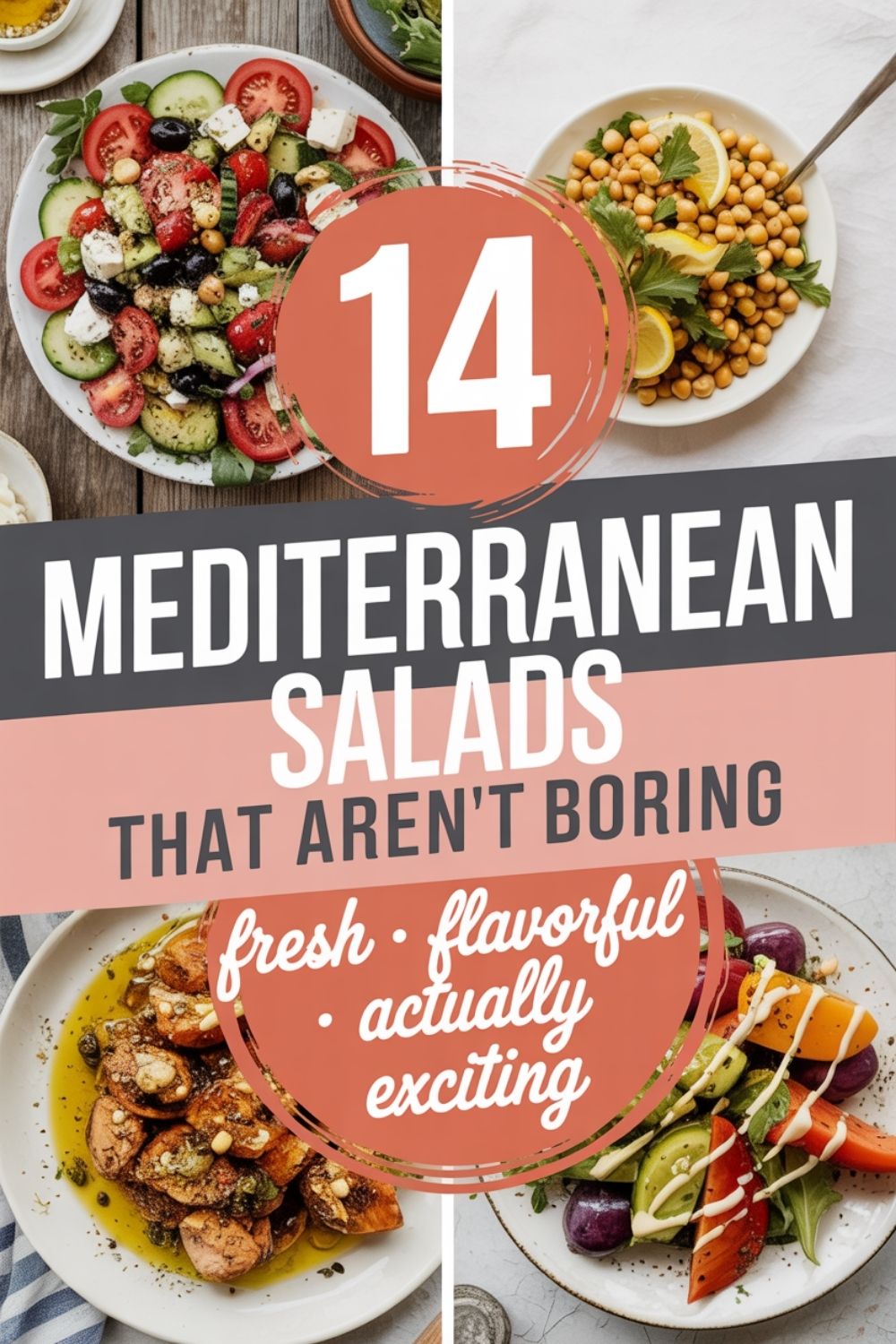
What Makes Mediterranean Salads Different
Mediterranean salads aren’t just about throwing vegetables in a bowl and hoping for the best. There’s actually some method to the madness that makes them infinitely more satisfying than your average salad bar disaster.
First off, the olive oil game is strong. We’re not talking about a sad drizzle—extra virgin olive oil contains powerful polyphenols that provide anti-inflammatory benefits. But beyond the science, it’s what makes these salads taste like an actual meal instead of rabbit food.
The texture contrast is where things get interesting. You’ve got creamy feta or tangy yogurt, crunchy vegetables, soft grains, and briny olives all hanging out together. It’s like a party in your mouth where everyone actually gets along.
And let’s talk about herbs for a second. Fresh herbs aren’t a garnish here—they’re main characters. Parsley, mint, dill, oregano. They’re doing the heavy lifting flavor-wise.
1. Classic Greek Salad (Horiatiki)
This is the OG, the one that started it all. No lettuce, which feels rebellious and right. Just chunky tomatoes, cucumbers, red onion, Kalamata olives, and thick slabs of feta cheese.
The secret? Don’t overthink the dressing. Good olive oil, a squeeze of lemon, dried oregano, salt, and pepper. That’s it. Let the vegetables do their thing.
I always cut my vegetables bigger than you’d think. We’re talking hefty chunks, not sad little dice. It makes the whole thing feel more substantial, less like a side dish that forgot its purpose. Get Full Recipe
And please, for the love of everything delicious, use ripe tomatoes. Those sad pink orbs at the grocery store aren’t going to cut it. Wait for summer or grab some vine-ripened ones. Your salad will thank you.
2. Fattoush with Sumac and Crispy Pita
Fattoush is what happens when leftover pita bread has a glow-up. You tear up some pita, toast it until it’s gloriously crispy, then toss it with basically whatever vegetables you have lying around.
The sumac is non-negotiable though. It’s this tangy, lemony spice that tastes like sunshine decided to become a powder. If you don’t have it yet, grab some ground sumac from this seller—it’ll transform more than just this salad.
What I love about fattoush is that it absorbs the dressing without getting soggy immediately. The pita pieces are like little flavor sponges, but they maintain enough crunch to keep things interesting texturally.
Purslane is traditional here, but good luck finding that at most grocery stores. Romaine works fine, or mix a bunch of greens together. Don’t stress about authenticity when accessibility is the real issue.
3. Tabbouleh (The Real Deal)
Most tabbouleh you’ve had is probably bulgur wheat with some sad parsley sprinkled on top. Real tabbouleh flips that ratio completely. We’re talking mostly parsley, with bulgur as the supporting actor.
You need a massive amount of fresh parsley. Like, an amount that seems unreasonable. Then you chop it really finely—and I mean actually finely, not that chunky situation you were about to do.
Fresh mint goes in there too, along with tomatoes, loads of lemon juice, and olive oil. The bulgur should be just enough to give it body without turning it into a grain salad pretending to be something else.
This is one of those salads that tastes better after sitting for a bit. The flavors meld together, the bulgur soaks up all that lemony goodness. Make it ahead if you’re meal prepping.
Speaking of prep-friendly options, if you’re looking for structured meal planning, check out this 7-day Mediterranean high-fiber meal prep plan that includes tabbouleh and other make-ahead favorites.
4. Israeli Salad (Salat Katzutz)
The name literally means “chopped salad,” and that’s exactly what it is. But here’s where people mess up—the pieces need to be uniformly tiny. We’re talking small dice, like confetti-sized.
Cucumbers and tomatoes are the base. Some people add bell peppers, some don’t. I’m in the “yes peppers” camp, but I won’t judge your choices too harshly.
The dressing is stupid simple: lemon juice, olive oil, salt. Maybe some fresh herbs if you’re feeling fancy. The small dice means every bite gets perfect seasoning distribution.
I use one of those chopper gadgets like this because hand-dicing everything that small gets old fast. Life’s too short for that level of knife work on a Tuesday night.
Professional Vegetable Chopper & Dicer
Stop crying over your cutting board. This multi-blade chopper makes uniform vegetable dice in seconds—perfect for Israeli salad, tabbouleh, and any recipe requiring precision cuts. Dishwasher safe with interchangeable blades for different sizes.
✓ Non-slip base & safety guard
✓ BPA-free materials
✓ Saves 15+ minutes per meal prep
5. Shepherd’s Salad (Çoban Salatası)
This Turkish number is like Israeli salad’s slightly more relaxed cousin. The vegetables are chopped, but not quite as obsessively small. It’s more of a rustic chop situation.
Tomatoes, cucumbers, peppers, onions, parsley. Sometimes people add white cheese or olives. The dressing is typically just lemon juice and olive oil with a heavy hand on the sumac.
The key difference here is the addition of pomegranate molasses, which is this thick, tangy syrup that adds a sweet-tart complexity. You can skip it if you don’t have it, but honestly? Grab a bottle here because you’ll start putting it on everything.
This salad is stupid refreshing. Like, aggressively refreshing. It’s what you want on a hot day when regular food feels like too much effort.
6. Panzanella with Mediterranean Twist
Panzanella is technically Italian, but it fits perfectly into the Mediterranean salad canon. Stale bread, ripe tomatoes, and whatever vegetables you’re vibing with that day.
The bread situation is crucial. You want day-old crusty bread, torn into chunks. Too fresh and it gets mushy. Too stale and it’s like eating rocks. There’s a sweet spot, and you’ll know it when you find it.
I tear my bread, don’t cut it. Rough edges = more surface area = better dressing absorption. This is basic salad physics, people.
Toss in halved cherry tomatoes, cucumbers, red onion, fresh basil, and capers. The capers are doing serious work here—they bring that briny, salty punch that makes everything taste more alive.
Let it sit for 20 minutes before serving. The bread needs time to soak up the tomato juices and dressing without completely falling apart. It’s a delicate balance, like most good things in life. Get Full Recipe
If you’re into Italian-Mediterranean fusion dishes, you’ll probably love these family-friendly Mediterranean meals that blend flavors from across the region.
7. Lentil Salad with Herbs and Feta
Finally, a salad that won’t leave you raiding the pantry an hour later. Lentils bring actual staying power to the table.
French green lentils are the move here. They hold their shape after cooking instead of turning into mush. Red lentils are great for soup, terrible for salad. Know the difference, save yourself the disappointment.
Cook them until just tender, then cool them down. Mix with cherry tomatoes, cucumber, red onion, loads of fresh parsley and mint, crumbled feta, and a lemon-olive oil dressing.
The trick is seasoning the lentils while they’re still warm. They’re like sponges when they’re hot, soaking up flavor like it’s their job. Wait until they’re cold and the window of opportunity closes.
This is excellent meal prep territory. It keeps well for days and actually tastes better the next day once everything has mingled. For a complete high-protein approach, pair this with options from this 14-day high-protein Mediterranean plan.
8. Roasted Vegetable Salad with Za’atar
Roasting vegetables is basically cheating at cooking. Everything tastes better slightly charred and caramelized. It’s science.
Grab whatever vegetables you have—eggplant, zucchini, bell peppers, red onion, cherry tomatoes. Chop them up, toss with olive oil and za’atar, then roast until they’re golden and slightly crispy at the edges.
Za’atar is this Middle Eastern spice blend that’s earthy, tangy, and slightly nutty all at once. If you don’t have it, order some from here—it’s one of those spices that makes you wonder how you cooked without it.
Once the vegetables are roasted and cooled slightly, toss them with arugula or spinach (the heat will wilt them just enough), chickpeas for protein, and a lemony tahini dressing.
I use rimmed baking sheets like these for roasting. The raised edges keep everything contained, and they distribute heat evenly. Game changer for getting that perfect caramelization.
9. Watermelon and Feta Salad
This sounds weird until you try it, and then suddenly it’s the only thing you want to eat all summer. The sweet-salty combo hits different.
Cube some watermelon (seedless, unless you enjoy spitting seeds like you’re six years old), crumble feta on top, add fresh mint, and drizzle with good balsamic vinegar. The cheap stuff won’t cut it here.
Some people add cucumber to this. I’m neutral on the topic. It doesn’t hurt, but it doesn’t really add much either. The watermelon and feta are already doing all the heavy lifting.
Make this right before serving. Watermelon releases liquid as it sits, turning your beautiful salad into a watery mess. Timing matters here.
10. Chickpea Salad with Preserved Lemon
Chickpeas are the unsung heroes of Mediterranean cuisine. They’re filling, cheap, and absorb flavor like nobody’s business.
Canned chickpeas work perfectly fine here. Drain them, rinse them, maybe dry them a bit if you’re feeling ambitious. Toss with diced cucumber, tomatoes, red onion, parsley, and the star of the show—chopped preserved lemon.
Preserved lemons are intense. A little goes a long way. They’re salty, tangy, and completely transform whatever they touch. You can make them yourself, but that requires planning ahead, which let’s be honest, isn’t happening. Buy a jar here and thank me later.
The dressing is simple olive oil and lemon juice. The preserved lemon is already doing so much that you don’t need complicated flavors competing for attention.
This keeps incredibly well, making it perfect for taking to work or eating throughout the week. Pair it with other anti-inflammatory meals from this 30-day anti-inflammation challenge for maximum health benefits. Get Full Recipe
11. Beet and Orange Salad
Beets get a bad rap, mostly because people overcook them into sad, mushy oblivion. When done right, they’re sweet, earthy, and actually crave-worthy.
Roast your beets. Wrap them in foil, stick them in the oven until they’re tender. The skins slip right off once they’re cooked. Or buy pre-cooked ones if you’re pressed for time. No judgment.
Slice the beets and oranges, arrange them on a plate, crumble some goat cheese or feta on top, add walnuts, and drizzle with a honey-citrus vinaigrette. The combination is somehow both fancy and rustic at the same time.
Pro move: Add arugula or watercress. The peppery greens cut through the sweetness and make this feel like a complete meal instead of just a vegetable showcase.
For the walnuts, toast them first. I use a small countertop toaster oven like this instead of firing up the big oven. Less energy waste, more immediate gratification.
Premium Extra Virgin Olive Oil Gift Set
Your salads deserve better than grocery store olive oil. This curated set includes three EVOO varieties (robust, medium, delicate) from award-winning Mediterranean producers. Perfect for discovering which flavor profile works best with different salads.
✓ High polyphenol content (health benefits)
✓ Dark glass bottles preserve freshness
✓ Includes tasting notes & pairing guide
12. White Bean Salad with Sun-Dried Tomatoes
White beans are criminally underused in salads. They’re creamy, mild, and pair well with basically everything.
Cannellini or great northern beans work here. Drain and rinse them, then mix with chopped sun-dried tomatoes (the oil-packed kind, not the leathery dry ones), sliced red onion, fresh basil, and a red wine vinegar dressing.
The sun-dried tomatoes bring this concentrated, almost sweet tomato flavor that regular tomatoes can’t match. They’re one of those pantry staples that make weeknight cooking feel less like a chore.
Add some baby spinach or arugula if you want more green stuff. Sometimes I throw in Kalamata olives too because why not? More salty, briny flavor never hurt anyone.
This is another excellent make-ahead situation. The flavors develop as it sits, so making it the night before is actually ideal. If you’re into bean-based meals, this gut-healing Mediterranean menu has more fiber-rich options to explore.
13. Quinoa Tabbouleh
Okay, quinoa isn’t traditionally Mediterranean, but it fits the vibe and makes tabbouleh more accessible for people who can’t find bulgur wheat or prefer gluten-free options.
Cook your quinoa, let it cool completely. Mix with loads of fresh parsley and mint—we’re still keeping that herb-heavy ratio that makes tabbouleh special.
Add diced cucumber, tomatoes, green onions, lemon juice, and olive oil. The quinoa gives it a slightly different texture than traditional tabbouleh, but it’s still fresh, bright, and herb-forward.
One thing about quinoa—rinse it before cooking. There’s this natural coating that tastes bitter if you don’t wash it off. Two minutes of rinsing saves you from a salad that tastes vaguely soapy.
14. Grilled Halloumi Salad
Halloumi is the cheese that changed the game. It grills without melting, getting these beautiful golden-brown edges while staying soft inside. It’s basically grilled cheese in salad form.
Slice your halloumi about a half-inch thick. Heat up a grill pan or regular pan until it’s properly hot, then cook the cheese slices until they’re golden on both sides. Two to three minutes per side usually does it.
Build your salad with mixed greens, cherry tomatoes, cucumber, red onion, and olives. Top with the warm grilled halloumi and dress with lemon-olive oil dressing.
The contrast between the warm, salty cheese and the cool, crisp vegetables is what makes this work. Don’t let the halloumi cool down completely before serving.
I use a cast-iron grill pan like this one for halloumi. The ridges give you those gorgeous grill marks, and cast iron holds heat incredibly well. Plus, it makes you feel like a proper chef even if you’re just grilling cheese. Get Full Recipe
For more protein-rich salads and meals, especially if you’re watching your weight, this 14-day Mediterranean weight loss plan offers balanced options that keep you satisfied.
The Salad Dressing Situation
Most Mediterranean salads use some variation of the same basic dressing formula. This is good news because it means you don’t need seventeen different bottles cluttering your fridge.
The classic ratio is three parts olive oil to one part acid (lemon juice, red wine vinegar, or white wine vinegar). Add salt, pepper, maybe some dried oregano or fresh herbs. Shake it up in a jar or whisk it together in a bowl.
Sometimes you’ll see tahini-based dressings, which are just tahini thinned with lemon juice and water until it reaches your desired consistency. Season with garlic, salt, and cumin.
Yogurt dressings are popular too. Mix Greek yogurt with lemon juice, minced garlic, dill or mint, salt, and pepper. Thin with water if it’s too thick. Done.
The beauty of these dressings is that you probably have most of the ingredients already. You’re not hunting down weird specialty items that you’ll use once and then abandon in the back of your pantry.
For the best results, use quality olive oil. I keep a bottle of extra virgin olive oil like this specifically for dressings and drizzling. The flavor difference between this and cooking-grade olive oil is significant.
Ingredients That Show Up Repeatedly
If you stock your kitchen with a few Mediterranean staples, these salads become incredibly easy to throw together on the fly.
Extra virgin olive oil is non-negotiable. This is your base for almost everything. Research shows that olive oil’s monounsaturated fats and antioxidants support heart health and reduce inflammation. Skip the cheap stuff for salads and splurge a bit.
Lemons appear in basically every dressing. Buy them by the bag. Fresh lemon juice is infinitely better than bottled, and it takes thirty seconds to squeeze one.
Fresh herbs—parsley, mint, dill, and oregano—are game changers. They’re not optional garnishes; they’re main ingredients. Grow them on your windowsill if you can. Fresh herbs from the store die within days, but a potted plant keeps producing.
Feta cheese adds that salty, tangy creaminess that balances out the vegetables. The block stuff you crumble yourself is better than pre-crumbled, which tends to be dry and sad.
Olives bring briny intensity. Kalamata are classic, but experiment with different varieties. There’s a whole world of olives out there beyond what’s on your pizza.
Canned beans and lentils make salads more substantial. Chickpeas, white beans, and lentils all work beautifully and keep for ages in the pantry.
Having these basics on hand means you’re always one chopping session away from a satisfying meal. No special grocery run required. For a comprehensive approach to Mediterranean staples, check out this 7-day Mediterranean anti-inflammation meal plan that breaks down exactly what you need.
Making Salads Actually Filling
The biggest complaint about salads is that they don’t keep you full. You eat a huge bowl, feel virtuous for forty-five minutes, then find yourself face-deep in a bag of chips wondering what went wrong.
The fix is simple: add protein and healthy fats. Mediterranean salads do this naturally with cheese, nuts, beans, and olive oil. You’re getting a balance of nutrients that keeps your blood sugar stable instead of crashing an hour later.
Lentils and chickpeas are protein powerhouses. A cup of cooked chickpeas has about 15 grams of protein. That’s not nothing. Combined with the fiber, you’re looking at serious staying power.
Cheese adds protein too, plus fat for satiety. Feta and halloumi are classics, but don’t sleep on fresh mozzarella or ricotta salata.
Nuts and seeds provide both protein and healthy fats. Pine nuts, walnuts, almonds, sunflower seeds, pumpkin seeds—throw them in. Toast them first for better flavor.
If you’re plant-based, these salads are already perfectly suited to your needs. Just skip the cheese or use vegan alternatives. This 7-day Mediterranean vegan plan has more ideas for plant-based Mediterranean eating.
The olive oil provides monounsaturated fats that not only help with nutrient absorption but also signal fullness to your brain. This is why Mediterranean salads feel satisfying in a way that fat-free dressings never will.
Glass Meal Prep Containers with Locking Lids (10-Pack)
Plastic containers absorb smells, stain easily, and make your carefully crafted salads taste like last week’s curry. These borosilicate glass containers keep flavors fresh, go from fridge to microwave, and actually look decent on your desk.
✓ Oven, microwave & dishwasher safe
✓ Stackable design saves fridge space
✓ BPA-free, stain & odor resistant
Meal Prep and Storage Tips
Most Mediterranean salads are meal prep champions, but you need to know a few tricks to keep them from turning into soggy disappointments by Wednesday.
Store components separately when possible. Keep dressing in a small container, add it right before eating. Keep crispy elements like nuts or pita chips separate too. They’ll stay crunchy instead of turning into sad, soggy bits.
Grain-based and bean-based salads (lentil, chickpea, quinoa tabbouleh) actually improve with time. The flavors meld overnight. Make them Sunday, eat them all week. Easy.
Vegetable-heavy salads need more careful handling. Tomatoes and cucumbers release water as they sit. If you’re prepping ahead, dice your vegetables but don’t mix them until you’re ready to eat. Or embrace the juice—just know your salad will be more of a wet situation by day three.
I use a set of glass meal prep containers like these because they don’t absorb odors or stains like plastic does. Plus, you can see what’s inside without opening every single one.
For maximum freshness with leafy salads, store greens separately from everything else. Add them right before eating so they stay crisp. Nobody wants wilted, slimy greens.
🌿 Mediterranean Meal Prep Planner & Recipe Bundle
Stop winging your Mediterranean meals and wondering what to prep. This digital planner includes 100+ authentic Mediterranean recipes, weekly meal planning templates, and grocery lists organized by category. Perfect for anyone making these salads a regular habit.
- 100+ Mediterranean salad & meal recipes with photos
- Pre-filled weekly meal plans (plus blank templates)
- Printable grocery lists organized by store section
- Ingredient substitution guide for dietary restrictions
- Prep-ahead checklists to save time during the week
Instant digital download. Works on any device or print at home.
Common Mistakes People Make
I’ve watched people massacre perfectly good Mediterranean salads with these completely preventable errors. Learn from their mistakes.
Cutting vegetables too small or too big. Size matters. Pieces should be fork-friendly and uniform. Too small and everything turns to mush. Too big and you’re wrestling with your fork trying to get a balanced bite.
Using iceberg lettuce. Just don’t. It’s 95% water and tastes like crunchy nothing. If you need greens, use romaine, arugula, spinach, or butter lettuce. Anything with actual flavor.
Overdressing is epidemic. You can always add more dressing, but you can’t take it away. Start with less than you think you need, toss, taste, adjust. A salad swimming in dressing isn’t sophisticated—it’s just wet.
Forgetting to season is rookie territory. Salt brings out flavors in vegetables. Under-salted vegetables taste flat and boring. Don’t be shy with the salt shaker.
Using old, sad herbs defeats the entire purpose. If your parsley looks like it’s seen better days, skip it. Wilted, yellowing herbs add nothing but visual disappointment.
Not letting grain or bean salads come to room temperature before serving. Cold mutes flavors. Take your lentil salad out of the fridge 20 minutes before eating. The difference is noticeable.
Seasonal Variations
Mediterranean salads adapt beautifully to whatever’s in season, which is convenient because eating seasonally usually means better flavor and lower prices.
Summer is peak tomato season, so go heavy on tomato-based salads. Greek salad, panzanella, Israeli salad—these all shine when tomatoes actually taste like tomatoes. Add fresh peppers, zucchini, and eggplant while they’re abundant.
Fall and winter call for roasted vegetable salads. Beets, sweet potatoes, butternut squash, brussels sprouts—roast them and add to hearty grain or lentil salads. Pomegranate seeds are in season and add gorgeous color plus tart sweetness.
Spring brings tender greens, asparagus, peas, and fresh herbs. Lighter salads work well here. Think herb-heavy tabbouleh, salads with fresh fava beans, or anything featuring spring onions.
Year-round staples like chickpeas, lentils, olives, and feta keep you covered regardless of season. Stock your pantry with these and you’re always ready to build something delicious.
📊 Mediterranean Food & Wellness Tracker
Curious if Mediterranean eating is actually making a difference? This digital tracker helps you monitor meals, energy levels, inflammation symptoms, and progress photos—all in one place. No more scattered notes or forgotten data.
- Daily meal logs with Mediterranean diet scoring system
- Energy & mood tracking to spot patterns
- Inflammation symptom monitor (joint pain, bloating, skin issues)
- Weekly measurements & progress photo pages
- Favorite recipe vault to remember what works
Fillable PDF or printable. 90 days of tracking pages included.
Why These Salads Work
At their core, Mediterranean salads work because they follow some basic flavor science principles, even if nobody’s explicitly thinking about it.
You’ve got fat, acid, salt, and texture all playing nicely together. The olive oil carries flavor and provides richness. Lemon juice or vinegar brightens everything up. Salt enhances natural flavors. Different textures keep your mouth interested.
There’s also something to be said for simplicity. These aren’t complicated recipes requiring specialty equipment or advanced techniques. You chop stuff, mix stuff, eat stuff. The barrier to entry is low, which means you’ll actually make them instead of bookmarking and forgetting.
The ingredients are largely interchangeable too. Don’t have red onion? Use green onion. No parsley? Try cilantro. Can’t find feta? Use goat cheese. The recipes are forgiving frameworks rather than rigid rules.
FYI, this flexibility is what makes Mediterranean eating sustainable long-term. You’re not locked into buying seventeen specific ingredients every week. You work with what’s available, what’s in season, what’s on sale. For more flexible meal approaches, explore this 14-day high-fiber Mediterranean plan for beginners.
The Community Weighs In
I’ve talked to dozens of people who’ve made these salads part of their regular rotation, and the feedback is pretty consistent.
Sarah from our community tried incorporating Mediterranean salads into her weekday lunches for three months. She reported losing 15 pounds without feeling deprived or hungry, which tracks with the high-fiber, high-protein approach these salads naturally provide.
Multiple readers have mentioned that the lentil and chickpea salads became their go-to meal prep options. They’re filling, they keep well, and they’re easy to customize based on what’s in the fridge.
The fattoush and panzanella recipes converted several bread-salad skeptics. Turns out crispy bread in salad form is actually a revelation when done properly.
IMO, the grilled halloumi salad is the most polarizing. People either become obsessed with it or don’t understand the appeal. There’s no middle ground with halloumi.
Frequently Asked Questions
Can I make these salads ahead of time?
Most Mediterranean salads are excellent make-ahead options, but storage matters. Grain and bean salads (lentil, chickpea, quinoa tabbouleh) actually taste better the next day as flavors develop. Store them fully dressed in airtight containers for up to four days. For vegetable-heavy salads, keep dressing separate and add right before eating. Crispy elements like pita chips or toasted nuts should always be stored separately and added at serving time to maintain their crunch.
What’s the best way to store fresh herbs?
Treat fresh herbs like flowers. Trim the stems and place them in a glass of water, covering loosely with a plastic bag, then refrigerate. Parsley and cilantro stored this way last up to two weeks. Alternatively, wrap unwashed herbs in slightly damp paper towels and store in a sealed bag—this works especially well for mint and dill. For long-term storage, chop herbs and freeze them in olive oil using ice cube trays.
Are Mediterranean salads actually filling enough for a meal?
Absolutely, when you include protein and healthy fats. The key is choosing salads with legumes (chickpeas, lentils, white beans), cheese (feta, halloumi), nuts, or grains (bulgur, quinoa). These components provide protein, fiber, and healthy fats that keep you satisfied for hours. A properly composed Mediterranean salad with these elements provides more lasting energy than many traditional “main courses” that rely heavily on refined carbs.
Can I substitute ingredients if I can’t find something specific?
Mediterranean cooking is inherently flexible. Can’t find Kalamata olives? Use whatever olives you can find. No feta? Try goat cheese or ricotta salata. Missing sumac? Extra lemon juice works in a pinch. The recipes are frameworks rather than strict formulas. Focus on the balance of flavors—salty, tangy, fresh, and rich—rather than exact ingredient matches.
What’s the difference between bulgur wheat and quinoa in tabbouleh?
Traditional tabbouleh uses bulgur wheat, which has a slightly nutty flavor and chewy texture. Quinoa is a gluten-free alternative that works well but has a lighter, fluffier texture and milder taste. Bulgur absorbs dressing more readily while quinoa maintains more distinct grains. Both work beautifully—choose based on dietary needs and personal preference. The real star of tabbouleh is the fresh herbs regardless of which grain you use.
Final Thoughts
Mediterranean salads aren’t revolutionary. They’re just vegetables, grains, beans, and cheese prepared in ways that actually taste good. No weird superfoods, no expensive specialty items, no complicated techniques.
What makes them special is the balance of flavors and textures that keeps you coming back. They prove that healthy eating doesn’t require suffering through meals you hate. You can enjoy what you’re eating and still feel good about your choices.
Start with one or two recipes that sound appealing. Don’t try to overhaul your entire diet overnight. Make a Greek salad this week. Try fattoush next week. Build from there.
The beauty of this approach is its simplicity and flexibility. You’re not locked into rigid meal plans or specific ingredients. You’re learning principles that adapt to your life, your budget, and your taste preferences.
Keep quality olive oil, lemons, and fresh herbs on hand. Stock your pantry with canned beans and lentils. Buy good feta and olives. With these basics, you’re always close to a satisfying meal that doesn’t feel like punishment.
These fourteen salads are just the beginning. Once you understand the framework—fresh vegetables, protein, healthy fats, bright acidity, bold flavors—you can create endless variations. The Mediterranean approach is less about following recipes exactly and more about understanding how flavors work together.
So yeah, Mediterranean salads that aren’t boring? Turns out they’re not even that hard to pull off. You just need to ditch the iceberg lettuce and sad ranch dressing mentality. Embrace bold flavors, good ingredients, and the idea that vegetables can actually be the best part of your meal.
Now go make yourself something delicious. Your taste buds deserve better than whatever sad desk lunch situation you’ve been dealing with.


