7-Day Mediterranean High-Fiber Breakfast Plan
You know that sluggish feeling you get mid-morning when your breakfast has already abandoned you? That 10 AM energy crash that has you reaching for a third coffee or raiding the vending machine? Yeah, that’s your fiber-deprived breakfast’s fault.
Most breakfast foods Americans eat are fiber wastelands. Bagels, sugary cereals, pastries—they’re all about quick carbs and zero staying power. Meanwhile, the Mediterranean approach loads your morning plate with fiber-rich foods that actually keep you satisfied until lunch. And I’m not talking about choking down cardboard-textured bran cereal like some kind of dietary punishment.
This 7-day plan combines the best parts of Mediterranean eating—olive oil, whole grains, nuts, fruits, vegetables—with a serious fiber boost that supports digestion, stabilizes blood sugar, and keeps you full for hours. These breakfasts taste good, take minimal time to prep, and won’t leave you fantasizing about donuts by 11 AM.
Let’s fix your mornings with food that actually works.

Why Fiber at Breakfast Changes Everything
Here’s what actually happens when you start your day with fiber: your digestion slows down in a good way. Instead of your blood sugar spiking and crashing like it’s on a roller coaster, fiber helps regulate blood sugar throughout the day by trickling glucose into your system gradually. No highs, no lows, just steady energy that lasts.
The digestive benefits of high-fiber breakfasts extend way beyond just staying regular—though that’s certainly a perk. Fiber feeds your good gut bacteria, reduces inflammation, helps lower cholesterol, and keeps you satisfied longer than any protein shake ever could.
Most people need 25-38 grams of fiber daily, but the average American barely gets 15 grams. Starting your morning with 8-12 grams of fiber sets you up to actually hit that target instead of falling tragically short. Plus, when you pair fiber with healthy Mediterranean fats like olive oil and nuts, you absorb fat-soluble vitamins better and feel even more satisfied.
The Mediterranean diet naturally provides way more fiber than typical Western eating patterns because it’s built on whole grains, legumes, fruits, vegetables, nuts, and seeds. Research on Mediterranean dietary patterns shows they deliver at least 14 grams of fiber per 1,000 calories—more than double what most industrialized countries consume daily.
The 7-Day Breakfast Breakdown
Day 1: Greek Yogurt Power Bowl
The Build: Full-fat Greek yogurt (the good stuff, not the fat-free impostor), topped with fresh berries, chopped walnuts, ground flaxseed, and a drizzle of honey. Side of whole grain toast with almond butter.
Fiber Count: Approximately 11 grams
Greek yogurt gives you protein and probiotics, while the berries and flaxseed deliver soluble fiber that helps lower cholesterol. Walnuts add omega-3s and more fiber, plus they’re crunchy and delicious. The whole grain toast with almond butter adds staying power without making you feel heavy.
I prep the flaxseed in a coffee grinder because whole flaxseeds just pass through your system undigested. Ground flaxseed also goes rancid quickly, so I grind small batches and store them in the fridge in an airtight container.
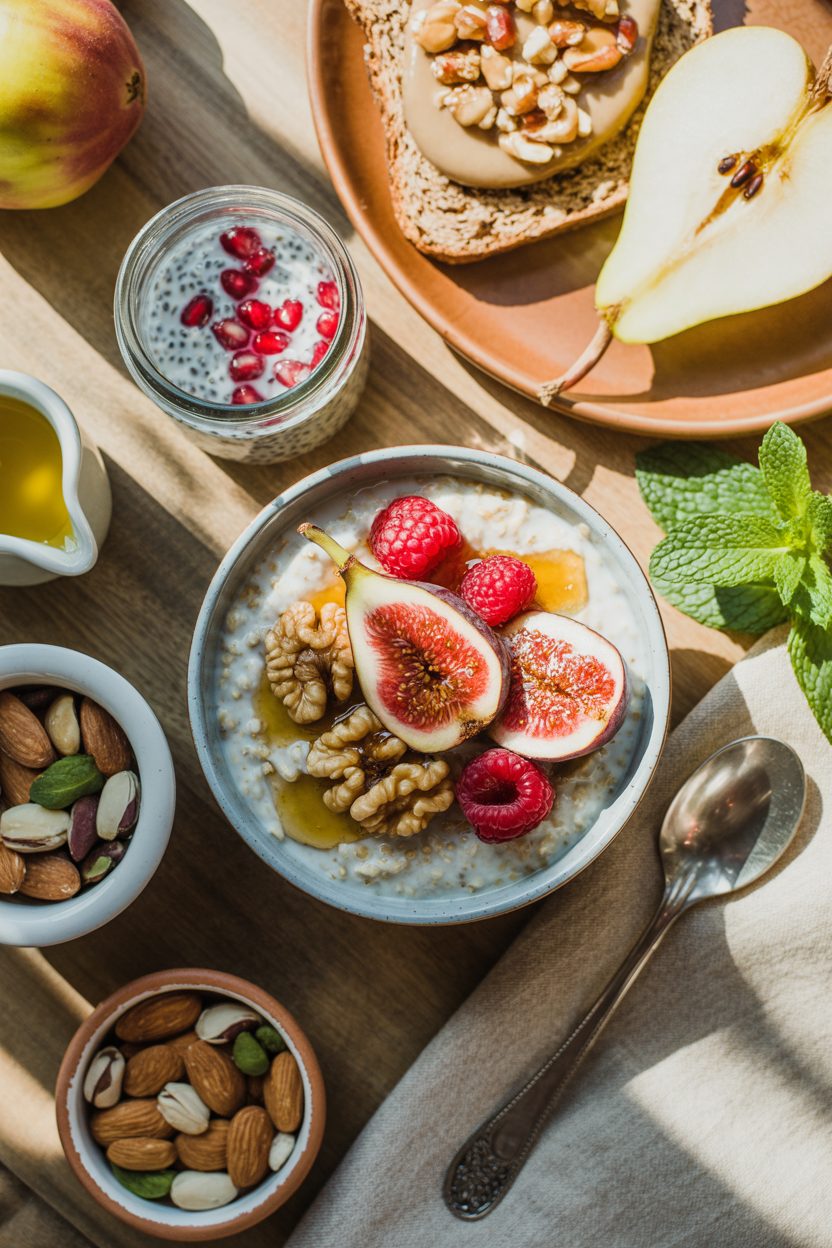
Day 2: Overnight Oats with Figs and Pistachios
The Build: Rolled oats soaked overnight in almond milk with chia seeds, topped with fresh or dried figs, chopped pistachios, and a touch of cinnamon.
Fiber Count: Approximately 13 grams
Overnight oats are the ultimate lazy breakfast—you make them the night before, and morning-you just grabs the jar from the fridge. The oats and chia seeds create this thick, pudding-like texture that’s weirdly satisfying. Figs are fiber bombs (one medium fig has about 2 grams), and pistachios add healthy fats plus that signature green color that makes everything look fancy.
I make these in mason jars with lids because they’re portable and I can prep five at once for the work week. No measuring in the morning, no thinking required.
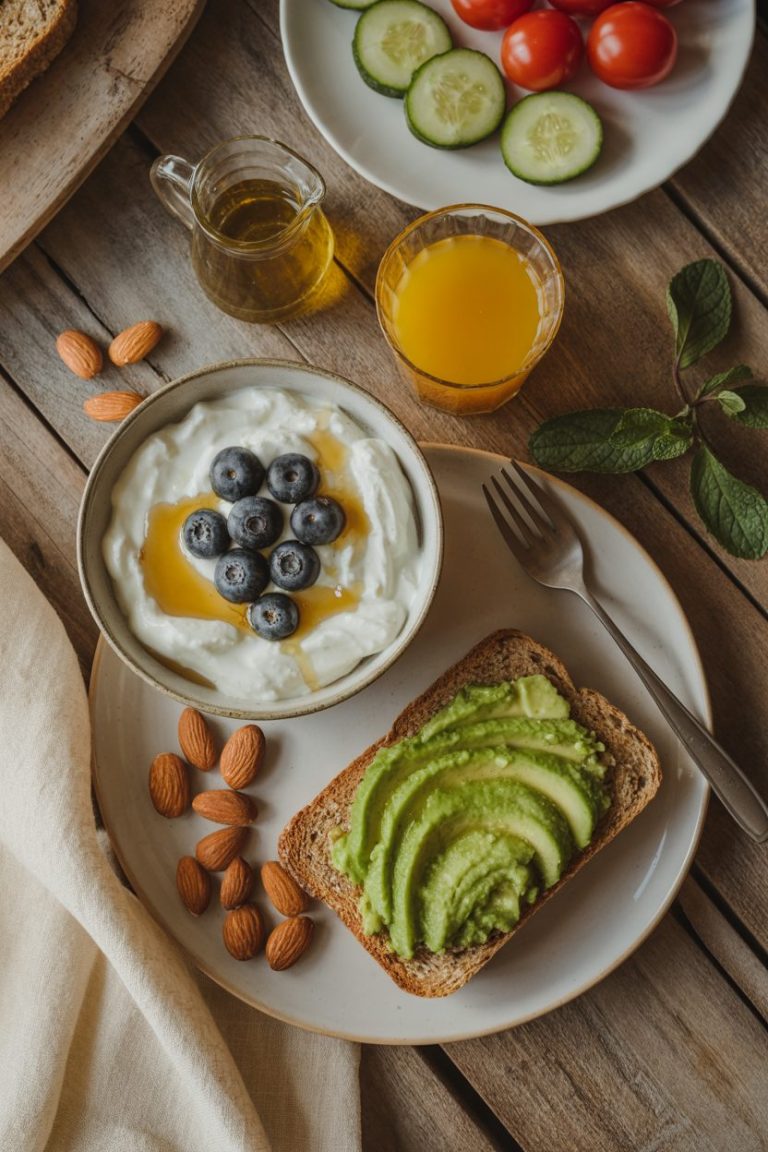
Day 3: Avocado Toast Mediterranean Style
The Build: Sprouted grain bread toasted and topped with mashed avocado, cherry tomatoes, cucumber slices, hemp seeds, a drizzle of olive oil, and za’atar seasoning.
Fiber Count: Approximately 12 grams
Avocado toast gets a bad rap for being Instagram bait, but it’s actually nutritionally solid when you do it right. Sprouted grain bread has more fiber and nutrients than regular whole wheat because the sprouting process breaks down anti-nutrients. The avocado provides healthy fats and fiber, while the vegetables add volume and micronutrients without many calories.
Hemp seeds are underrated—they’re complete proteins, loaded with omega-3s, and add a subtle nutty flavor. Za’atar is a Middle Eastern spice blend that makes everything taste more interesting without any effort.
For more ways to start your day with Mediterranean flavors, this 7-day Mediterranean meal prep plan includes breakfast strategies that work for busy mornings.
Day 4: Shakshuka with Whole Wheat Pita
The Build: Eggs poached in spiced tomato sauce with bell peppers, onions, and spinach. Served with whole wheat pita for dipping.
Fiber Count: Approximately 9 grams
Shakshuka sounds fancy but takes about 20 minutes to make. You basically simmer vegetables in tomato sauce with spices (cumin, paprika, maybe some harissa if you like heat), crack eggs directly into the sauce, and cook until the whites set but yolks stay runny.
The vegetables provide fiber and antioxidants, the eggs give you protein, and the whole wheat pita adds whole grain fiber for scooping. I make this in a cast iron skillet because it goes from stovetop to table and looks impressive even though it’s stupid easy.
Day 5: Chia Pudding with Pomegranate and Almonds
The Build: Chia seeds soaked overnight in coconut milk, topped with pomegranate seeds, sliced almonds, and a sprinkle of cinnamon.
Fiber Count: Approximately 14 grams
Chia pudding is one of those weird foods that looks questionable but tastes great. The chia seeds absorb liquid and swell up into this tapioca-like consistency. Each tablespoon of chia seeds packs about 3 grams of fiber, so two tablespoons gets you to 6 grams before you even add toppings.
Pomegranate seeds add a tart burst of flavor and antioxidants. They’re also ridiculously pretty, which matters when you’re trying to eat healthy food that doesn’t look sad. I use a pomegranate deseeder tool because picking out seeds by hand is tedious and stains everything red.
Day 6: Whole Grain Toast with White Bean Spread
The Build: Whole grain toast topped with white bean spread (mashed white beans, garlic, lemon, olive oil), arugula, roasted red peppers, and a sprinkle of feta cheese.
Fiber Count: Approximately 11 grams
White bean spread is basically hummus’s less famous cousin, but it’s just as good and higher in fiber. Half a cup of white beans has about 6 grams of fiber, plus protein that keeps you full. Mash them with garlic, lemon juice, and olive oil, and you’ve got a creamy spread that tastes way better than it sounds.
The arugula adds a peppery bite, and roasted red peppers contribute sweetness and antioxidants. I buy jarred roasted red peppers because roasting them yourself is a pain, and the jarred ones taste fine.
Speaking of bean-based breakfasts and anti-inflammatory benefits, this 7-day Mediterranean anti-inflammation meal plan expands on these concepts with full-day meal ideas.
Day 7: Savory Oatmeal with Vegetables and Egg
The Build: Steel-cut oats cooked in vegetable broth, topped with sautéed mushrooms, spinach, cherry tomatoes, and a soft-boiled egg. Finish with olive oil and black pepper.
Fiber Count: Approximately 10 grams
Savory oatmeal is a game-changer if you’re tired of sweet breakfast options. Steel-cut oats have more fiber than rolled oats and a chewier texture that works better for savory applications. Cooking them in vegetable broth instead of water adds flavor without any effort.
The vegetables boost fiber and nutrients, and the egg adds protein and richness. This breakfast feels more like a complete meal than a snack masquerading as breakfast. I use a pressure cooker for steel-cut oats because they usually take 30 minutes but cook in 10 in the pressure cooker.
The Fiber Types That Matter
Not all fiber is the same, and your body needs both types to function properly. Soluble fiber dissolves in water and forms a gel that slows digestion. It’s what helps lower cholesterol and stabilize blood sugar. You find it in oats, beans, apples, berries, and flaxseed.
Insoluble fiber doesn’t dissolve—it adds bulk to your stool and helps everything move through your digestive tract efficiently. It prevents constipation and keeps your gut healthy. You get it from whole grains, nuts, vegetables, and wheat bran.
Most high-fiber foods contain both types, so you don’t need to stress about calculating ratios. Just eat a variety of fiber sources—whole grains, fruits, vegetables, legumes, nuts, seeds—and your body gets what it needs. The Mediterranean diet naturally provides this variety because it’s built on diverse plant foods.
Meal Prep Strategy for Busy Mornings
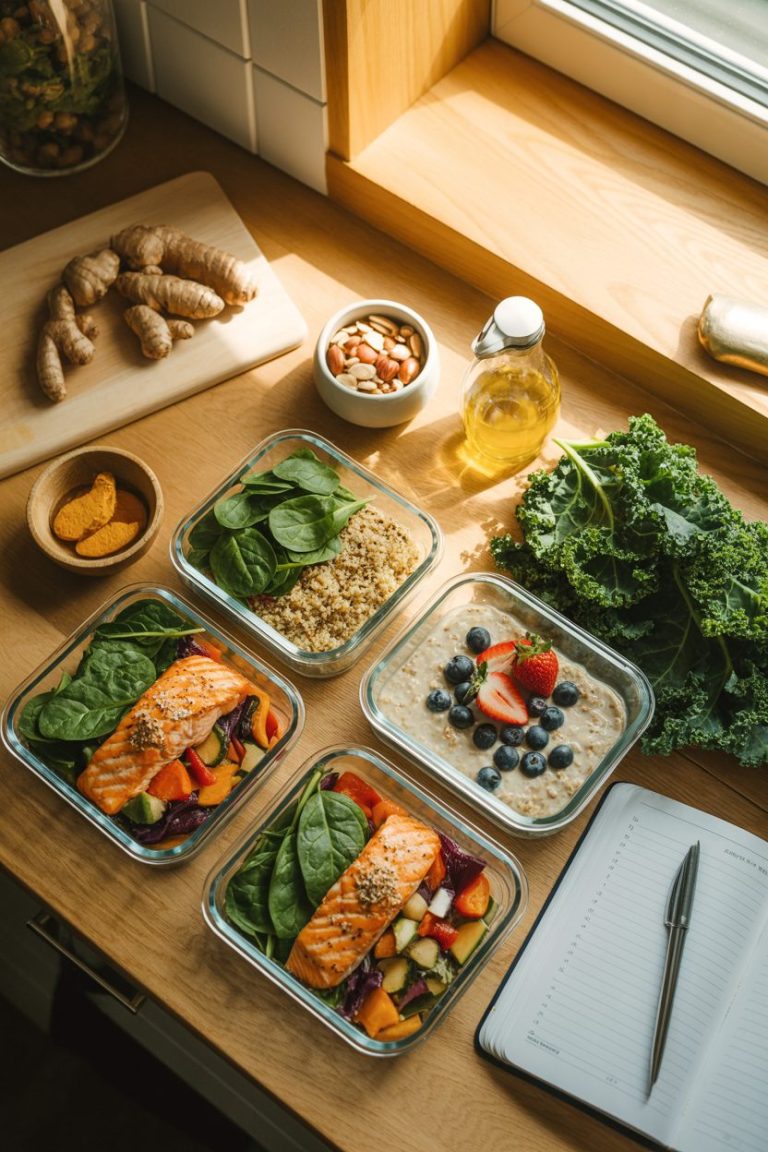
Nobody wants to cook elaborate breakfasts at 6 AM. That’s why meal prep exists. Here’s how to set yourself up for success without spending your entire Sunday in the kitchen:
Prep Once, Eat Multiple Times:
- Make a big batch of overnight oats in individual jars—stores for 5 days
- Prep chia pudding bases and add fresh toppings daily
- Chop vegetables for shakshuka and store in airtight containers
- Make white bean spread and store for the week
- Boil eggs in advance using an egg cooker that does all the work
Keep These Staples Stocked:
- Rolled oats and steel-cut oats
- Chia seeds and ground flaxseed
- Various nuts (walnuts, almonds, pistachios)
- Whole grain bread (freeze half the loaf if it goes stale quickly)
- Canned or dried beans
- Frozen berries (just as nutritious as fresh and way cheaper)
- Greek yogurt
- Eggs
- Extra virgin olive oil
I store my nuts and seeds in glass storage jars in the fridge because they contain oils that go rancid at room temperature. Stale nuts taste terrible and can actually be inflammatory, which defeats the whole purpose.
Why Mediterranean + High Fiber = Magic
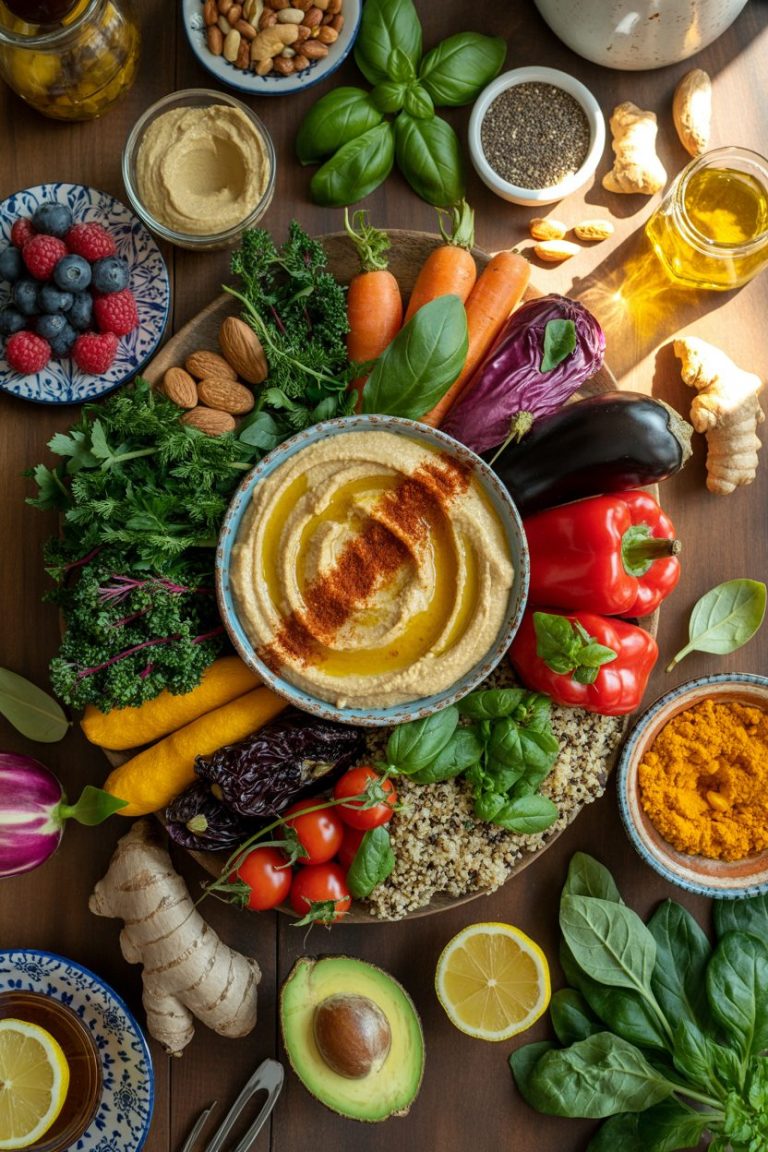
The Mediterranean approach to eating isn’t just about specific foods—it’s about how those foods work together. When you combine fiber-rich whole grains and vegetables with healthy fats from olive oil and nuts, your body absorbs nutrients better and stays satisfied longer.
Fat slows digestion, which is good when you’re also eating fiber. Together, they create this sustained release of energy that keeps blood sugar stable and hunger at bay. This is why a Mediterranean breakfast with healthy fats and fiber keeps you full for hours, while a low-fat, low-fiber breakfast leaves you starving by mid-morning.
The Cleveland Clinic explains how the Mediterranean diet emphasizes this combination of fiber and healthy fats, which supports heart health, brain function, and metabolic wellness.
Plus, the Mediterranean diet includes foods that support your gut microbiome—yogurt, olive oil, whole grains, vegetables. Your gut bacteria love fiber, and they reward you by producing beneficial compounds that reduce inflammation and support immune function. It’s a whole ecosystem of health benefits.
Common Mistakes That Sabotage Your Fiber Goals
Adding more fiber sounds simple, but people mess it up in predictable ways. Here’s what to avoid:
Going Zero to Hero Overnight
If you currently eat 10 grams of fiber daily and suddenly jump to 30 grams, your digestive system will riot. Gas, bloating, constipation, stomach cramps—you’ll feel worse, not better. Add fiber gradually, increasing by 5 grams every few days. Give your gut bacteria time to adjust.
Not Drinking Enough Water
Fiber binds with water in your digestive tract. If you eat lots of fiber but don’t drink enough water, you’ll get constipated instead of regular. Aim for at least 8 glasses daily, more if you’re active or it’s hot. I keep a large water bottle on my desk because I forget to drink water unless it’s staring at me.
Relying on Fiber Supplements Only
Fiber supplements have their place, but they don’t provide the vitamins, minerals, antioxidants, and other beneficial compounds that whole foods deliver. You need actual food fiber, not just powder stirred into water. Supplements can fill gaps, but they shouldn’t be your primary fiber source.
Choosing Processed “Fiber-Added” Foods
Food companies add fiber to everything now—yogurt, ice cream, protein bars. But isolated fiber added to processed foods doesn’t work the same way as fiber naturally present in whole foods. Your body processes it differently, and you miss out on all the other nutrients. Stick with actual high-fiber foods.
Budget-Friendly High-Fiber Breakfast Tips
High-fiber Mediterranean breakfasts don’t have to cost a fortune. Here’s how to keep costs down without sacrificing nutrition:
Buy oats in bulk—they’re one of the cheapest whole grains available. Same with dried beans, lentils, and chia seeds. A pound of chia seeds seems expensive upfront, but it lasts for months because you use tablespoons at a time.
Frozen berries cost way less than fresh and have identical nutrition. They’re frozen at peak ripeness, so sometimes they’re actually better than fresh berries that sat in a truck for a week. I buy big bags and use them in overnight oats, chia pudding, and smoothies.
Buy nuts in bulk from stores with high turnover. Pre-packaged nuts at regular grocery stores are ridiculously marked up. Bulk sections or stores like Costco sell them for a fraction of the price. Store them in the fridge or freezer to prevent rancidity.
Make your own white bean spread and hummus instead of buying them. A can of beans costs less than a dollar and makes enough spread for several breakfasts. Five minutes of work saves you several dollars.
Addressing Common Concerns
Won’t All This Fiber Make Me Gassy?
Initially, maybe. Your gut bacteria need time to adjust to increased fiber intake. Start slow, drink plenty of water, and the gas usually resolves within a week or two as your microbiome adapts. If it persists, you might be sensitive to specific fibers—try eliminating suspects one at a time.
I Don’t Have Time for Elaborate Breakfasts
Most of these take 10 minutes or less, especially if you prep components ahead. Overnight oats and chia pudding require zero morning effort. Toast with toppings takes 5 minutes. Even shakshuka is only 20 minutes if you have vegetables pre-chopped.
My Kids Won’t Eat This Stuff
Start with what they already like and add fiber gradually. If they eat yogurt, add berries and ground flaxseed (they won’t notice). Make overnight oats with their favorite fruit. Let them choose toppings for avocado toast. Kids are more likely to eat food they helped make.
Can I Get Enough Protein?
Yes. These breakfasts include eggs, Greek yogurt, nuts, seeds, and beans—all protein sources. If you need more protein, add an extra egg, increase the yogurt portion, or include a side of smoked salmon. Mediterranean eating isn’t low-protein; it’s just not centered around massive amounts of meat.
For those specifically focused on protein alongside anti-inflammatory benefits, this 14-day high-protein Mediterranean plan addresses that balance throughout the day.
The Gut Health Connection You Need to Know
Your gut microbiome—the trillions of bacteria living in your digestive tract—thrives on fiber. These bacteria ferment fiber and produce short-chain fatty acids like butyrate, which feed the cells lining your colon, reduce inflammation, and support immune function.
When you eat a high-fiber Mediterranean breakfast, you’re essentially feeding your gut bacteria the nutrients they need to keep you healthy. A diverse microbiome correlates with better metabolic health, stronger immunity, improved mental health, and reduced inflammation.
FYI, this is why diversity matters in your fiber sources. Different types of fiber feed different bacterial strains. Eating the same high-fiber breakfast every single day is better than eating no fiber, but varying your choices supports greater microbial diversity.
If you’re dealing with digestive issues and want to focus specifically on gut healing, check out this 7-day gut healing Mediterranean menu that targets digestive wellness.
Making It Work Long-Term
Seven days is a great start, but the real benefits come from making high-fiber Mediterranean breakfasts your default. Here’s how to stick with it:
Rotate Through Your Favorites: You don’t need 50 different breakfasts. Find 5-7 options you actually like and rotate through them. Variety prevents boredom, but you don’t need endless options.
Prep What You Can: Sunday evening, spend 30 minutes prepping breakfast components for the week. Future-you will appreciate the help when you’re half-asleep on Wednesday morning.
Keep Emergency Options: Sometimes life happens and you can’t make breakfast. Keep quick high-fiber options available—whole grain crackers with almond butter, bananas with nuts, even a fiber-rich protein bar. Imperfect is better than nothing.
Listen to Your Body: If a certain high-fiber food consistently makes you feel terrible, stop eating it. Food sensitivities are real. There are plenty of high-fiber options—you don’t have to force yourself to eat things that don’t work for you.
Related Plans Worth Exploring
If this 7-day breakfast plan has you interested in extending Mediterranean eating to other meals, here are some solid options to consider:
Complete Meal Plans:
- 14-Day High-Fiber Mediterranean Plan for Beginners – extends high-fiber eating throughout the day with beginner-friendly meals
- 30-Day Mediterranean Wellness Plan – comprehensive approach to Mediterranean eating for a full month
Specialized Focus:
- 7-Day Mediterranean Anti-Bloat Plan – combines high-fiber foods with strategies to reduce bloating
- 7-Day Anti-Inflammation Reset – simple, doable meals focused on reducing inflammation
Extended Challenges:
- 30-Day Anti-Inflammation Challenge – structured program for sustained health benefits
- 30-Day High-Fiber Anti-Inflammation Program – combines fiber focus with inflammation reduction
Final Thoughts: Just Start
You don’t need to overhaul your entire life to benefit from high-fiber Mediterranean breakfasts. Start with one or two favorites from this plan and see how you feel. Most people notice better energy, improved digestion, and more stable appetite within a few days.
The Mediterranean approach works because it’s based on real food that tastes good. You’re not suffering through sawdust-flavored cereal or choking down fiber supplements. You’re eating actual meals with flavor, texture, and satisfaction.
High-fiber breakfasts specifically matter because they set the tone for your entire day. When you start with stable blood sugar and sustained energy, you make better food choices later. You’re not desperately hungry and willing to eat anything by lunchtime.
IMO, breakfast is where most people either win or lose the nutrition game. Get this meal right, and everything else gets easier. Screw it up with refined carbs and sugar, and you’re fighting an uphill battle all day.
So pick one breakfast from this plan and make it tomorrow. Don’t overthink it. Don’t wait for the perfect time or until you’ve bought every ingredient. Just start. Your gut, your energy levels, and your afternoon self will thank you.