7-Day Mediterranean Anti-Bloat Plan
Ever wake up feeling like someone inflated you overnight? That uncomfortable, tight feeling where your jeans suddenly don’t fit right and your stomach looks like you swallowed a basketball? Yeah, bloating is the worst. And here’s the kicker—sometimes the healthiest foods are the biggest culprits.
I used to think I was doing everything right. Loads of vegetables, whole grains, legumes—all the Mediterranean staples people rave about. But my stomach was constantly angry, bloated, and uncomfortable. Turns out, you can eat all the “right” foods and still feel like garbage if you’re not paying attention to how your body actually processes them. That’s where this 7-day Mediterranean anti-bloat plan comes in—it takes all the incredible benefits of Mediterranean eating and strategically adjusts it so you can actually feel good while eating well.

Why Mediterranean Eating Can Actually Cause Bloating
Let’s get real for a second. The Mediterranean diet is phenomenal for your health—there’s decades of research backing that up. But it’s also loaded with fiber, fermentable carbohydrates, and certain foods that can turn your digestive system into a gas factory if you’re not careful.
According to research from the National Institutes of Health, the high fiber content of Mediterranean eating can cause gastrointestinal side effects including abdominal bloating and gas, particularly when people transition from a typical Western diet. Your gut bacteria basically throw a party when you suddenly flood them with all that fiber, and the byproduct of that celebration is…well, uncomfortable bloating.
The thing is, most people don’t realize that healthy eating doesn’t have to mean constant digestive distress. You just need to be smarter about which Mediterranean foods you emphasize and which ones you temporarily dial back while your gut adjusts. This plan walks you through exactly how to do that.
I use this food journal to track which foods trigger bloating for me—turns out chickpeas and I are not friends, but white beans are totally fine. Everyone’s different.
Understanding Your Bloat Triggers
Before we get into the meal plan, you need to understand what’s actually causing your bloat. It’s not always what you think.
Common Mediterranean bloat culprits:
- High-FODMAP vegetables: Onions, garlic, cauliflower, asparagus
- Legumes: Chickpeas, lentils, and beans (especially if not soaked/cooked properly)
- Certain whole grains: Wheat-based products for those with sensitivities
- Too much raw produce: Your gut has to work overtime to break it down
- Large portions of fiber-rich foods: Even healthy foods can overwhelm your system
- Carbonated beverages: Even sparkling water can contribute to bloating
Research from gastroenterology experts shows that FODMAPs—fermentable oligosaccharides, disaccharides, monosaccharides, and polyols—are poorly absorbed in the small intestine and ferment in the gut, producing gas and drawing water into the intestines. This causes that uncomfortable bloated, distended feeling that makes you want to live in sweatpants.
The good news? You don’t have to eliminate these foods forever. This week is about giving your gut a break and figuring out your personal tolerance levels.
The Low-FODMAP Mediterranean Approach
Here’s where it gets interesting. You can combine Mediterranean principles with a low-FODMAP approach to get the best of both worlds—all those anti-inflammatory benefits without the digestive drama.
This means prioritizing foods like olive oil, lean proteins (fish, chicken, eggs), low-FODMAP fruits and vegetables (like berries, zucchini, spinach), and being strategic about grains. You’re still eating Mediterranean-style, just with smarter choices for your digestive system.
For a more comprehensive approach to gut healing, check out this 7-day gut healing Mediterranean menu that focuses specifically on digestive wellness alongside Mediterranean principles.
Your Complete 7-Day Anti-Bloat Meal Plan
Alright, let’s get into the actual plan. Each day is designed to minimize bloating while keeping you satisfied and nourished. Portions are moderate, and foods are chosen specifically for their low-FODMAP and easy-to-digest properties.
Day 1: The Reset
Breakfast: Simple Scrambled Eggs with Spinach Three eggs scrambled with sautéed spinach and a drizzle of olive oil. Serve with a small portion of sourdough toast (the fermentation process makes it easier to digest). Fresh cucumber slices on the side. Why it works: Eggs are protein-rich and low-FODMAP, spinach is gentle on the gut, and sourdough is more digestible than regular bread.
Lunch: Grilled Chicken and Zucchini Bowl Grilled chicken breast over white rice with roasted zucchini, cherry tomatoes, and fresh basil. Light lemon-olive oil dressing. Why it works: White rice is easier to digest than brown rice initially, and zucchini is a low-FODMAP vegetable that rarely causes issues.
Snack: Lactose-free Greek yogurt with blueberries Why it works: The lactose-free version eliminates a major bloat trigger while still providing probiotics.
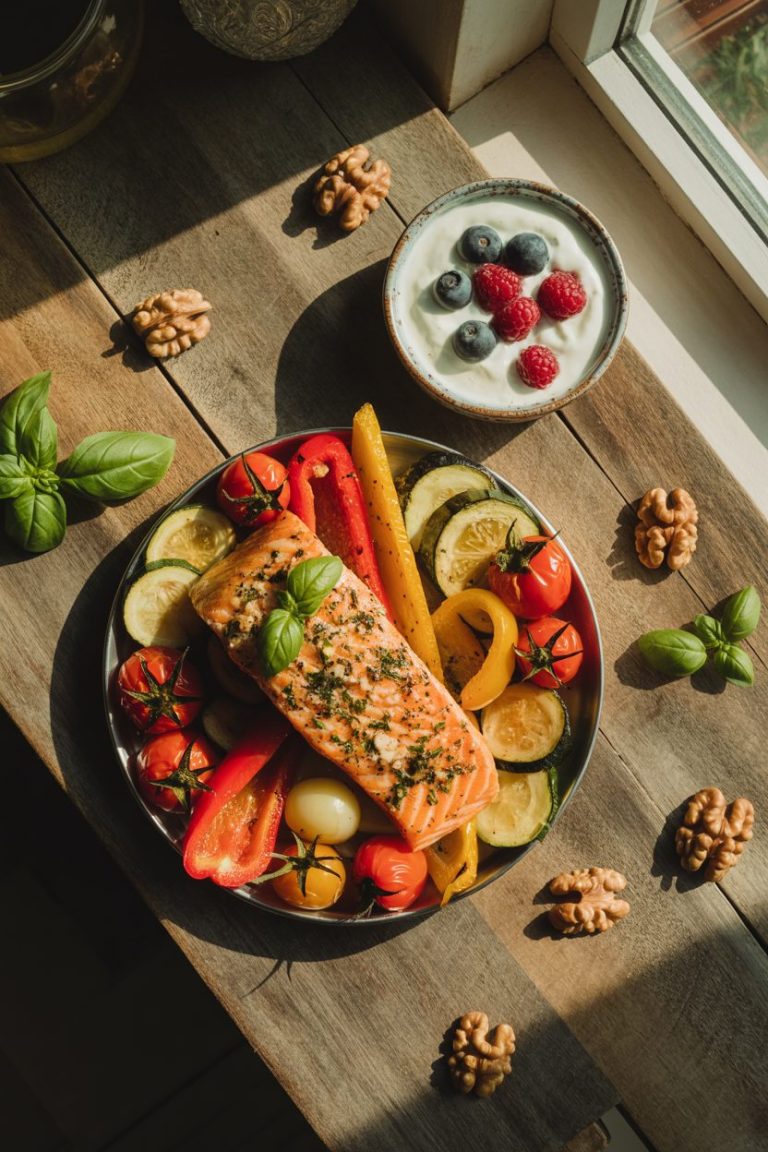
Dinner: Baked Salmon with Steamed Carrots 6oz wild-caught salmon with steamed carrot coins and a small serving of mashed potatoes (made with lactose-free milk). Fresh dill and lemon. Why it works: Salmon provides omega-3s, carrots are gentle on digestion, and the simple preparation is easy for your gut to process.
Hydration tip: Sip on ginger tea throughout the day. I use this ginger tea blend that actually tastes good and helps calm digestive upset.
Day 2: Building Confidence
Breakfast: Smoothie Bowl Blend lactose-free yogurt, frozen strawberries, a handful of spinach, and a tablespoon of almond butter. Top with a sprinkle of chia seeds and sliced kiwi. Why it works: Blending breaks down the fiber, making it easier to digest, and all ingredients are low-FODMAP.
Lunch: Turkey Lettuce Wraps Sliced turkey breast wrapped in butter lettuce with cucumber, tomato, and a drizzle of tahini. Serve with a side of rice crackers. Why it works: Lettuce wraps eliminate heavy bread, and butter lettuce is particularly gentle on sensitive stomachs.
Snack: Small handful of walnuts with an orange Why it works: Walnuts in moderation provide healthy fats without overloading your system, and oranges are low-FODMAP.
Dinner: Herb Chicken with Roasted Bell Peppers Baked chicken thighs with roasted red bell peppers and a side of quinoa (small portion). Fresh oregano and olive oil. Why it works: Bell peppers are generally well-tolerated, and a modest portion of quinoa adds fiber without overwhelming your gut.
Speaking of simple approaches, the 7-day anti-inflammation reset focuses on uncomplicated meals that are naturally easier on your digestive system.
Day 3: Finding Your Rhythm
Breakfast: Omelette with Tomatoes and Feta Three-egg omelette with cherry tomatoes and a small amount of feta cheese. Serve with a side of cantaloupe. Why it works: Cherry tomatoes are lower in FODMAPs than regular tomatoes, and feta is naturally lower in lactose.
Lunch: Tuna Salad Over Greens Canned tuna mixed with mayonnaise, served over mixed greens with cucumber, shredded carrot, and a lemon-olive oil dressing. Rice cakes on the side. Why it works: Simple, protein-rich, and uses vegetables that are easy to digest.
Snack: Hard-boiled egg with a few olives Why it works: Protein-based snacks keep you satisfied without causing bloating.
Dinner: Grilled Shrimp Skewers Shrimp grilled with zucchini and red pepper, served over a small portion of white rice. Fresh parsley and lemon. Why it works: Shrimp is low-FODMAP and easy to digest, and the simple preparation keeps bloating at bay.
Pro tip: I prep all my proteins on Sunday using this indoor grill pan that gives you those beautiful grill marks without heating up your whole kitchen.
Day 4: Expanding Options
Breakfast: Chia Pudding with Berries Chia seeds soaked overnight in lactose-free almond milk, topped with strawberries and a drizzle of maple syrup. Why it works: Chia seeds provide fiber but in a gel-like form that’s easier on digestion when properly soaked.
Lunch: Greek-Style Chicken Bowl Grilled chicken over spinach with cucumber, tomato, kalamata olives, and a small amount of crumbled feta. Olive oil and lemon dressing. Why it works: All components are low-FODMAP and naturally anti-inflammatory.
Snack: Rice crackers with a small piece of aged cheddar Why it works: Aged cheeses are lower in lactose and pair well with easily digestible crackers.
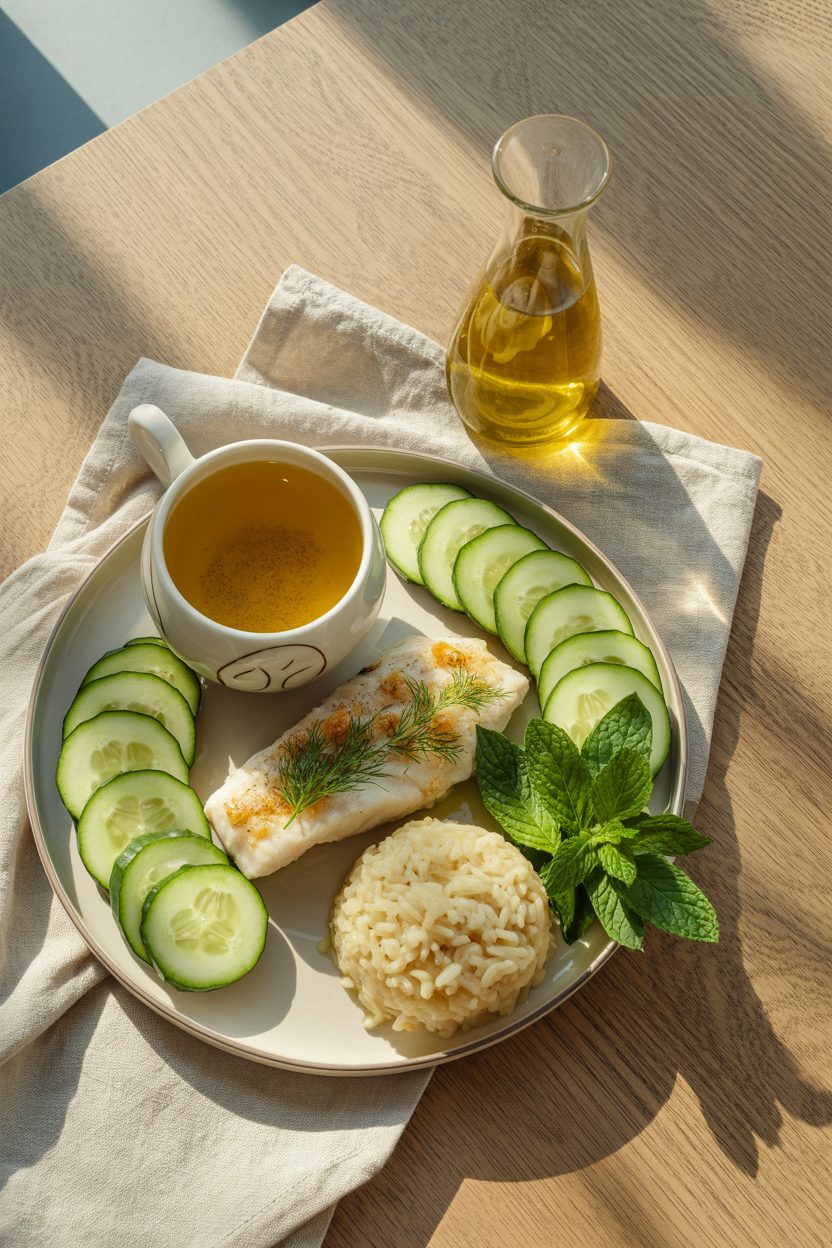
Dinner: Baked Cod with Green Beans 6oz cod fillet baked with lemon and herbs, served with steamed green beans and a small baked potato with olive oil. Why it works: Cod is lean and gentle on digestion, green beans are well-tolerated by most people.
For those looking to extend these principles beyond a week, the 14-day anti-inflammatory eating plan for women provides a longer framework that addresses both inflammation and digestive comfort.
Day 5: Midweek Maintenance
Breakfast: Toast with Scrambled Eggs and Avocado Sourdough toast topped with scrambled eggs and 1/4 avocado. Fresh tomato slices on the side. Why it works: Avocado in moderation is fine for most people, and this combo provides sustained energy.
Lunch: Chicken and Rice Soup Homemade soup with shredded chicken, white rice, carrots, and celery in a simple broth. Fresh dill. Why it works: Soup is inherently easy to digest, and these ingredients are all gentle on the gut.
Snack: Lactose-free yogurt with a handful of blueberries Why it works: Repeating well-tolerated foods builds confidence and reduces variables.
Dinner: Pork Tenderloin with Roasted Squash Herb-crusted pork tenderloin with roasted butternut squash and a side of sautéed spinach. Why it works: Pork tenderloin is lean, and butternut squash is a low-FODMAP option that adds natural sweetness.
I roast all my vegetables on these rimmed baking sheets that don’t warp in high heat—even distribution means perfectly cooked veggies every time.
Day 6: Almost There
Breakfast: Berry Protein Smoothie Blend lactose-free milk, vanilla protein powder (low-FODMAP), frozen strawberries, and a handful of spinach. Add a tablespoon of flaxseed. Why it works: Protein powder helps you stay full, and blending makes everything more digestible.
Lunch: Turkey and Veggie Plate Sliced turkey breast with cucumber sticks, cherry tomatoes, bell pepper strips, and a small portion of hummus (made from canned chickpeas which are better tolerated in small amounts). Why it works: This assembly-style meal is easy on digestion and requires zero cooking.
Snack: A small orange with a few almonds Why it works: The combination provides both quick and sustained energy without bloating.
Dinner: Grilled Salmon with Couscous Salmon fillet with a small portion of couscous, roasted zucchini, and fresh mint. Lemon-olive oil drizzle. Why it works: Couscous is easier to digest than many whole grains, and the portions are kept moderate.
Digestive support: I keep this digestive enzyme supplement on hand for meals that might be slightly more challenging—it’s been a game-changer for me, but check with your doctor first.
Day 7: The Finish Line
Breakfast: Veggie Frittata Egg-based frittata with zucchini, red bell pepper, and fresh basil. Serve with a small side of fresh melon. Why it works: Eggs remain your digestive best friend, and these vegetables are all well-tolerated.
Lunch: Mediterranean Tuna Salad Mixed greens with tuna, cucumber, cherry tomatoes, olives, and a simple vinaigrette. Rice crackers on the side. Why it works: Light, protein-rich, and uses ingredients you’ve already tested successfully.
Snack: Lactose-free cottage cheese with sliced strawberries Why it works: Cottage cheese provides protein and probiotics in an easily digestible form.
Dinner: Chicken Souvlaki-Style Grilled chicken pieces with tomato, cucumber, and a small serving of rice. Tzatziki made with lactose-free yogurt. Why it works: You’re celebrating the end of the week with flavors you love, modified to keep your gut happy.
The Anti-Bloat Pantry Essentials
Stocking your kitchen with the right ingredients makes this week exponentially easier. Here’s what you need:
Proteins:
- Eggs (your new best friend)
- Wild-caught salmon and other fish
- Chicken breast and thighs
- Turkey breast
- Canned tuna (in water)
- Shrimp
Low-FODMAP vegetables:
- Zucchini
- Carrots
- Spinach
- Cucumber
- Bell peppers (red and yellow)
- Cherry tomatoes
- Green beans
- Lettuce varieties
Digestive-friendly carbs:
- White rice
- Sourdough bread
- Rice crackers
- Quinoa (small portions)
- Potatoes
Healthy fats:
- Extra virgin olive oil
- Avocado (in moderation)
- Walnuts and almonds
- Olives
Dairy alternatives:
- Lactose-free Greek yogurt
- Lactose-free milk
- Aged cheeses (feta, parmesan)
One thing that’s helped me immensely is this airtight container set for storing prepped vegetables—they actually stay crisp instead of getting soggy and sad.
Strategies to Minimize Bloating Beyond Food Choices
Food is huge, but it’s not everything. Your eating habits and lifestyle play equally important roles in managing bloating.
Eat Slowly and Mindfully
FYI, you’re probably eating way too fast. When you inhale your food, you swallow air along with it, which contributes to that bloated feeling. It also means you’re not chewing thoroughly, forcing your gut to work harder to break everything down.
Try putting your fork down between bites. Sounds simple, but it’s surprisingly effective. Aim for at least 20 minutes per meal—your body needs time to register fullness and properly digest.
Stay Hydrated (But Strategically)
Water is essential for digestion and preventing constipation, which absolutely contributes to bloating. But chugging water during meals can dilute digestive enzymes and make bloating worse.
Drink water between meals, and sip moderately during eating. Aim for about 8 glasses throughout the day, but spread them out. I keep this insulated water bottle with time markers to pace my intake properly.
Move Your Body
Physical activity helps move gas through your digestive system and prevents constipation. Even a 15-minute walk after meals can make a significant difference. You don’t need to run marathons—gentle movement is actually better for digestion than intense exercise immediately after eating.
According to digestive health experts, regular moderate physical activity can improve symptoms like bloating and abdominal discomfort in people with digestive sensitivities.
Manage Stress Levels
Your gut and brain are connected through the gut-brain axis, which means stress directly impacts your digestion. When you’re stressed, your body diverts resources away from digestion, leading to slower gut motility and increased bloating.
Find what works for you—meditation, deep breathing, yoga, whatever helps you decompress. I’m not going to tell you to eliminate all stress (because, life), but finding even 10 minutes a day to chill out helps.
If stress-related digestive issues are a major problem, the 7-day gut healing Mediterranean menu incorporates foods specifically chosen to support the gut-brain connection.
Identifying Your Personal Triggers
This 7-day plan is designed to be universally gentle, but everyone’s digestive system is unique. What bloats me might be totally fine for you, and vice versa. The goal here is to establish a baseline of foods you tolerate well, then slowly reintroduce potential triggers one at a time.
How to test foods:
- Stick to the plan completely for 7 days to establish your baseline. Notice how you feel, your energy levels, and your digestive comfort.
- Choose one food to test from your “suspect” list—maybe it’s chickpeas, or wheat bread, or raw broccoli.
- Introduce a moderate portion of that food alongside your usual well-tolerated meals. Don’t test multiple new foods at once or you won’t know which one caused issues.
- Wait 48-72 hours before testing another food. Some bloating reactions are immediate; others take time to manifest.
- Keep detailed notes in your food journal about symptoms, severity, and timing.
This process is tedious, but it’s the only way to truly understand your body’s responses. IMO, spending a few weeks figuring this out is way better than years of constant bloating and discomfort.
When to Seek Professional Help
Look, I’m all for trying to solve things yourself first. But there are times when bloating signals something more serious than just food sensitivities.
See a gastroenterologist if you experience:
- Bloating that doesn’t improve with dietary changes
- Significant weight loss without trying
- Blood in your stool
- Severe abdominal pain
- Bloating accompanied by fever
- Changes in bowel habits that persist
A registered dietitian who specializes in digestive health can also be incredibly helpful. They can guide you through a proper elimination and reintroduction process, ensure you’re meeting your nutritional needs, and help you navigate more complex digestive conditions like IBS or SIBO.
For longer-term anti-inflammatory eating that supports digestive health, the 14-day high-fiber Mediterranean plan for beginners gradually introduces fiber in a way that minimizes digestive distress.
Supplement Support for Digestive Comfort
While food should always be your primary focus, certain supplements can support better digestion and reduce bloating.
Digestive enzymes: Help break down proteins, fats, and carbohydrates more efficiently. Particularly helpful if you have pancreatic insufficiency or just produce fewer digestive enzymes naturally.
Probiotics: Support a healthy gut microbiome. Look for strains like Lactobacillus and Bifidobacterium that have been studied for digestive health.
Ginger: A natural anti-inflammatory that can soothe digestive upset and reduce bloating. You can take it as a supplement or just drink ginger tea throughout the day.
Peppermint oil: Specifically enteric-coated capsules can help relax intestinal muscles and reduce gas and bloating. Don’t use regular peppermint oil internally—it needs that special coating.
Magnesium: Can help with constipation-related bloating by drawing water into the intestines and promoting bowel movements.
I’m not saying you need all of these. Start with one based on your specific issues, and give it a few weeks to see if it helps. And always check with your doctor before starting new supplements, especially if you take medications.
Transitioning Back to Regular Mediterranean Eating
So you’ve made it through the week, you’re feeling better, and your jeans fit again. Now what? The goal isn’t to eat this restrictively forever—it’s to identify what works for you and gradually expand your options.
Reintroduction strategy:
Week 2: Add small portions of well-cooked legumes. Start with white beans or lentils, which tend to be easier to digest than chickpeas. Stick to 1/4 cup portions initially.
Week 3: Introduce more whole grains gradually. Maybe switch from white rice to brown rice once a day, or try whole grain pasta in small amounts.
Week 4: Test higher-FODMAP vegetables one at a time. Roast them rather than eating raw—cooking breaks down some of the problematic fibers.
Week 5 and beyond: Continue testing foods while maintaining the core low-bloat principles: eating slowly, staying hydrated, managing portions, and choosing cooking methods that enhance digestibility.
The 30-day anti-inflammation challenge provides a structured approach to gradually building a more varied anti-inflammatory diet while monitoring your body’s responses.
The Reality Check
Let’s be honest—some bloating is normal. You’re not going to have a perfectly flat stomach 24/7. Stomachs naturally distend after meals as they work to digest food. The goal here is to eliminate uncomfortable, excessive bloating that impacts your quality of life, not to achieve some unrealistic Instagram ideal.
Also, this plan might not solve everything immediately. Digestive issues are complex and often involve multiple factors—gut microbiome composition, stress levels, sleep quality, underlying medical conditions. This week is a starting point, not a magic cure-all.
But what it will do is give you a framework for understanding how your body responds to different foods and eating patterns. That knowledge is powerful. Instead of constantly guessing why you feel terrible, you’ll have concrete data about what works for you.
For those interested in combining weight management with digestive comfort, the 14-day Mediterranean weight loss plan offers structured meals that support both goals simultaneously.
Related Plans You’ll Love
Looking for more ways to support your digestive health and overall wellness? Here are some plans that complement this anti-bloat approach:
For Gentle Gut Healing: 7-day gut healing Mediterranean menu—specifically designed to soothe and repair digestive issues
7-day Mediterranean anti-inflammation meal plan—combines anti-inflammatory benefits with Mediterranean principles
For Extended Commitment: 14-day anti-inflammatory eating plan for women—addresses hormonal factors that can contribute to bloating
30-day high-fiber anti-inflammation program—gradually builds fiber intake to support long-term digestive health
For Simplified Approaches: 7-day anti-inflammation reset with simple meals—uncomplicated recipes that are naturally easier to digest
7-day Mediterranean vegan anti-inflammation plan—plant-based options for those avoiding animal products
Your Comfortable, Confident Week Starts Now
You’ve got the complete 7-day plan, you understand why these foods work, and you know how to troubleshoot common issues. The only question left is whether you’re ready to stop accepting bloating as your normal and actually do something about it.
Seven days. That’s all I’m asking. One week of being intentional about your food choices, eating slowly, and paying attention to how your body responds. If you don’t feel noticeably better by day 7, at minimum you’ve learned something valuable about your personal digestive patterns.
Start tomorrow morning with those simple scrambled eggs and spinach. Take your time eating them. Notice how you feel an hour later, three hours later, by the end of the day. Keep a simple log—just a few words about your energy and comfort levels. By the end of the week, you’ll have concrete data instead of just constantly wondering why your stomach hates you.
Your digestive system isn’t broken—it’s just overwhelmed. Give it this week of gentler foods and better habits, and see what happens. You might be surprised at how much better you can feel.