7-Day Anti-Inflammatory Smoothie + Meals Plan
Chronic inflammation is basically your body throwing a tantrum that never ends. Joint pain, brain fog, constant fatigue, random skin issues—it’s all connected to inflammation that’s gone rogue. And while you can’t exactly un-inflame yourself overnight, what you eat makes a massive difference in how your body responds.
I’ll be straight with you—I used to think smoothies were either health-food punishment or glorified milkshakes masquerading as nutrition. But after dealing with persistent joint pain that made me feel about forty years older than I actually was, I started taking anti-inflammatory eating seriously. This 7-day plan combines targeted anti-inflammatory smoothies with complementary meals that work together to calm your system down. A week might not sound like much, but it’s enough time to notice real changes in how you feel.

Why Smoothies Work for Anti-Inflammatory Eating
Here’s the thing about smoothies—they’re basically a delivery system for concentrated nutrition. You can pack more anti-inflammatory ingredients into one glass than you’d realistically eat in a whole meal. And blending breaks down the cell walls of plants, making their nutrients more bioavailable to your body.
According to research from Healthline on anti-inflammatory drinks, certain ingredients like berries, leafy greens, and omega-3 fatty acids can help suppress proteins that promote chronic inflammation. The cool part? When you combine these ingredients strategically, they work synergistically—meaning they’re more powerful together than separately.
But here’s where most people mess up: they make fruit bombs that spike blood sugar and call it healthy. A truly anti-inflammatory smoothie needs protein, healthy fats, and fiber to balance out the fruit. Otherwise, you’re just drinking liquid candy that makes inflammation worse.
I blend everything in this high-powered blender that actually pulverizes tough ingredients like frozen berries and leafy greens—no chunks, no weird texture, just smooth consistency every time.
Understanding the Key Anti-Inflammatory Ingredients
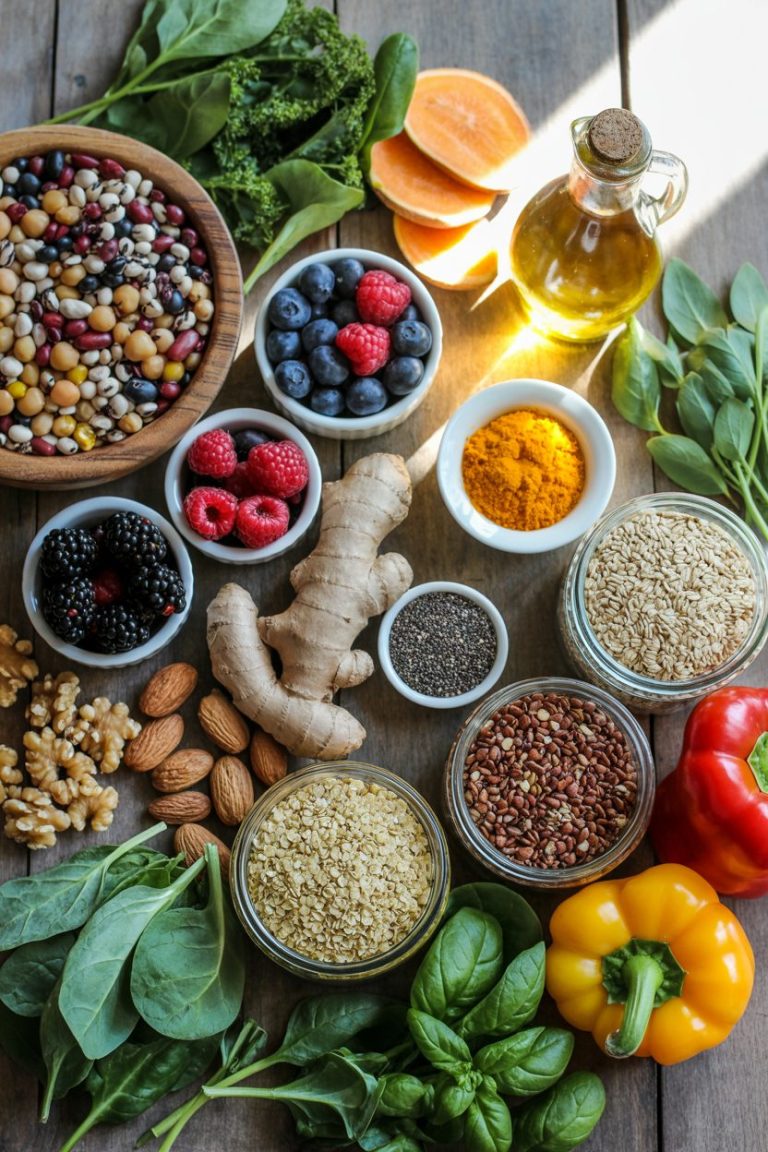
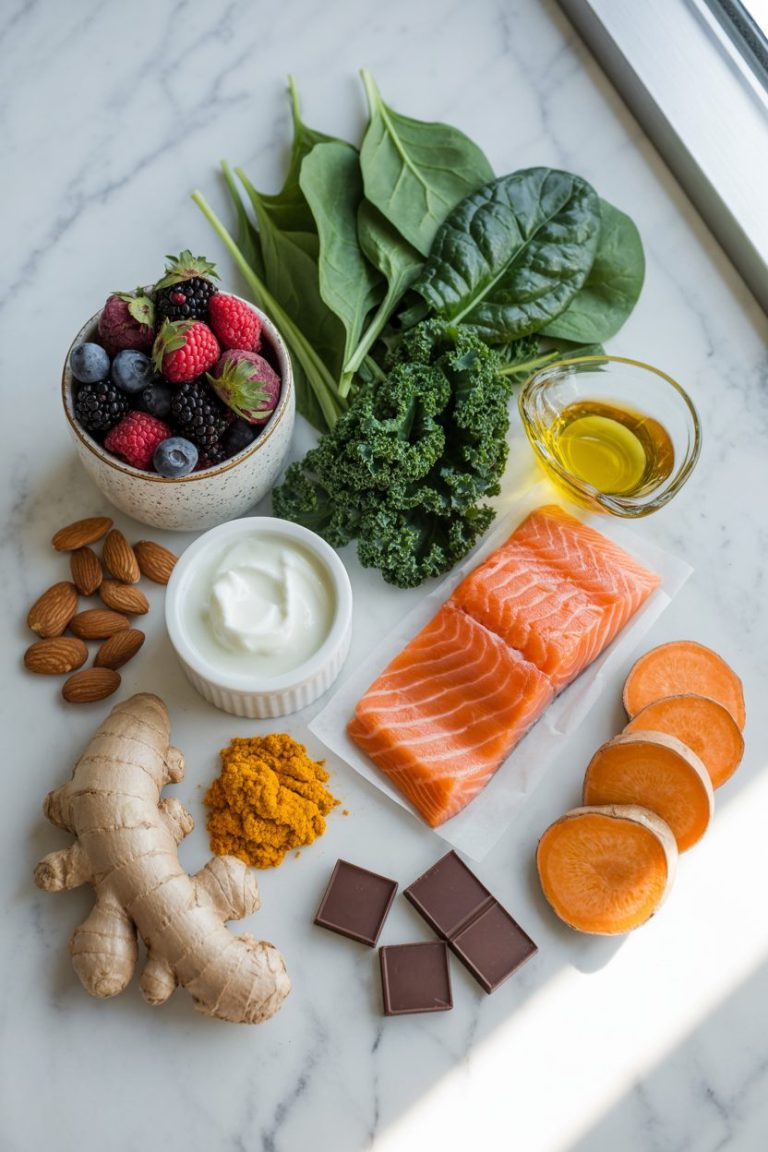
Not all smoothie ingredients are created equal. These are the heavy hitters that actually make a difference:
Berries: Blueberries, strawberries, and raspberries contain anthocyanins, powerful antioxidants that reduce inflammatory markers in your blood. They’re also naturally low in sugar compared to tropical fruits.
Leafy greens: Spinach and kale pack vitamins A, C, and K, plus magnesium—all crucial for managing inflammation. The slight bitterness disappears when you balance them with fruit.
Ginger: Contains gingerol, a bioactive compound that’s comparable to ibuprofen for reducing pain and inflammation. Fresh ginger is way more potent than powdered.
Turmeric: The curcumin in turmeric is insanely anti-inflammatory, but your body barely absorbs it without black pepper. Always add a pinch of pepper to turmeric-based smoothies.
Omega-3 sources: Chia seeds, flaxseeds, and hemp hearts provide plant-based omega-3s that directly counter inflammatory pathways. Two tablespoons daily makes a real difference.
Pineapple: Contains bromelain, an enzyme that breaks down proteins and reduces inflammation, particularly helpful for joint pain and swelling.
For comprehensive anti-inflammatory eating guidance beyond smoothies, check out this 7-day Mediterranean anti-inflammation meal plan that covers complete daily menus.
Your Complete 7-Day Smoothie and Meal Plan
Each day includes one anti-inflammatory smoothie plus two complementary meals designed to work together. The smoothies rotate to prevent boredom while hitting different anti-inflammatory angles.
Day 1: The Berry Blast Foundation
Morning Smoothie: Triple Berry Anti-Inflammatory
- 1 cup mixed berries (blueberries, strawberries, raspberries)
- 1 cup spinach
- 1 tablespoon chia seeds
- 1/2 banana (for creaminess)
- 1 cup unsweetened almond milk
- 1 scoop vanilla protein powder
- 1/4 teaspoon turmeric
- Pinch of black pepper
Blend spinach with liquid first to avoid chunks, then add everything else. This gives you about 25g protein and loads of antioxidants to start your day strong.
Lunch: Grilled chicken salad with mixed greens, cherry tomatoes, cucumber, walnuts, and olive oil-lemon dressing. Add quinoa for extra fiber and protein.
Dinner: Baked salmon with roasted Brussels sprouts and sweet potato. The omega-3s from salmon complement the smoothie’s anti-inflammatory properties perfectly.
I prep smoothie ingredients in these freezer-safe bags with individual portions—just dump and blend on busy mornings.
Day 2: The Golden Ginger Reset
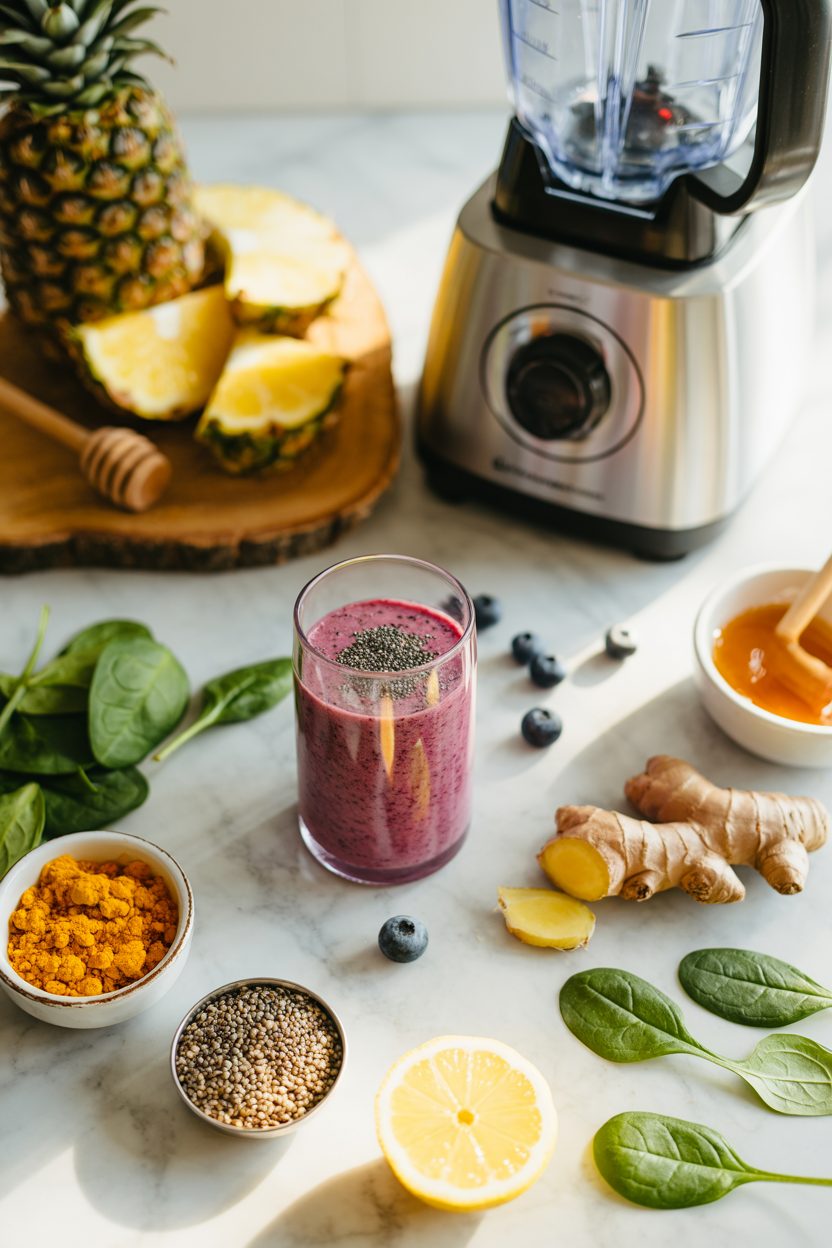
Morning Smoothie: Pineapple Turmeric Golden Glow
- 1 cup frozen pineapple
- 1-inch piece fresh ginger (peeled)
- 1/2 teaspoon turmeric powder
- 1 tablespoon hemp seeds
- 1/2 cup Greek yogurt (for protein and probiotics)
- 1 cup coconut water
- 1 teaspoon honey
- Pinch of black pepper
This combination is seriously potent for inflammation. The pineapple’s bromelain, ginger’s gingerol, and turmeric’s curcumin create a triple threat against inflammatory pathways.
Lunch: Turkey and avocado wrap in a whole grain tortilla with spinach, tomato, and hummus. Keep it simple but satisfying.
Dinner: Chicken stir-fry with broccoli, bell peppers, and snap peas over brown rice. Use fresh garlic and ginger in the stir-fry to amplify anti-inflammatory benefits.
FYI, fresh ginger stores for weeks in the freezer and grates easier when frozen—total game changer for smoothie prep.
Day 3: The Green Machine
Morning Smoothie: Super Green Anti-Inflammatory
- 2 cups spinach
- 1/2 avocado
- 1/2 green apple
- 1/2 cucumber
- 1 tablespoon flaxseed meal
- 1 cup unsweetened almond milk
- Juice of 1/2 lemon
- 1-inch piece fresh ginger
- Handful of ice
The avocado makes this incredibly creamy while providing healthy fats that reduce inflammation. Don’t skip the lemon—it cuts the earthy taste and adds vitamin C.
Lunch: Lentil soup with carrots, celery, and tomatoes. Lentils provide plant-based protein and fiber that supports gut health, which directly impacts inflammation.
Dinner: Grilled chicken breast with roasted cauliflower and a side of sautéed kale with garlic. Simple, clean, anti-inflammatory.
Speaking of gut health and inflammation connection, the 7-day gut healing Mediterranean menu addresses both simultaneously with targeted meal strategies.
Day 4: The Tropical Anti-Inflammatory
Morning Smoothie: Mango Ginger Sunshine
- 1 cup frozen mango
- 1/2 cup pineapple
- 1 cup spinach
- 1-inch piece fresh ginger
- 1 tablespoon chia seeds
- 1 cup coconut milk
- 1/2 teaspoon turmeric
- Pinch of black pepper
Tropical fruits get a bad rap for sugar content, but mango contains mangiferin, a compound with powerful anti-inflammatory properties. Just balance it with protein and fat.
Lunch: Quinoa bowl with chickpeas, roasted vegetables (zucchini, bell peppers, onions), and tahini dressing. The combination provides complete protein and loads of fiber.
Dinner: Baked cod with asparagus and wild rice. White fish is naturally anti-inflammatory and easy to digest.
I roast all my vegetables on these silicone baking mats that prevent sticking and make cleanup ridiculously easy.
Day 5: The Antioxidant Power Punch
Morning Smoothie: Dark Cherry Berry Blast
- 1 cup frozen dark cherries
- 1/2 cup blueberries
- 1 cup kale
- 1 tablespoon almond butter
- 1 tablespoon ground flaxseed
- 1 cup unsweetened vanilla almond milk
- 1 scoop protein powder
Dark cherries are particularly potent for reducing inflammation and muscle soreness. Research shows they can significantly lower inflammatory markers in as little as a week.
Lunch: Mediterranean chickpea salad with cucumber, tomato, red onion, feta, and olive oil-lemon dressing. Serve with whole grain pita.
Dinner: Turkey meatballs in marinara sauce with zucchini noodles. The tomatoes provide lycopene, another powerful anti-inflammatory compound.
For those wanting to extend these principles into a longer commitment, the 30-day anti-inflammation challenge provides progressive guidance for building sustainable habits.
Day 6: The Tropical Green Fusion
Morning Smoothie: Pineapple Spinach Paradise
- 1 cup frozen pineapple
- 2 cups spinach
- 1/2 banana
- 1 tablespoon hemp hearts
- 1 cup coconut water
- 1/2 inch fresh turmeric root (or 1/4 tsp powder)
- Squeeze of lime juice
This one tastes way better than it sounds. The pineapple completely masks the spinach, and the lime adds brightness that makes it refreshing.
Lunch: Grilled chicken Caesar salad with homemade dressing (Greek yogurt-based), parmesan, and whole grain croutons. Skip the traditional heavy dressing loaded with inflammatory oils.
Dinner: Shrimp and vegetable kebabs with quinoa. Shrimp provides selenium and vitamin B12, both important for managing inflammation.
I use these stainless steel straws for smoothies—they’re way better than disposable ones and don’t affect the taste like metal sometimes can.
Day 7: The Omega-3 Powerhouse
Morning Smoothie: Berry Flax Recovery
- 1 cup mixed berries
- 1 cup spinach
- 2 tablespoons ground flaxseed
- 1 tablespoon almond butter
- 1/2 cup plain kefir (probiotics!)
- 1/2 cup unsweetened almond milk
- 1/4 teaspoon cinnamon
- Handful of ice
Ground flaxseed provides more omega-3s than any other plant source. The almond butter adds healthy fats and makes this incredibly satisfying.
Lunch: Salmon salad with mixed greens, avocado, cucumber, and a ginger-miso dressing. Double down on those omega-3s.
Dinner: Baked chicken with roasted root vegetables (carrots, parsnips, beets) and a side of sautéed Swiss chard. End the week strong with nutrient-dense whole foods.
By day seven, you should notice measurably less inflammation—joints feel better, energy is more stable, and that general “blah” feeling starts lifting.
The Science Behind the Timing
You might wonder why smoothies are specifically for morning. There’s actual strategy here. According to research on nutrient timing and inflammation, consuming antioxidants and omega-3s earlier in the day provides protection against inflammatory stressors you’ll encounter throughout the day.
Plus, starting with a nutrient-dense smoothie sets the tone for better food choices all day. When you begin with concentrated nutrition, you’re less likely to make impulsive, inflammatory food choices later. It’s basically momentum for your metabolism.
The complementary meals throughout the day maintain steady blood sugar, which is crucial because blood sugar spikes trigger inflammatory responses. Each meal includes protein, healthy fats, and fiber to keep everything stable.
For women specifically dealing with inflammatory issues, the 14-day anti-inflammatory eating plan for women addresses hormonal factors that can amplify inflammation.
Prep Strategies That Actually Work
Look, you’re not going to stick with this if it requires an hour of prep every morning. Here’s how to make it sustainable:
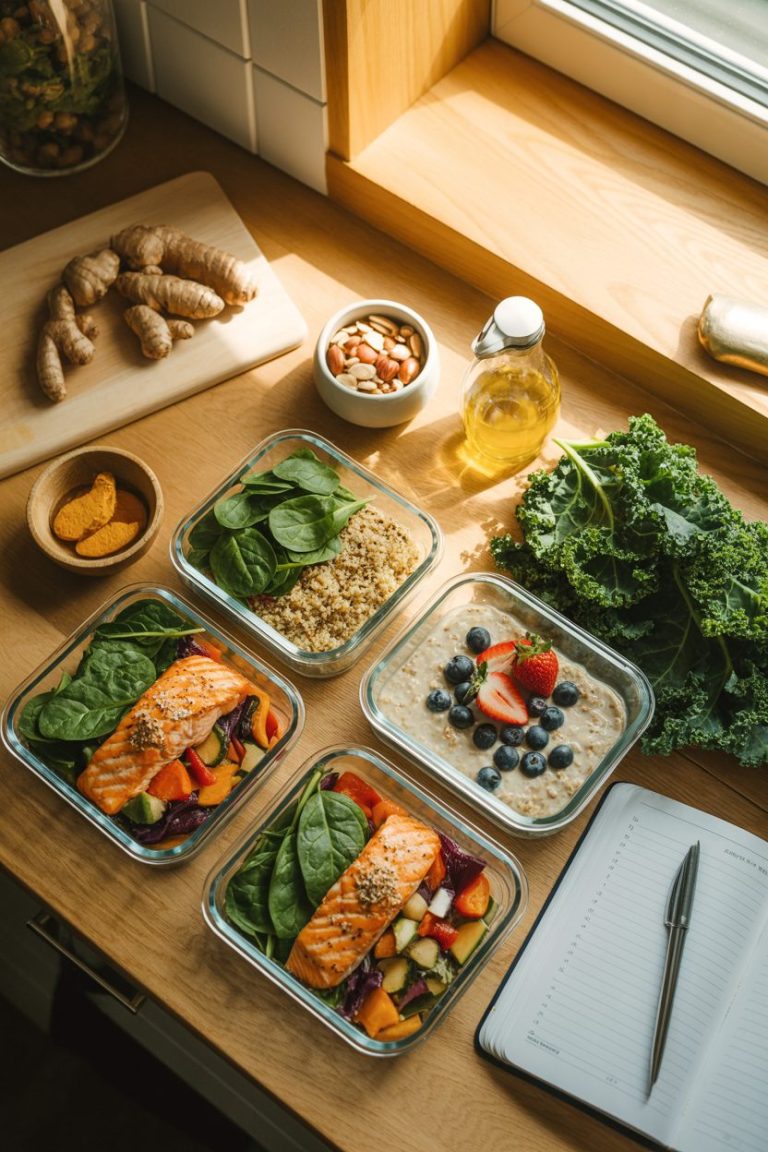
Smoothie Packs: Portion out all your smoothie ingredients (except liquid) into individual freezer bags or these reusable silicone bags. Label them by day. In the morning, dump the contents into your blender, add liquid, blend. Takes literally two minutes.
Batch Prep Proteins: Grill several chicken breasts, bake a couple salmon fillets, cook a big pot of lentils on Sunday. Store separately in the fridge. These become your lunch and dinner proteins all week.
Pre-Chop Vegetables: Wash and chop all your salad vegetables, roasting vegetables, and smoothie produce on Sunday. Store in airtight containers with a paper towel to absorb moisture.
Make Dressings in Bulk: A big jar of lemon-olive oil vinaigrette lasts all week in the fridge. Same with hummus, which you should absolutely make yourself—it’s cheaper and tastes way better.
I use this set of airtight glass containers for everything. They stack perfectly in the fridge and I can see exactly what I have without digging around.
Common Mistakes That Sabotage Results
Even with the best intentions, people mess this up in predictable ways:
Mistake 1: Too much fruit, not enough balance. Your smoothie shouldn’t be 90% fruit. Aim for 1-1.5 cups of fruit max, with the rest being greens, protein, and healthy fats.
Mistake 2: Skipping the fat. You need fat to absorb the fat-soluble vitamins in your smoothie and to keep you full. Add avocado, nut butter, seeds, or coconut oil.
Mistake 3: Not drinking it immediately. Antioxidants degrade when exposed to air and light. Blend and drink within 15 minutes for maximum benefit.
Mistake 4: Forgetting about inflammation in other meals. You can’t have an anti-inflammatory smoothie for breakfast then eat fried chicken and donuts the rest of the day. The whole day needs to support your goals.
Mistake 5: Insufficient protein. IMO, every smoothie should have at least 20g of protein. Use protein powder, Greek yogurt, kefir, or nut butter to hit that target.
Supplements to Consider
While food should always be your primary focus, certain supplements can enhance your anti-inflammatory efforts:
Omega-3 fish oil: If you’re not eating fatty fish 2-3 times per week, a quality omega-3 supplement fills that gap. Look for one with at least 1000mg combined EPA and DHA.
Vitamin D: Most people are deficient, and vitamin D plays a crucial role in immune regulation and inflammation management. Get your levels tested.
Curcumin: A concentrated turmeric extract with black pepper (piperine) gives you way more anti-inflammatory benefit than you could get from food alone.
Probiotics: Gut health directly impacts inflammation. A quality probiotic with multiple strains can help, though fermented foods like kefir and yogurt also work.
I keep this omega-3 supplement on hand for days when I don’t eat fish—it’s molecularly distilled so it doesn’t have that gross fishy aftertaste some brands have.
What to Expect: Real Results
Let’s set realistic expectations. After one week of this plan, here’s what you can reasonably expect:
Days 1-2: You might feel slightly more bloated as your fiber intake increases. This is temporary. Drink lots of water and keep moving.
Days 3-4: Energy levels start stabilizing. You’re not hitting that 2 PM crash anymore. Joint pain may start decreasing slightly.
Days 5-6: Digestion improves noticeably. Skin might start looking clearer. You’re sleeping better because your blood sugar is more stable.
Day 7: Most people report measurably less joint stiffness, better energy throughout the day, and reduced brain fog. Some see visible changes in skin inflammation or puffiness.
These aren’t dramatic overnight transformations, but they’re real, measurable improvements that compound over time. Imagine how you’d feel after a month of eating this way.
For longer-term fiber increase strategies that minimize digestive discomfort, the 14-day high-fiber Mediterranean plan gradually builds your tolerance while maintaining anti-inflammatory principles.
Adapting for Dietary Restrictions
This plan is flexible enough to accommodate most dietary needs:
Vegan: Replace Greek yogurt with coconut yogurt, use plant-based protein powder, swap fish for tempeh or tofu, and replace chicken with more legumes. The 7-day Mediterranean vegan anti-inflammation plan provides complete plant-based frameworks.
Dairy-free: Use plant-based milk, skip the Greek yogurt or use coconut yogurt, and substitute nutritional yeast for cheese in meals.
Nut allergies: Replace almond butter with sunflower seed butter, use oat milk instead of almond milk, and swap nuts for seeds (pumpkin, sunflower, hemp).
Low-FODMAP: Replace onions and garlic with green onion tops and garlic-infused oil. Choose low-FODMAP fruits like berries and pineapple. Keep portion sizes moderate.
The core principle remains the same: pack in antioxidants, omega-3s, and anti-inflammatory compounds while avoiding processed foods and refined carbs that trigger inflammation.
Beyond the Week: Maintaining Results
Seven days proves the concept, but the real question is: what happens next? If you stop completely and revert to inflammatory eating patterns, you’ll lose these benefits within a week or two.
Instead, maintain the momentum by keeping anti-inflammatory smoothies in your regular rotation. Maybe it’s not every day—even 3-4 times per week makes a significant difference. Continue prioritizing whole foods, lots of vegetables, lean proteins, and healthy fats in your regular meals.
The beauty of this approach is it’s not restrictive. You’re not eliminating entire food groups or following complicated rules. You’re simply emphasizing foods that calm inflammation while minimizing those that trigger it.
For simplified approaches when you’re feeling overwhelmed, the 7-day anti-inflammation reset strips things down to uncomplicated basics that still deliver results.
Related Plans You’ll Love
Looking for more ways to combat inflammation and support overall wellness? Here are some plans that complement this smoothie-focused approach:
For Complete Meal Structures: 7-day Mediterranean anti-inflammation meal plan—comprehensive daily menus with proven anti-inflammatory benefits
7-day Mediterranean high-fiber meal prep plan—batch-cooking strategies for the entire week
For Extended Commitment: 30-day anti-inflammation challenge—month-long progressive plan for sustainable habit building
30-day high-fiber anti-inflammation program—combines fiber increase with inflammation management
For Digestive Focus: 7-day gut healing Mediterranean menu—addresses the gut-inflammation connection directly
For Specific Needs: 14-day anti-inflammatory eating plan for women—hormonal considerations and nutritional requirements
Your Inflammation-Free Week Starts Tomorrow
You’ve got everything you need—seven days of smoothie recipes, complementary meals, prep strategies, and realistic expectations. The only variable left is whether you’ll actually commit to one week of intentional anti-inflammatory eating.
Here’s the reality: inflammation isn’t going away on its own. It’s compounding daily, contributing to how terrible you feel and potentially setting you up for chronic health issues down the road. One week of targeted nutrition won’t cure everything, but it will show you how much better your body can feel when you stop constantly triggering inflammatory responses.
Start tomorrow morning with that Triple Berry smoothie. Follow the meal plan for lunch and dinner. Notice how you feel. Check in with your energy levels, your joint pain, your mental clarity. By day seven, you’ll have concrete evidence of whether this approach works for your body.
And when it does work—because for most people, it absolutely does—you’ll have a framework for eating that supports your body instead of fighting against it. That’s worth way more than any quick fix or temporary diet could ever deliver.