
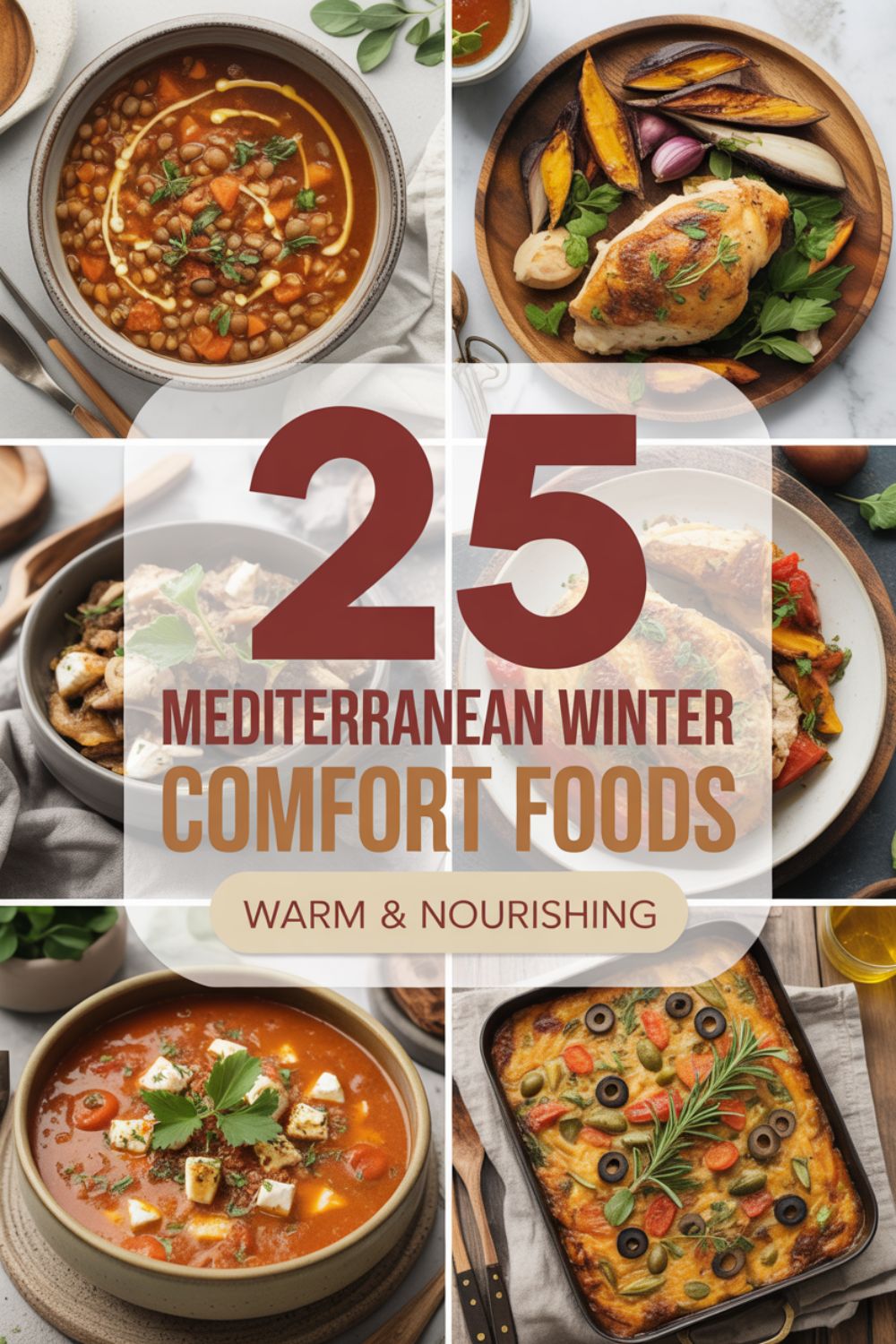
25 Mediterranean Winter Comfort Foods (Warm & Nourishing)
Look, I get it. When the temperature drops and you’re huddled under three blankets contemplating your life choices, the last thing you want is a sad desk salad. Winter calls for warmth, substance, and foods that make you feel like you’re getting a hug from the inside out.
That’s where Mediterranean winter comfort foods come in. We’re not talking about the summer version with fresh tomatoes and grilled fish—this is the cozy, soul-warming side of Mediterranean eating that most people don’t talk about enough. Think slow-simmered stews, hearty soups loaded with beans, roasted root vegetables drizzled with golden olive oil, and baked dishes that fill your kitchen with the kind of smells that make your neighbors jealous.
The beautiful thing about Mediterranean winter cooking is that it manages to be both incredibly comforting AND good for you. According to research from Harvard’s School of Public Health, the Mediterranean diet consistently reduces cardiovascular disease risk while increasing lifespan—and that applies just as much to winter dishes as summer ones.
I’ve spent years experimenting with Mediterranean recipes, and I can tell you that winter is actually when this style of eating shines brightest. You get all the anti-inflammatory benefits of olive oil, legumes, and whole grains, wrapped up in dishes that actually make you want to come home for dinner instead of ordering takeout for the fourth night in a row.
What Makes Mediterranean Winter Food Different
Here’s something most food bloggers won’t tell you—Mediterranean winter cooking is fundamentally different from the cuisine’s summer repertoire, and for good reason. The people who developed these recipes weren’t just winging it; they were working with what the season actually gave them.
Winter in the Mediterranean means hardy vegetables like fennel, leeks, and winter squash. It means dried legumes that have been stored since summer. It means preserves, pickles, and the kind of root vegetables that can sit in a cellar for months without complaint. The cooking methods change too—less grilling, more braising. Less fresh herbs, more dried oregano and bay leaves.
And honestly? The winter versions often pack more flavor. There’s something about slow-cooked dishes that just hits different when it’s cold outside. A study published in the Journal of Translational Medicine found that the anti-inflammatory properties of Mediterranean eating come largely from the combination of foods rather than individual ingredients—which is exactly what these winter stews and baked dishes deliver.
The Core Ingredients That Make Winter Mediterranean Food Work
Before we get into the actual dishes, let’s talk about what you should actually have in your kitchen. IMO, having the right staples makes the difference between “I guess I’ll order pizza again” and “I can throw together something amazing in 30 minutes.”
Pantry Essentials
First up: dried legumes. I’m talking chickpeas, white beans, lentils—the whole squad. Yeah, canned works in a pinch, but dried beans that you’ve cooked yourself have a completely different texture. I use this 6-quart Dutch oven for all my bean cooking and it’s worth every penny for how evenly it cooks.
You need good olive oil. Not the fancy stuff for special occasions—the everyday workhorse bottle that you’ll use liberally. Extra virgin is non-negotiable for Mediterranean cooking. The Johns Hopkins Medicine research specifically notes that the monounsaturated fats in olive oil are key to the diet’s heart-health benefits.
Whole grains are your friend here. Farro, bulgur, barley—these ancient grains add substance and a nutty flavor that refined grains just can’t match. I store mine in these airtight glass containers because nothing’s worse than finding bugs in your pantry staples.
Fresh Elements for Winter
Even in winter, you need some fresh components. Root vegetables like carrots, celery root, parsnips, and turnips are peak season. Winter squash varieties—butternut, acorn, kabocha—become ridiculously sweet when roasted.
Don’t sleep on hardy greens like kale, Swiss chard, and collard greens. They actually taste better after a frost, losing that bitter edge and getting sweeter. Toss them with olive oil and this garlic press that actually crushes garlic properly instead of just mangling it.
25 Mediterranean Winter Comfort Foods That Actually Deliver
Hearty Soups and Stews (The Real MVPs)
1. Greek Lentil Soup (Fakes)
This is my go-to when I need something that feels like a warm blanket but won’t leave me in a food coma. Red lentils, tomatoes, and a generous pour of olive oil at the end. The Greeks know what’s up—this soup is ridiculously simple but hits every single comfort food note. Get Full Recipe.
2. Ribollita (Tuscan Bread Soup)
Okay, so this is basically what happens when you take leftover vegetable soup and turn it into something spectacular by adding stale bread. Sounds weird, tastes incredible. The bread breaks down and creates this thick, porridge-like consistency that’s completely addictive.
3. Chickpea and Spinach Stew
Spanish in origin, this stew is proof that simple ingredients can create complex flavors. Chickpeas, spinach, garlic, cumin, and smoked paprika. That’s it. The smoked paprika is key though—it adds a depth that makes people think you’ve been cooking for hours when really it’s like 25 minutes of active time.
If you’re serious about building an anti-inflammatory meal rotation that actually works for busy weekdays, you might want to check out this 7-day Mediterranean anti-inflammation meal plan or this 14-day high-fiber Mediterranean plan for beginners. They take the guesswork out of what to cook each night.
4. White Bean and Escarole Soup
This Italian classic is what I make when I want something nourishing but not heavy. Cannellini beans, slightly bitter escarole, garlic, and a parmesan rind thrown in while it simmers. The rind adds this umami depth that makes the soup taste way more sophisticated than the effort required.
5. Fish Stew (Kakavia)
The Greek answer to bouillabaisse. Whatever white fish is freshest, tomatoes, potatoes, and loads of lemon. I use this fish spatula to turn the fish without it falling apart—game changer for any fish recipe.
Baked Dishes That Fill Your Kitchen With Amazing Smells
6. Moussaka
The Greek comfort food champion. Layers of eggplant, spiced meat sauce, and béchamel. Yeah, it takes some time, but it’s worth it for special occasions. Plus, moussaka actually improves overnight in the fridge, so it’s perfect for meal prep.
7. Imam Bayildi
The name literally means “the imam fainted”—supposedly from how delicious it was. Eggplants stuffed with a tomato and onion mixture, then baked until everything’s melty and caramelized. Serve it with crusty bread to soak up all those juices.
8. Greek-Style Baked Beans (Gigantes Plaki)
Giant lima beans baked in tomato sauce with dill and olive oil. These beans are creamy, the sauce is rich, and it’s one of those dishes that’s somehow both rustic and elegant. I bake these in this ceramic baking dish that goes from oven to table.
9. Spanakopita (Spinach Pie)
Flaky phyllo pastry wrapped around a filling of spinach, feta, and herbs. Working with phyllo can be intimidating, but honestly, if you keep it covered with a damp towel and work quickly, it’s totally manageable. The results are so much better than frozen grocery store versions.
10. Turkish Eggplant and Chickpea Casserole
Roasted eggplant and chickpeas with tomatoes and warm spices, all baked together until everything’s soft and the flavors have melded. This is vegetarian comfort food that even my meat-loving friends request regularly.
Grain and Pasta Dishes Worth Your Time
11. Fasolada (Greek Bean Soup)
Actually, I’m listing this separately because while it’s technically a soup, it’s thick enough that it’s almost like a bean stew. Considered the national dish of Greece, and for good reason—it’s hearty, filling, and uses ingredients you probably already have.
12. Bulgur Pilaf with Chickpeas
Nutty bulgur wheat cooked pilaf-style with chickpeas, onions, and warming spices. This is the kind of side dish that could easily become the main event. The texture of bulgur is somewhere between rice and couscous, and it soaks up flavors incredibly well.
13. Pasta e Fagioli
Italian pasta and bean soup that’s basically a hug in a bowl. Use small pasta shapes like ditalini, add cannellini beans, tomatoes, and finish with a drizzle of your best olive oil. Some people add pancetta, but honestly, the vegetarian version is perfect as-is.
For anyone trying to eat more fiber this winter (which helps with everything from blood sugar control to keeping you full longer), this 30-day high-fiber anti-inflammation program has been a lifesaver. It’s basically a month of recipes that keep your gut happy while fighting inflammation.
14. Lentil and Rice Pilaf (Mujadara)
A Middle Eastern staple that’s absurdly simple—lentils, rice, and deeply caramelized onions. The onions are what make it, so don’t rush that step. I use this wide sauté pan to get maximum caramelization surface area.
15. Baked Orzo with Tomatoes and Feta
Orzo pasta baked with tomatoes, garlic, and chunks of feta that get all melty and tangy. This is the kind of dish that looks impressive but requires minimal actual cooking skill—perfect for when you want to look like you know what you’re doing in the kitchen.
Vegetable-Forward Dishes That Don’t Taste Like Punishment
16. Roasted Root Vegetables with Za’atar
Carrots, parsnips, beets, whatever you’ve got—toss them with olive oil and za’atar spice blend, roast until caramelized. Za’atar is a Middle Eastern spice mix that’s tangy, herby, and completely addictive. You can buy it premade or Get Full Recipe to make your own.
17. Braised Leeks with White Wine
Leeks get way less love than they deserve. Braised in white wine with thyme until they’re meltingly tender, they become this sweet, silky side dish that pairs with basically anything. FYI, cleaning leeks properly is crucial—those layers trap dirt like it’s their job.
18. Roasted Cauliflower with Tahini Sauce
Whole roasted cauliflower is having a moment, and I’m here for it. Roast it with olive oil and spices, then drizzle with tahini sauce. The contrast between the crispy, caramelized outside and tender inside is chef’s kiss. I use this silicone basting brush to coat the cauliflower evenly.
19. Stuffed Bell Peppers with Rice and Herbs
Classic Mediterranean preparation—bell peppers stuffed with rice, tomatoes, pine nuts, and fresh herbs. Some versions include ground meat, but I actually prefer the vegetarian version. The peppers get sweet and tender in the oven, and the rice soaks up all those flavors.
20. Braised Fennel with Tomatoes
Fennel is one of those vegetables that people either love or think they hate (usually because they’ve only had it raw). Braised with tomatoes, it becomes sweet and tender, losing that intense anise flavor and becoming something much more subtle and complex.
One-Pot Wonders for Lazy (Smart) Cooks
21. Chicken and Olive Tagine
Moroccan tagines are the ultimate set-it-and-forget-it meal. Chicken with preserved lemons, olives, and warm spices, all cooked together until the chicken is falling off the bone. You don’t actually need a tagine pot—a regular Dutch oven works great.
22. Seafood and Saffron Rice
This is basically a simplified paella. Rice cooked with seafood stock, saffron, and whatever seafood you can get fresh. The rice gets this gorgeous golden color from the saffron, and the socarrat (crispy bottom layer) is the best part if you can nail it.
23. White Bean and Kale Stew with Sausage
This is my answer to when I want something hearty but don’t want to spend hours in the kitchen. White beans, kale, tomatoes, and good quality sausage (I use Italian chicken sausage usually). Everything cooks in one pot, flavors meld together, and you’ve got dinner plus leftovers.
Speaking of meals that work for the whole family without drama, this 14-day Mediterranean family meal plan has been clutch for avoiding the “what’s for dinner” arguments. Real food that even picky eaters will actually eat.
24. Lamb and Barley Stew
Rich, warming, and substantial. Lamb shoulder braised with barley, root vegetables, and aromatics until everything’s tender and the barley has soaked up all those deep, savory flavors. This is cold-weather food at its finest.
25. Vegetarian Harira (Moroccan Soup)
Traditionally eaten to break fast during Ramadan, this soup is hearty enough to be a full meal. Lentils, chickpeas, tomatoes, and warming spices like ginger and cinnamon. It’s complex without being complicated, and it freezes beautifully.
Kitchen Tools That Make Mediterranean Cooking Actually Enjoyable
Look, you don’t need a kitchen full of gadgets to cook Mediterranean food. But there are a few things that make the process way less annoying and the results noticeably better. Here’s what I actually use regularly:
Heavy-Bottom Dutch Oven (6-8 quart)
This is non-negotiable if you’re serious about soups and stews. Even heat distribution means nothing burns on the bottom while the top stays raw. This enameled cast iron one goes from stovetop to oven without complaints and will outlive us all.
High-Quality Chef’s Knife
You’re going to be chopping a LOT of vegetables. A sharp, well-balanced knife makes the difference between cooking being a chore and being actually kind of meditative. This 8-inch chef’s knife is the one I reach for every single day.
Large Wooden Cutting Board
Get one that’s big enough to actually work on. Those tiny cutting boards are useless when you’re prepping ingredients for a stew. This bamboo board has a juice groove that actually contains all the tomato liquid instead of letting it run onto your counter.
Mediterranean Meal Planning Template (Digital Download)
Honestly, having a system for planning your Mediterranean meals is worth more than any kitchen gadget. This printable meal planning template has spaces for weekly menus, shopping lists, and prep notes. Takes the mental load out of “what’s for dinner.”
Complete Mediterranean Pantry Guide (Digital PDF)
A comprehensive list of what to keep stocked so you can always throw together a Mediterranean meal without running to the store. This pantry guide includes shelf life info, storage tips, and substitution suggestions.
Seasonal Mediterranean Recipe Collection (Digital Bundle)
Four seasonal cookbooks (including winter!) with recipes organized by what’s actually in season. This digital bundle means you’re always cooking with the best ingredients at the best prices.
Why Mediterranean Winter Food Actually Helps You Feel Better
Okay, let’s talk science for a minute without making it boring. The reason these foods work so well goes beyond just “they taste good and make you feel full.”
Winter Mediterranean dishes are loaded with ingredients that fight inflammation. The Harvard Health research on anti-inflammatory foods specifically highlights many Mediterranean staples: olive oil, fatty fish, nuts, whole grains, and beans.
The fiber content in these dishes is also no joke. Between the beans, whole grains, and vegetables, you’re getting the kind of fiber that keeps your blood sugar stable and your gut bacteria happy. Ever notice how you feel satisfied for hours after a bowl of lentil soup, but starving 90 minutes after a sandwich? That’s fiber doing its job.
The omega-3 fatty acids in fish and the monounsaturated fats in olive oil aren’t just heart-healthy buzzwords—they actually help your body manage inflammation, which is especially important in winter when we’re more prone to joint aches and general sluggishness.
And here’s something I wish more people talked about: these meals are genuinely satisfying in a way that low-fat “diet food” never is. When you finish a bowl of ribollita or a plate of moussaka, you feel nourished, not deprived. That psychological aspect matters more than any nutrition label.
Making Mediterranean Winter Cooking Work for Real Life
Here’s the thing nobody tells you about Mediterranean cooking: it’s not actually complicated, but it does require a mindset shift if you’re used to everything being fast and convenient.
Batch Cooking Is Your Best Friend
Most of these dishes taste better the next day anyway. Make a huge pot of soup on Sunday, portion it out, freeze half. Same with stews, baked dishes, grain pilafs—all of it freezes well and reheats beautifully.
I keep these freezer-safe containers stocked specifically for this purpose. They’re the right size for individual portions, stack well, and actually seal properly so you don’t end up with freezer-burned food.
Prep Your Ingredients Once
When you buy vegetables, prep them right away. Wash your greens, chop your onions, peel your garlic. Store everything properly and suddenly weeknight cooking becomes way less overwhelming. I use these produce storage containers that keep prepped vegetables fresh for days.
For folks trying to balance eating well with an actual busy schedule, this 7-day anti-inflammation plan for busy women is designed specifically around minimal prep time. Real talk: if a meal plan requires two hours of cooking every night, nobody’s going to stick with it.
Don’t Stress About Perfection
Mediterranean cooking is forgiving. Forgot to soak your beans overnight? Use canned. Don’t have fresh tomatoes? Canned works great. Missing an herb? Substitute something else or leave it out. The food police aren’t going to show up at your door.
The core principles—good olive oil, plenty of vegetables, whole grains, legumes—those matter. Whether your ribollita has exactly the right beans or your moussaka has three layers instead of four? Nobody cares, and it’s still going to taste great.
Common Mistakes People Make (And How to Avoid Them)
After years of cooking Mediterranean food and helping others do the same, I’ve seen the same mistakes over and over. Here’s what trips people up:
Using cheap olive oil. This is where people try to save money and it backfires. You don’t need the $50 bottle, but you do need something that actually tastes like olives, not vegetable oil. The olive oil is carrying a lot of flavor in these dishes—it matters.
Not seasoning enough. Mediterranean food isn’t bland. Use salt. Taste as you go. Add more salt. The difference between good and great is usually just proper seasoning.
Rushing the cooking. These aren’t 15-minute meals (well, most of them). But they’re not complicated either—they just need time. Let things simmer, let flavors develop. Your patience will be rewarded.
Skipping the final drizzle of olive oil. So many Mediterranean dishes finish with a generous pour of good olive oil right before serving. This isn’t optional—it’s what ties everything together and adds that richness that makes the dish sing.
Frequently Asked Questions
Can I make these recipes ahead of time for meal prep?
Absolutely, and I’d actually recommend it for most of these dishes. Soups, stews, and baked dishes often taste better after sitting for a day as the flavors meld together. Most will keep in the fridge for 4-5 days or can be frozen for up to 3 months. Just reheat gently and add a fresh drizzle of olive oil before serving.
Are these winter Mediterranean dishes expensive to make?
Not at all—that’s one of the best parts. The base ingredients (dried beans, lentils, seasonal vegetables, grains) are dirt cheap. Yes, good olive oil costs more upfront, but you’re using it across multiple meals. Compare the per-serving cost of homemade lentil soup to takeout and you’ll see why Mediterranean eating is actually budget-friendly.
What if I can’t find specific Mediterranean ingredients where I live?
Work with what’s available and don’t stress about authenticity. Can’t find farro? Use barley. No preserved lemons? Fresh lemon works. The principles matter more than specific ingredients—focus on whole grains, legumes, vegetables, and good olive oil, and you’re 90% of the way there.
How do I know if I’m using enough olive oil in these recipes?
Mediterranean cooking uses more olive oil than many Americans are comfortable with initially. A good rule of thumb: if your vegetables look dry after roasting, you didn’t use enough. If your soup tastes flat, a generous drizzle of olive oil on top will probably fix it. Don’t be shy with it—that’s where a lot of the flavor and satisfaction comes from.
Can I make these recipes vegetarian or vegan?
Most Mediterranean winter dishes are already vegetarian or easily adaptable. For dishes with meat, you can usually substitute more beans or chickpeas. For dairy, use nutritional yeast instead of cheese or skip it entirely. The beauty of this cuisine is that it’s naturally plant-forward, so removing animal products doesn’t leave you with nothing to eat.
The Bottom Line on Mediterranean Winter Comfort Food
Look, winter eating doesn’t have to be a choice between sad salads and regretting your life choices three hours after dinner. Mediterranean winter food gives you the best of both worlds—comfort and nourishment, satisfaction and health benefits, tradition and practicality.
These 25 dishes represent centuries of people figuring out how to eat well during the cold months with whatever was available. They’re not trendy, they’re not trying to be Instagram-perfect, and they’re not promising you’ll lose 10 pounds in 10 days. They’re just good food that makes you feel good.
The beauty of cooking this way is that it’s sustainable. You’re not white-knuckling your way through some restrictive diet plan. You’re eating real food that actually tastes like something, and you’re doing it in a way that supports your health without making you miserable.
Start with one or two recipes that sound good. Make them a few times until they feel comfortable. Then add another couple to your rotation. Before you know it, you’ll have a whole repertoire of winter meals that you actually look forward to cooking and eating.
And on those nights when you just can’t deal? That’s fine too. Order the pizza. Life happens. But having these recipes in your back pocket means you have options—and options are what make healthy eating actually work long-term.
Winter’s here. Might as well eat well while we’re enduring it, right?