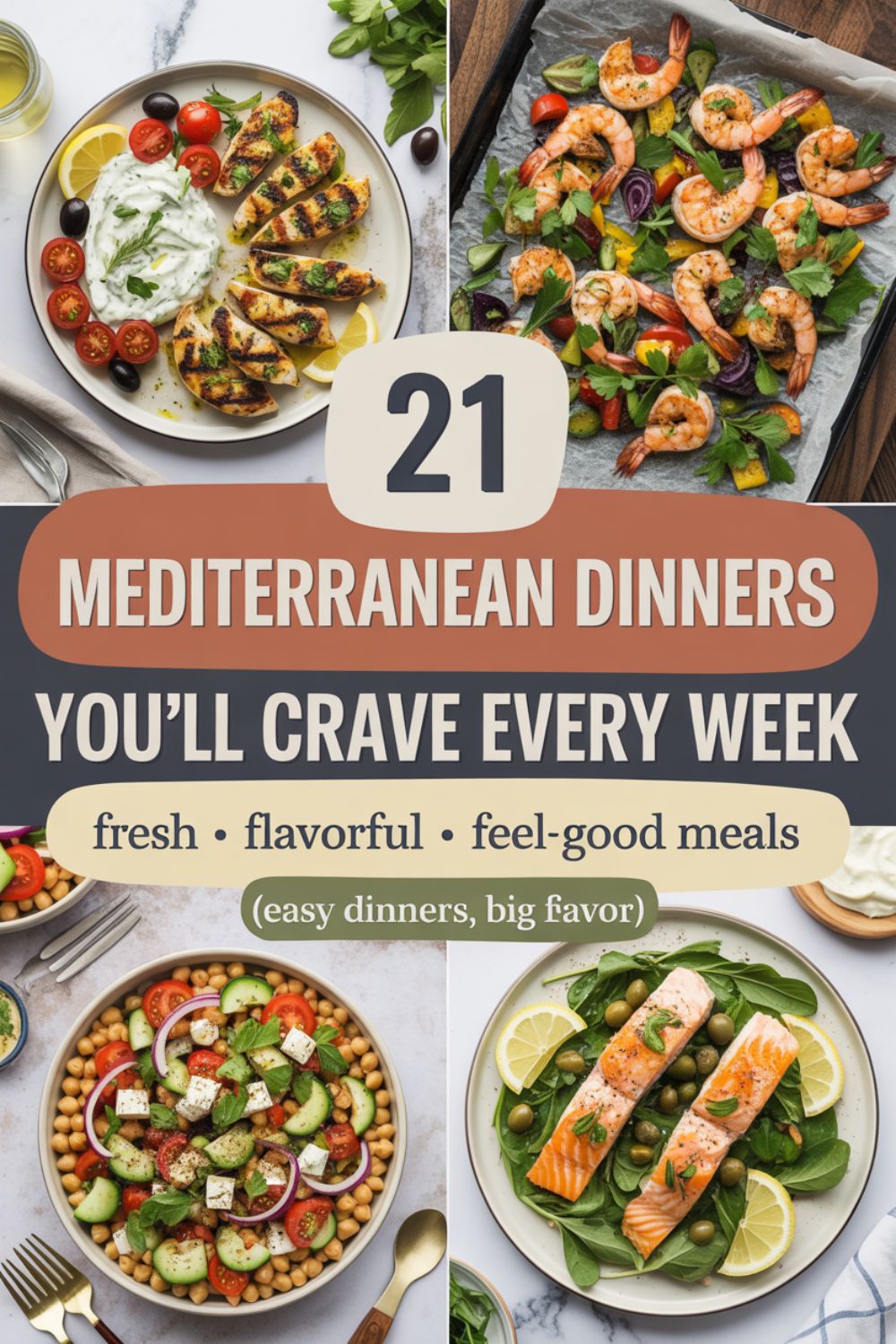
21 Mediterranean Dinners You’ll Crave Every Week
Look, I’m not going to promise you’ll suddenly become a Greek goddess who floats around in linen while whisking up perfect moussaka. But what I will tell you is this: Mediterranean dinners changed my weeknight dinner game, and once you get into the rhythm, you’ll wonder why you ever stressed over meal planning.
The Mediterranean diet isn’t just some trendy eating plan that’ll disappear next year—it’s been around for centuries because it actually works. Research consistently shows that this way of eating reduces cardiovascular disease risk by about 25% and increases overall longevity. But forget the clinical talk for a second. These dinners taste incredible, come together without making you want to order takeout halfway through, and leave you feeling satisfied instead of sluggish.
I’ve pulled together 21 dinners that rotate through my own kitchen on repeat. Some take 20 minutes, others need a bit more attention, but none of them require you to be a culinary genius or hunt down ingredients you’ll use once and forget about.
Why Mediterranean Dinners Actually Work for Real Life
Here’s what nobody tells you about Mediterranean cooking: it’s ridiculously forgiving. Forgot to marinate the chicken? Slap some oregano and lemon on it and call it a day. Ran out of cherry tomatoes? Regular ones work fine. The whole approach is built around fresh ingredients doing most of the heavy lifting, which means less fussing from you.
The anti-inflammatory properties of this diet come mainly from olive oil’s polyphenols and the abundance of plant-based foods. Translation: your body gets the good stuff without you having to think too hard about it. Plus, the focus on whole grains, legumes, and seafood means you’re getting quality protein and fiber that keeps you full longer than that sad desk salad ever could.
For those just starting out, I’d recommend checking out a 7-day Mediterranean anti-inflammation meal plan that walks you through the basics without overwhelming you. Sometimes having a roadmap makes all the difference.
Join Our Mediterranean Cooking Community!
Want weekly meal prep tips, recipe swaps, and real-time cooking advice? Join our WhatsApp community where hundreds of home cooks share what’s working in their kitchens.
Get exclusive recipe variations, shopping hacks, and honest reviews you won’t find anywhere else.
Join WhatsApp ChannelThe Powerhouse Proteins: Fish and Seafood Dinners
1. Lemon Herb Grilled Salmon with Roasted Vegetables
This one’s my go-to when I need dinner fast but want it to look like I tried. Season salmon fillets with salt, pepper, fresh dill, and loads of lemon juice. While it bakes, toss zucchini, bell peppers, and red onion with good quality olive oil# and roast until everything’s slightly charred. Get Full Recipe.
Salmon is loaded with omega-3 fatty acids, which help protect against heart disease and inflammation. Pair it with those roasted veggies and you’ve got a complete meal that doesn’t leave you hunting through the pantry an hour later.
2. Sheet Pan Mediterranean Cod
Cod gets overlooked, which is a shame because it’s mild, flaky, and basically impossible to screw up. Layer cherry tomatoes, olives, capers, and thinly sliced garlic on a rimmed baking sheet#, nestle the cod on top, drizzle everything with olive oil, and bake. Twenty minutes later, you’ve got a dish that looks restaurant-worthy.
3. Garlic Shrimp with White Beans and Spinach
Keep frozen shrimp in your freezer and you’ll never be more than 15 minutes from dinner. Sauté garlic in olive oil until fragrant, toss in the shrimp until pink, then add white beans and spinach. Finish with lemon juice and red pepper flakes. Serve over crusty bread or with high-fiber grains for extra staying power.
I use a large cast iron skillet# for this because it distributes heat evenly and goes straight from stove to table, which means one less dish to wash.
Mediterranean Cooking Essentials Kit
After years of testing kitchen tools, I’ve found the combo that actually makes Mediterranean cooking easier. This isn’t about having a fancy kitchen—it’s about having the right basics that won’t let you down.
- Premium Olive Oil Dispenser – No more glugging or spills, just controlled pours every time
- Herb Storage Containers – Keeps fresh herbs alive 3x longer (game-changer for basil and parsley)
- Citrus Zester & Juicer Combo – Because lemon is life in Mediterranean cooking
- Garlic Press That Actually Works – One squeeze, perfect mince, no sticky residue
I use these tools multiple times a week. They’re not expensive, but they eliminate those annoying micro-frustrations that make cooking feel like a chore.
See the Complete Kit4. Baked Sea Bass with Fennel and Citrus
Sea bass feels fancy but requires zero actual skill. Slice fennel thin (a mandoline slicer# makes this stupidly easy), layer it with orange and lemon slices, top with the fish, and bake. The fennel gets sweet and tender, the citrus keeps everything bright, and you look like you know what you’re doing.
Professional Chef’s Knife Set
The one investment that transforms your cooking
I resisted buying quality knives for years, thinking any blade would do. Then I upgraded, and suddenly prepping vegetables wasn’t a chore anymore. A sharp knife makes everything faster, safer, and more enjoyable.
Why This Set Works:
- 8-inch Chef’s Knife – Handles 90% of your cutting tasks effortlessly
- Paring Knife – Perfect for garlic, herbs, and detailed work
- Serrated Bread Knife – Cuts through crusty bread and tomatoes without squashing
- German Stainless Steel – Stays sharp longer, resists rust and staining
- Ergonomic Handles – Comfortable even during long meal prep sessions
These knives have lasted me four years of near-daily use without dulling. They’re balanced, comfortable, and make prep work genuinely satisfying instead of tedious.
5. Grilled Swordfish Steaks with Herb Salsa Verde
Swordfish has a meaty texture that satisfies even the most devoted carnivores. Grill it simply with salt and pepper, then top with salsa verde—just blitz parsley, mint, capers, garlic, olive oil, and lemon in a mini food processor#. The herbaceous sauce cuts through the richness of the fish perfectly. Get Full Recipe.
If you’re diving deeper into Mediterranean eating, a 14-day high-fiber plan can help you understand how to balance proteins like fish with plenty of vegetables and whole grains.
Chicken and Poultry Done Right
6. One-Pan Greek Chicken with Potatoes and Lemon
This dish requires almost no effort and delivers maximum flavor. Marinate chicken thighs in lemon juice, garlic, and oregano (or skip the marinating if you’re short on time—it still works). Arrange them on a large roasting pan# with halved baby potatoes, drizzle everything with olive oil, and roast until the chicken skin is crispy and the potatoes are golden.
Chicken thighs stay juicy even if you slightly overcook them, unlike breasts which turn into rubber if you so much as look at them wrong. Plus, they’re cheaper and more flavorful.
7. Chicken Souvlaki Bowls
Cut chicken into chunks, thread onto metal skewers#, and grill or broil until charred. Serve over rice or quinoa with cucumber, tomatoes, red onion, and a dollop of tzatziki. It’s basically deconstructed Greek street food that you can assemble in a bowl while watching TV. Get Full Recipe.
8. Braised Chicken with Olives and Tomatoes
Brown chicken pieces in a Dutch oven#, remove them, sauté onions and garlic, add canned tomatoes, olives, and white wine, then nestle the chicken back in and simmer. The result is fall-off-the-bone tender chicken in a sauce you’ll want to sop up with every piece of bread within reach.
For more inspiration on building complete meals, you might appreciate a Mediterranean family meal plan that shows you how to prep multiple dinners efficiently.
9. Mediterranean Turkey Meatballs with Cucumber Yogurt Sauce
Mix ground turkey with grated zucchini, garlic, cumin, and fresh herbs. Form into meatballs and bake on a parchment-lined sheet pan#. While they cook, whisk together Greek yogurt, grated cucumber, lemon, and dill for a cooling sauce. These meatballs are lighter than traditional ones but still satisfying.
Vegetarian Victories That Don’t Feel Like You’re Missing Out
10. Eggplant and Chickpea Stew
Cube eggplant, sauté it until golden (use enough olive oil—don’t be stingy), add onions, garlic, canned tomatoes, chickpeas, cumin, and cinnamon. Simmer until everything’s melded together. This stew is hearty, warming, and proves that vegetarian dinners can be genuinely filling without trying to mimic meat.
The combination of chickpeas and whole grains provides complete protein, making it ideal for those following a Mediterranean vegan approach.
11. Spanakopita-Inspired Spinach and Feta Pasta
Cook pasta, reserve some pasta water, then toss with sautéed garlic, wilted spinach, crumbled feta, lemon zest, and pine nuts. Add pasta water to create a light sauce. It captures all the flavors of spanakopita without the fiddly phyllo dough. Get Full Recipe.
12. Roasted Red Pepper and Walnut Dip with Grilled Vegetables
This isn’t technically a dinner on its own, but pair it with grilled zucchini, eggplant, and bell peppers, plus some warm pita, and suddenly you’ve got a feast. Blend roasted red peppers, toasted walnuts#, garlic, olive oil, and a touch of pomegranate molasses. The result is smoky, nutty, and seriously addictive.
13. Baked Feta with Tomatoes and Herbs
Put a block of feta in a small baking dish#, surround it with cherry tomatoes, garlic cloves, and fresh herbs, drizzle with olive oil, and bake until the tomatoes burst and the feta softens. Serve with crusty bread for scooping. It’s elegant, minimal effort, and tastes like you spent hours on it.
Speaking of minimal effort with maximum results, you might like exploring a plan designed for busy schedules that focuses on quick, anti-inflammatory meals.
14. Lentil Moussaka
Traditional moussaka takes forever. This version uses lentils instead of ground meat, which cuts the cooking time significantly. Layer cooked lentils with roasted eggplant and a simple béchamel sauce, then bake. It’s rich, comforting, and satisfying enough to convince the staunchest meat-eaters.
Grains and Bowls That Actually Satisfy
15. Farro Bowl with Roasted Vegetables and Tahini Drizzle
Cook farro according to package directions (or use that batch you prepped on Sunday). Roast whatever vegetables you have—sweet potatoes, Brussels sprouts, cauliflower all work beautifully. Top with a tahini-lemon dressing thinned with water to drizzle consistency. Add some chickpeas for protein and you’re set. Get Full Recipe.
The beauty of grain bowls is their flexibility. If you’re following a high-fiber program, you can easily adjust the components based on what you’ve got on hand.
16. Quinoa-Stuffed Bell Peppers
Hollow out bell peppers, stuff them with a mixture of cooked quinoa, sautéed onions, garlic, tomatoes, and crumbled feta, then bake. The peppers get sweet and tender, and the filling stays moist and flavorful. Make extra and reheat them for lunch the next day.
17. Bulgur Pilaf with Pistachios and Dried Apricots
Toast bulgur in olive oil, add vegetable broth, simmer until tender, then stir in toasted pistachios and chopped dried apricots. The combination of nutty grains, crunchy pistachios, and sweet apricots creates a complex flavor profile that works as either a main dish or a substantial side.
I toast the pistachios in a small dry skillet# for a few minutes until fragrant—it makes a huge difference in flavor.
The Ultimate Mediterranean Pantry Starter Pack
Staring at an empty pantry wondering where to start? This curated collection gives you everything you need to make 90% of Mediterranean recipes without constant grocery runs.
- Organic Extra Virgin Olive Oil – Cold-pressed, actually tastes like olives (not the flavorless stuff)
- Authentic Greek Oregano & Herbs – The difference between “meh” and “wow, this tastes like vacation”
- Quality Kalamata Olives & Capers – Properly brined, not rubbery or overly salty
- Specialty Sea Salt Sampler – Finishing salts that actually make a difference
Think of this as insurance against bland dinners. Once these are in your pantry, you’re never more than 20 minutes from something delicious.
Build Your PantryPasta and Comfort Food Mediterranean-Style
18. Pasta alla Norma
This Sicilian classic combines fried eggplant, tomato sauce, ricotta salata, and basil over pasta. The eggplant gets crispy edges, the sauce clings to every noodle, and the salty cheese ties it all together. It feels indulgent but is actually pretty light. Get Full Recipe.
Use a large non-stick pan# for frying the eggplant to minimize oil absorption while still getting that golden crust.
Premium Extra Virgin Olive Oil Collection
Taste the difference quality makes
Not all olive oils are created equal. The difference between grocery store oil and this stuff is night and day—grassy, peppery, actually tastes like olives. It’s the secret ingredient that makes simple Mediterranean dishes sing.
What Makes It Special:
- Cold-Pressed Within 24 Hours – Preserves maximum flavor and antioxidants
- Single-Origin Greek Olives – Traceable to specific groves, not mystery blends
- High Polyphenol Content – Those bitter/peppery notes mean powerful anti-inflammatory compounds
- Dark Glass Bottles – Protects oil from light degradation and rancidity
- Harvest Date Listed – Unlike most brands, you know exactly how fresh it is
I keep two bottles: this premium one for finishing dishes and drizzling, and a decent mid-range oil for cooking. But when I want to actually taste the olive oil—like on roasted vegetables or fresh bread—this is what I reach for.
19. Linguine with Clams and White Wine
Sauté garlic in olive oil, add white wine, let it reduce slightly, toss in fresh clams, cover until they open, then add cooked linguine and fresh parsley. It tastes like vacation in a bowl and takes about 20 minutes start to finish.
If you’re looking for more quick Mediterranean-inspired meals, a clean eating plan offers plenty of simple recipes that don’t sacrifice flavor.
20. Baked Orzo with Lamb and Tomatoes (Youvetsi)
Brown chunks of lamb in a heavy oven-safe pot#, add onions, garlic, tomatoes, cinnamon, and orzo, then add broth and bake. The orzo absorbs all the flavors while cooking, resulting in a dish that’s somewhere between a pasta and a pilaf. It’s hearty, warming, and perfect for cold nights.
21. Puttanesca with Extra Capers and Olives
Puttanesca is bold, briny, and comes together in the time it takes to boil pasta. Sauté anchovies (yes, trust me) and garlic until the anchovies dissolve, add tomatoes, capers, olives, and red pepper flakes. Toss with pasta and finish with fresh parsley. Get Full Recipe.
The umami from the anchovies creates incredible depth without making the dish taste fishy. If you’re hesitant about anchovies, start with just one or two—you won’t taste them individually, but you’ll notice something’s deliciously different.
Making It Work Week After Week
The secret to actually cooking these dinners regularly isn’t meal prepping your entire week on Sunday (though if that’s your thing, go for it). It’s about keeping your pantry stocked with Mediterranean staples so you’re never starting from zero.
Stock up on: good olive oil (not the fancy stuff for finishing, but decent quality for cooking), canned tomatoes, dried pasta, canned beans, dried lentils, quinoa or farro, garlic, lemons, olives, capers, and whatever dried herbs you use most. With these on hand, you can throw together a satisfying dinner even when your fridge looks sad.
For protein, I keep a rotation of frozen shrimp, a few chicken thighs in the freezer, and canned tuna or sardines in the pantry. Fresh fish goes on the shopping list for specific recipes, but I’m not mad if plans change and I need to pivot.
If you’re serious about making Mediterranean cooking a regular thing, exploring resources like a 30-day wellness plan can help you build sustainable habits instead of just trying a few recipes and forgetting about them.
The real advantage of Mediterranean dinners is their inherent flexibility. Most recipes are more like guidelines—swap this vegetable for that one, use white beans instead of chickpeas, substitute lemon for vinegar. Once you grasp the basic flavor profiles, you can improvise based on what you’ve got, what’s on sale, or what you’re craving.
The Bigger Picture: Why This Matters
Beyond the health stats—and yes, the research on cardiovascular benefits is compelling—there’s something fundamentally satisfying about cooking and eating this way. Mediterranean cuisine doesn’t ask you to weigh everything, count macros obsessively, or feel guilty about using olive oil liberally.
It’s food that tastes good, makes you feel good, and doesn’t require a culinary degree to execute. The diet emphasizes whole foods over processed ones, plenty of plants, moderate amounts of protein, and healthy fats. It’s also been shown to support healthy weight management better than typical low-fat diets, according to multiple meta-analyses of clinical trials.
For those dealing with specific health concerns, targeted approaches like a plan focused on hormone balancing or a anti-bloat plan can address particular needs while keeping meals delicious and satisfying.
What I appreciate most is that Mediterranean cooking doesn’t feel like deprivation. There’s no “cheat day” mentality because nothing is off-limits. You’re encouraged to use olive oil, enjoy bread with dinner, have a glass of wine if that’s your thing. It’s sustainable precisely because it doesn’t ask you to white-knuckle your way through meals.
Tips for Actually Sticking With It
Start with recipes that use ingredients you already like. If you hate olives, skip the Puttanesca and make the lemon herb salmon instead. The Mediterranean diet is broad enough to accommodate personal preferences.
Don’t try to overhaul everything at once. Pick two or three dinners from this list, make them a few times until they feel natural, then add more to your rotation. Trying to cook completely differently overnight usually leads to overwhelm and ordering pizza.
Mediterranean Meal Prep Containers That Don’t Suck
Regular plastic containers make everything taste like sadness by day three. These are specifically designed for Mediterranean meals—marinades, olive oil, acidic tomato sauces, and all.
- Glass Containers with Leak-Proof Lids – Reheat without transferring, no weird plastic smell
- Divided Sections – Keeps your roasted veggies from getting soggy next to grains
- Stackable & Space-Saving – Actually fit in a normal-sized fridge
- Dishwasher & Microwave Safe – Because life’s too short for hand-washing containers
I meal prep Sunday’s grains and proteins in these, and they still taste fresh on Thursday. Worth every penny for reducing food waste alone.
Upgrade Your Meal PrepInvest in a few good tools. You don’t need a kitchen full of gadgets, but a sharp chef’s knife#, a large cutting board#, and a heavy-bottomed pot# make everything easier. When cooking feels less like a struggle, you’re more likely to actually do it.
Cast Iron Skillet & Dutch Oven Combo
Two pieces that replace half your cookware
If you only buy two pieces of cookware, make it these. They’re workhorses that go from stovetop to oven, develop better seasoning over time, and will outlive you. I use mine at least four times a week.
Why Cast Iron Rules:
- 12-Inch Skillet – Perfect for searing fish, sautéing vegetables, baking cornbread
- 5-Quart Dutch Oven – Braising, stews, roasting whole chickens, baking bread
- Pre-Seasoned & Ready – No break-in period, use immediately out of the box
- Superior Heat Retention – Stays hot for even cooking and perfect crusts
- Naturally Non-Stick When Seasoned – Gets better with use, not worse
The skillet is my go-to for garlic shrimp, grilled fish, and roasted vegetables. The Dutch oven handles braised chicken, stews, and even baking bread. Between the two, you can make every recipe in this article.
Keep it simple on busy nights. Not every meal needs to be Instagram-worthy. Sometimes dinner is just grilled chicken with a side of sautéed greens and some bread. That’s still Mediterranean, and it counts.
If you want more structure, programs like a gut-healing menu or a high-fiber breakfast plan can give you specific direction while you’re finding your footing.
Never Run Out of Dinner Ideas Again
Tired of the same boring rotation? Our WhatsApp channel drops fresh Mediterranean dinner inspo every week—plus substitution ideas when you’re missing an ingredient.
Real cooks, real kitchens, zero judgment. Just good food and practical advice.
Get Weekly InspirationFrequently Asked Questions
Is Mediterranean food expensive to make regularly?
Not really, despite what you might think. The foundation is affordable—beans, lentils, pasta, seasonal vegetables, and canned tomatoes. Where people get tripped up is buying fancy imported ingredients they use once. Stick to basics, buy fish when it’s on sale, and use olive oil from the grocery store (save the expensive stuff for drizzling). Most of these dinners cost less per serving than takeout.
Can I meal prep Mediterranean dinners?
Absolutely. Grain-based dishes, stews, and meatballs all reheat beautifully. Cook your grains in batches, prep your vegetables on the weekend, and you’re halfway to several dinners. Fish is better cooked fresh, but marinated proteins can sit in the fridge for a day or two before cooking.
What if I’m not a fan of fish or seafood?
Focus on the chicken, vegetarian, and grain-based options. The Mediterranean diet is flexible enough that you can get the benefits without forcing yourself to eat foods you dislike. Chicken thighs, legumes, and eggs provide plenty of protein. You’ll miss out on omega-3s from fish, but you can get some from walnuts and flaxseed.
Are these recipes actually authentic?
Some are traditional, others are Mediterranean-inspired. Honestly, authenticity is less important than whether the food tastes good and works for your life. If you want strictly traditional recipes, there are resources for that. But most home cooks in Mediterranean countries adapt recipes based on what they have, and you should too.
How do I know if I’m getting enough protein without eating meat every night?
Beans, lentils, chickpeas, Greek yogurt, eggs, and cheese all provide protein. Combine legumes with whole grains to get complete proteins. A cup of cooked lentils has about 18 grams of protein, and chickpeas have around 15 grams per cup. Add some feta or a yogurt-based sauce, and you’re easily hitting adequate protein levels without relying on meat.
Your Turn to Get Cooking
These 21 Mediterranean dinners aren’t meant to be a strict rotation where you cook them in order and start over. They’re a toolkit. Pick the ones that sound good, try them out, keep the ones you love, and skip the ones that don’t work for you.
The point isn’t perfection—it’s finding a sustainable way to eat well that doesn’t make you miserable. Some weeks you’ll nail it and cook five Mediterranean dinners. Other weeks you’ll manage two and order takeout the rest of the time. That’s fine. Life happens.
What matters is having options that taste good, come together without excessive drama, and leave you feeling satisfied instead of sluggish or deprived. Mediterranean dinners deliver on all three counts, which is why they’ve stuck around in my rotation long after other cooking trends faded.
Start with one or two recipes this week. See how they fit into your schedule and your family’s preferences. Build from there. Before you know it, you’ll have your own rotation of Mediterranean dinners that you actually crave, not just tolerate because they’re “healthy.”
And if you need a bit more structure or want to dive deeper into Mediterranean eating patterns, resources like a hormone-balancing plan can provide the framework while you develop your own cooking rhythm.
The beauty of this approach is that it gets easier the more you do it. Your pantry stays stocked with the right ingredients. You develop a feel for the flavors and know instinctively what works together. And eventually, throwing together a delicious Mediterranean dinner becomes second nature—no recipe needed.
So grab that bottle of olive oil#, stock up on some lemons and garlic, and pick a recipe that sounds good. Your weeknight dinners are about to get a whole lot better.