
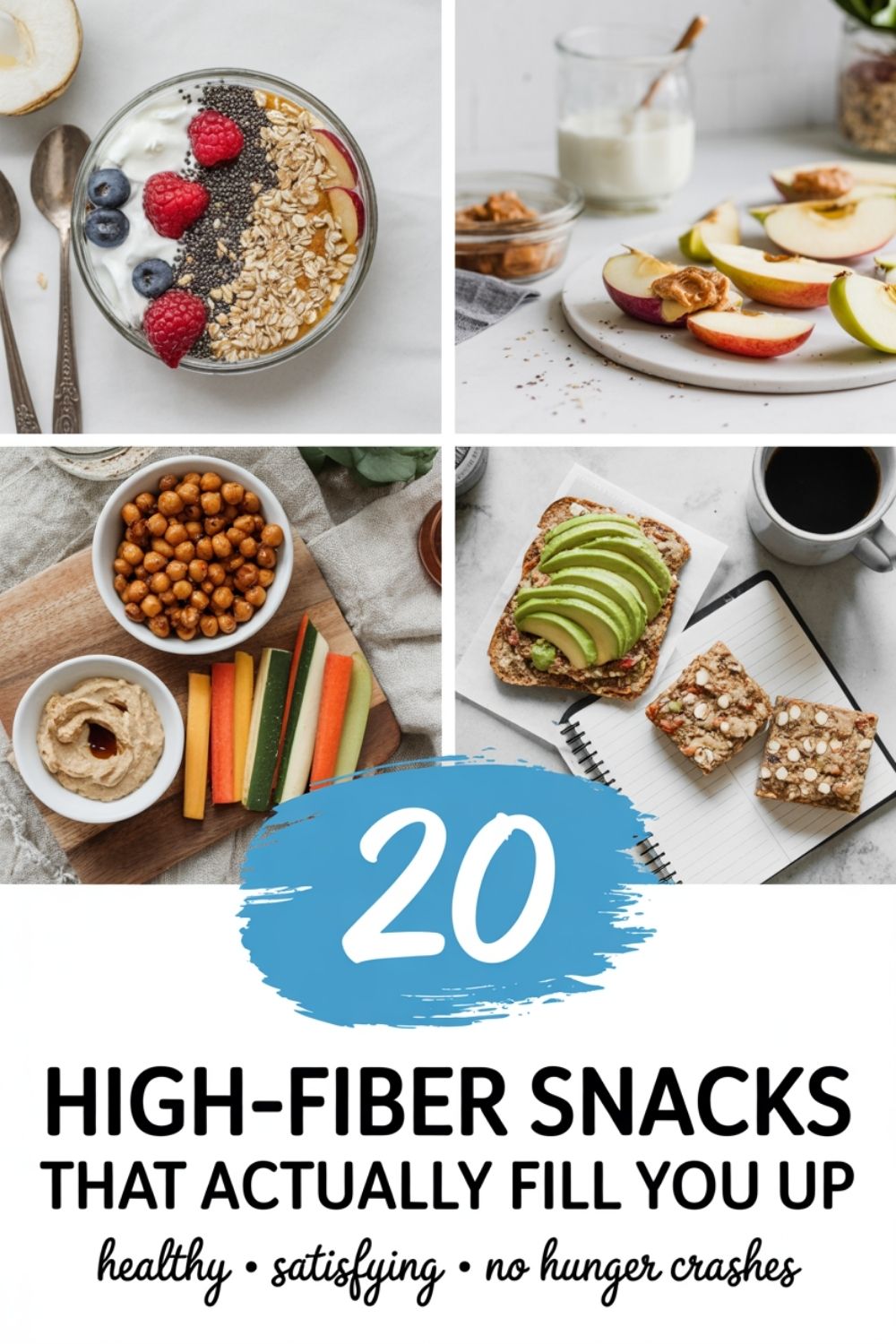
20 High-Fiber Snacks That Actually Fill You Up
Look, I’m just going to say it: most “healthy” snacks are a total scam. You grab something labeled low-calorie or fat-free, munch it down, and fifteen minutes later you’re back at the pantry wondering if you hallucinated eating in the first place. The problem isn’t your willpower or your metabolism—it’s that you’re missing the one ingredient that actually keeps hunger at bay: fiber.
I spent years cycling through snacks that promised satisfaction but delivered nothing but empty promises and an annoyed stomach. Then I learned about fiber’s superpower—it slows digestion, keeps blood sugar steady, and makes you feel full without requiring a second mortgage to afford. Research shows that fiber can lower blood pressure and cholesterol levels while helping with weight loss, so we’re not just talking about feeling full here—we’re talking about actual health benefits.
So I’ve rounded up 20 snacks that pack serious fiber punch and won’t leave you ransacking the fridge an hour later. These aren’t boring health food store rejects, either. They’re real, tasty options that fit into actual life. Ready to stop playing hunger roulette?
Why Fiber Actually Works (Not Just Health Blog BS)
Before we get into the snacks, let’s talk about why fiber is basically magic without the smoke and mirrors. When you eat fiber, it doesn’t break down like other carbs. Instead, it moves through your digestive system mostly intact, which sounds useless until you realize that’s exactly why it works.
There are two types: soluble and insoluble. Soluble fiber dissolves in water and forms a gel-like substance that slows down digestion. This keeps you fuller longer and helps stabilize blood sugar—no more energy crashes that send you face-first into a bag of chips. Insolible fiber doesn’t dissolve but adds bulk to your stool, which sounds unsexy but is crucial for digestive health.
Studies indicate that increased fiber consumption can reduce the risk of cardiovascular disease, type 2 diabetes, obesity, and colon cancer. That’s not just feel-good marketing speak—that’s actual science backing up what I’m telling you. Most Americans don’t get nearly enough fiber, which partially explains why we’re always hungry and reaching for snacks that don’t satisfy.
1. Apple Slices with Almond Butter
This combo is basically the gold standard of high-fiber snacks, and for good reason. One medium apple packs around 4 grams of fiber, and when you pair it with almond butter, you’re adding healthy fats and protein that make this snack seriously satisfying.
I keep a jar of almond butter in my pantry at all times because it’s versatile, doesn’t require refrigeration until opened, and tastes incredible. The key is leaving the apple skin on—that’s where most of the fiber lives. Get Full Recipe
Pro move: slice up a few apples on Sunday night and store them in water with a squeeze of lemon juice. They’ll stay fresh all week, and you’ll thank yourself when you’re rushing out the door Tuesday morning.
Premium Organic Nut Butter Variety Pack
This is hands-down the best nut butter collection I’ve found. Six different flavors—almond, cashew, walnut, pecan, macadamia, and mixed—all organic, no added sugar or oils. Just nuts and a pinch of salt.
2. Pear with Walnuts
Pears are fiber champions—half a large pear delivers a solid dose of both soluble and insoluble fiber. They’re sweet enough to satisfy dessert cravings but won’t spike your blood sugar like candy.
I pair mine with walnuts because they add omega-3s and keep things interesting texture-wise. You can toast the walnuts in a pan if you’re feeling fancy, but honestly, I usually just eat them straight from the bag. If you want to elevate this snack, use this mini toaster oven—makes toasting nuts foolproof with zero babysitting required.
3. Popcorn (The Real Kind, Not Microwave Nonsense)
Three cups of air-popped popcorn give you about 3.5 grams of fiber and only 100 calories. That’s a huge volume of food for relatively few calories, which means you can actually munch for a while without guilt.
Skip the microwave bags loaded with fake butter and chemicals. Get yourself an air popper and make it fresh. Season with nutritional yeast, garlic powder, or a tiny drizzle of olive oil and sea salt. It takes two minutes and tastes infinitely better than anything from a bag.
Hot Air Popcorn Maker – No Oil Required
This compact air popper changed my snacking game completely. Makes perfect popcorn in under 3 minutes with zero oil. It’s fast, efficient, and produces the fluffiest kernels I’ve ever had. The measuring cup doubles as a butter melter if you’re feeling indulgent.
Looking for more wholesome snack ideas that keep you satisfied? Check out this 14-day high-fiber Mediterranean plan that’s packed with creative options, or try this Mediterranean meal prep guide for stress-free weekly planning.
4. Carrots and Hummus
This is the snack I reach for when I need crunch and substance. Baby carrots are convenient, but full-size carrots sliced into sticks have more fiber and honestly taste better. One medium carrot has about 2 grams of fiber, and a quarter-cup of hummus adds another 3 grams plus protein.
Store-bought hummus works fine, but if you make your own, you control the texture and flavor. I use this food processor for everything from hummus to pesto—it’s become one of my most-used kitchen tools.
5. Greek Yogurt with Berries and Chia Seeds
Plain Greek yogurt doesn’t have fiber, but it’s the perfect base for ingredients that do. Top it with raspberries (8 grams of fiber per cup), blueberries, and a tablespoon of chia seeds (5 grams of fiber), and you’ve got a powerhouse snack.
Chia seeds are ridiculously high in fiber and expand in liquid, making them extra filling. Let this sit for five minutes before eating so the chia has time to absorb moisture and create a pudding-like texture. I buy organic chia seeds in bulk because they’re shelf-stable and way cheaper when you’re not buying tiny bags.
Organic Chia Seeds – 2 lb Resealable Bag
These USDA organic chia seeds are my pantry staple. At 5 grams of fiber per tablespoon, they’re insanely versatile—add to yogurt, smoothies, oatmeal, or make chia pudding. This 2-pound bag lasts months and costs less per ounce than those tiny grocery store containers.
6. Edamame (The Underrated Hero)
One cup of edamame delivers 8 grams of fiber plus 17 grams of protein. That’s a complete snack right there. You can buy it frozen and just steam or microwave it—takes about three minutes.
Season with sea salt or try a squeeze of lime and chili powder for variety. I keep bags in my freezer for those afternoons when I need something substantial but don’t want to actually cook. According to Harvard Health, incorporating more plant-based proteins like edamame supports heart health while boosting fiber intake.
7. Whole Grain Crackers with Avocado
Avocados aren’t just for toast—they’re fiber-rich (about 10 grams per fruit) and pair perfectly with whole grain crackers. Choose crackers with at least 3 grams of fiber per serving, which usually means they’re made with actual whole grains, not refined flour masquerading as healthy.
Mash half an avocado with a fork, add a sprinkle of salt and red pepper flakes, and spread it on crackers. It’s creamy, satisfying, and doesn’t involve turning on the stove. I store cut avocados with the pit still in and a squeeze of lemon juice to prevent browning.
8. Roasted Chickpeas
These crunchy little guys are dangerously addictive and pack about 6 grams of fiber per half-cup. You can buy them pre-roasted or make your own—I prefer making them because store-bought versions are often oversalted or stale.
Drain and rinse a can of chickpeas, pat them dry, toss with olive oil and spices, then roast at 400°F for 30 minutes. Use this silicone baking mat and you’ll never deal with stuck-on chickpeas again. Zero sticking, zero scrubbing, just crispy perfection.
If you’re loving these plant-based options, you’ll definitely want to explore this Mediterranean vegan plan that’s loaded with fiber-rich recipes.
9. Banana with Peanut Butter
A medium banana has about 3 grams of fiber, and adding a tablespoon of peanut butter gives you healthy fats and protein that slow down digestion even more. This combo is classic for a reason—it just works.
For a variation, slice the banana and freeze it, then spread peanut butter between two slices for a makeshift sandwich. It’s like ice cream but actually filling. FYI, natural peanut butter with just peanuts and salt is always better than versions with added sugar and hydrogenated oils.
10. Oatmeal Energy Balls
These no-bake bites combine oats (fiber), nut butter (protein and fat), and mix-ins like chia seeds or dried fruit. They’re portable, customizable, and way better than grabbing a granola bar that’s basically a candy bar in disguise.
Mix a cup of oats with half a cup of nut butter, a quarter cup of honey, and whatever add-ins you want. Roll into balls and refrigerate. I use these portion scoops to keep them uniform, which matters more than you’d think for storage and portion control. Get Full Recipe
📊 High-Fiber Meal Tracker & Planner
Tracking fiber intake changed my entire approach to eating. This digital meal planner and fiber tracker helps you hit your daily fiber goals without obsessing over every gram.
- Pre-built high-fiber meal templates with exact fiber counts
- Weekly grocery lists organized by store section
- Snack swap suggestions when you’re running low on fiber
- Printable daily trackers to monitor progress
It’s basically a nutritionist in spreadsheet form, minus the expensive appointments. Track meals, plan ahead, and actually see results instead of guessing.
Get the Meal Planner11. Raspberries (Straight Up, No Frills)
One cup of raspberries has 8 grams of fiber—that’s more than most “high-fiber” granola bars. They’re sweet, they’re tart, they’re satisfying, and they require zero prep beyond rinsing.
I buy frozen raspberries in bulk because they’re cheaper and don’t go bad in two days like fresh ones. Let them thaw slightly for the perfect texture, or blend them into a smoothie. Either way, you’re getting serious fiber bang for your buck.
12. Sweet Potato Rounds
Slice a sweet potato into rounds, brush with olive oil, season, and bake until crispy. One medium sweet potato has about 4 grams of fiber, and the complex carbs keep your energy stable without the blood sugar roller coaster.
These are filling enough to count as a snack but interesting enough that you won’t feel like you’re eating diet food. Top with a dollop of Greek yogurt or a sprinkle of cinnamon for variety.
13. Trail Mix (But Make It Right)
Most store-bought trail mix is candy with a few nuts thrown in for appearances. Make your own with raw almonds, walnuts, dried cherries, pumpkin seeds, and a tiny bit of dark chocolate. You’ll get fiber from the nuts and seeds plus healthy fats that keep you satisfied.
I portion mine into small containers using these reusable snack bags because otherwise I’ll eat the entire batch in one sitting. Nuts are healthy, but they’re also calorie-dense, so portion control matters here.
📱 Mediterranean Diet & Anti-Inflammation App
If you’re serious about high-fiber eating paired with anti-inflammatory benefits, this Mediterranean diet tracking app is genuinely life-changing. I resisted apps for years, but this one actually works.
- Scan barcodes to instantly check fiber content and inflammation scores
- Recipe builder that calculates total fiber per serving automatically
- Customizable reminders for meal prep and hydration
- Community challenges to keep you motivated and accountable
The interface is clean, not cluttered with ads, and syncs across devices. Plus, it includes a massive database of Mediterranean recipes specifically optimized for fiber and anti-inflammatory eating.
Download the App14. Sliced Bell Peppers with Guacamole
Bell peppers have about 2 grams of fiber each, and guacamole adds more from the avocado. This combo is crunchy, creamy, and colorful—way more exciting than sad desk snacks.
Use red, yellow, or orange peppers for maximum sweetness and vitamin content. Store-bought guac works, but homemade takes five minutes and tastes infinitely better. Mash avocado with lime juice, cilantro, salt, and a diced tomato if you’re feeling ambitious.
Speaking of fresh, veggie-forward options, this gut-healing Mediterranean menu focuses on fiber-rich vegetables and this anti-bloat plan emphasizes foods that keep digestion smooth.
15. Pear and Cheese
Pears and aged cheddar is a combination that shouldn’t work but absolutely does. The fiber from the pear plus the protein and fat from the cheese make this snack balanced and satisfying.
Slice both thinly and alternate them on a plate for maximum fancy vibes with minimal effort. This is my go-to when I want something that feels indulgent but won’t wreck my afternoon energy.
16. Whole Wheat Toast with Mashed Beans
This might sound weird, but trust me—mashed white beans on toast with a drizzle of olive oil and cracked pepper is incredible. Beans are fiber superstars, and whole wheat toast adds even more.
Keep canned beans in your pantry and you always have an option that’s more interesting than plain toast. Add a squeeze of lemon and some fresh herbs if you’re feeling it, or keep it simple. Either way, you’re getting about 8 grams of fiber per serving.
17. Frozen Grapes
Freeze grapes and you’ve got a snack that feels like candy but actually has fiber and nutrients. One cup has about 1.4 grams of fiber, which isn’t massive but adds up when you’re eating the whole cup slowly.
The frozen texture makes them last longer, so you’re not inhaling them in thirty seconds like regular grapes. IMO, this is one of the best summer snacks that doesn’t feel like punishment.
18. Cottage Cheese with Flaxseed and Berries
Cottage cheese is having a moment, and it deserves one. It’s high in protein, and when you add ground flaxseed (2 grams of fiber per tablespoon) and berries, you’ve got a complete snack.
I use a coffee grinder to grind flaxseeds fresh because whole flaxseeds pass through your system undigested. Ground flax absorbs better and adds a nutty flavor that works surprisingly well with berries.
19. Baked Apple Chips
Slice apples thin, sprinkle with cinnamon, and bake at 200°F for about two hours. You’ll end up with crispy, sweet chips that satisfy the crunch craving without any of the junk in store-bought versions.
One apple makes a decent batch, and since you’re eating the whole fruit (including the skin), you’re getting all the fiber. These store well in an airtight container for a few days, though they rarely last that long in my house.
20. Black Bean Brownies
Yes, really. Blend black beans with cocoa powder, eggs, a bit of honey, and vanilla, then bake. The result is fudgy, chocolatey, and packed with fiber and protein. Each brownie has about 3-4 grams of fiber depending on your recipe.
I know it sounds suspicious, but the beans are completely undetectable taste-wise. Use a high-speed blender to make sure everything gets smooth—that’s the key to making these work. Get Full Recipe
📖 The Complete High-Fiber Anti-Inflammatory Recipe Ebook
I used to cobble together recipes from random blogs until I found this comprehensive high-fiber recipe ebook. It’s 150+ pages of actually tested recipes that prioritize fiber without sacrificing flavor.
- 100+ recipes organized by meal type and fiber content
- Complete nutritional breakdowns including exact fiber grams
- Batch cooking guides for meal prep efficiency
- Substitution charts for common allergens and preferences
- Bonus section on anti-inflammatory ingredient combinations
Every recipe includes prep time, cooking time, and storage instructions. No fluff, no life stories before the recipe—just solid, practical information that helps you eat better without overthinking it.
Get the Recipe EbookFor even more creative ways to sneak fiber into desserts and treats, check out this 30-day anti-inflammation program that includes sweet options alongside savory meals.
How to Actually Make This Work in Real Life
Having a list of snacks is great, but if you don’t have them available when hunger hits, you’ll default to whatever’s easiest. That’s usually something processed and fiber-free that leaves you unsatisfied.
Here’s what I do: Sunday afternoon, I spend 30 minutes prepping. I slice vegetables, portion out nuts, wash berries, and make a batch of energy balls or roasted chickpeas. Everything goes into clear containers in the fridge so I can see what I have.
When 3 PM rolls around and I’m tempted to demolish a bag of chips, I open the fridge and see actual options that I know will fill me up. That small bit of prep is the difference between intentions and actual results. Research also shows that adequate fiber intake can alter the gut microbiome to support immune function and protect against inflammation, so you’re doing more than just satisfying hunger—you’re supporting your overall health.
If you’re ready to commit to better eating habits, this 30-day anti-inflammation challenge includes structured meal plans and prep guides, or try this 7-day plan designed specifically for busy schedules.
The Fiber Mindset Shift
Once you start prioritizing fiber, everything changes. You’re not constantly thinking about food because you’re actually satisfied. Your energy stays stable instead of crashing every few hours. Your digestion improves. You stop relying on caffeine and sugar to get through the day.
It’s not about perfection or eating kale for every meal. It’s about having real, filling options that don’t make you feel deprived. These 20 snacks aren’t punishment—they’re actually good, and they work.
Start with two or three that sound appealing and rotate them for a week. Notice how different you feel compared to your usual snacking routine. Then add a few more. Before you know it, high-fiber snacking becomes second nature, not a chore.
Frequently Asked Questions
How much fiber should I eat per day?
Most adults should aim for 25-35 grams of fiber daily, but most Americans only get about 15 grams. Start where you are and gradually increase your intake to avoid digestive discomfort. Focus on adding fiber-rich whole foods rather than supplements when possible, as whole foods come with additional nutrients and benefits.
Will eating more fiber help me lose weight?
Research shows that participants who consumed shakes rich in protein and fiber experienced significant weight loss, reductions in body fat, and lower LDL cholesterol levels. Fiber keeps you fuller longer, which naturally reduces calorie intake without feeling restricted. It also helps stabilize blood sugar, preventing the crashes that lead to overeating.
Can I eat too much fiber?
Yes, ramping up fiber too quickly can cause bloating, gas, and digestive discomfort. Increase gradually over several weeks and drink plenty of water—fiber needs water to work properly. If you’re consistently eating 50+ grams daily and experiencing issues, scale back slightly.
What’s the difference between soluble and insoluble fiber?
Soluble fiber dissolves in water and forms a gel that slows digestion, helping with fullness and blood sugar control. Insoluble fiber doesn’t dissolve and adds bulk to stool, supporting regular bowel movements. You need both types for optimal health, and most high-fiber foods contain a mix of each.
Are fiber supplements as good as getting fiber from food?
While supplements can help if you’re falling short, whole food sources are superior because they provide vitamins, minerals, and phytonutrients that supplements lack. Focus on real foods first, and use supplements only to bridge gaps when necessary.
Final Thoughts
High-fiber snacks aren’t complicated or expensive. They don’t require special equipment or culinary skills. They just require a slight shift in how you think about snacking and a willingness to prep a little bit ahead of time.
The payoff is huge: stable energy, real satiety, better digestion, and long-term health benefits that go way beyond just feeling full. You don’t need to overhaul your entire diet overnight. Pick a few snacks from this list, try them for a week, and see how you feel.
I’m betting you’ll feel the difference pretty quickly. And once you realize that snacking doesn’t have to mean choosing between satisfaction and health, there’s no going back. Your body deserves fuel that actually works, and these 20 options deliver exactly that.