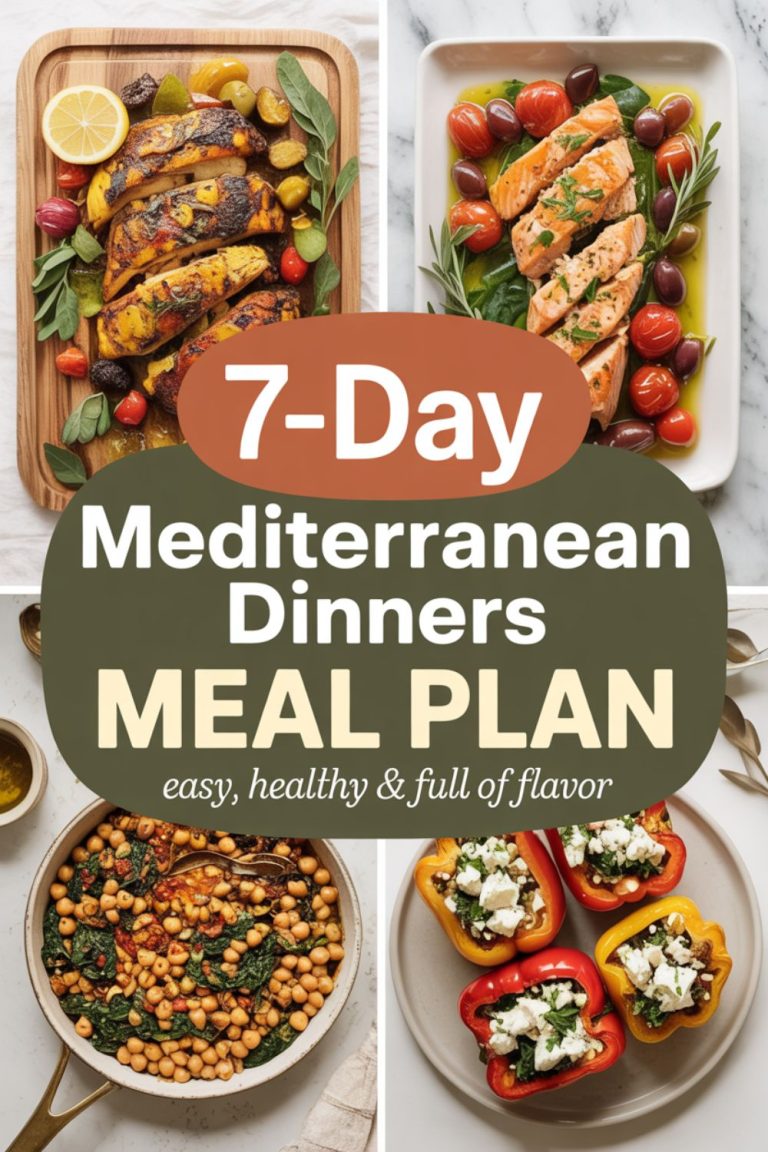
14-Day Mediterranean Weight Loss Plan
Let’s cut through the noise—most weight loss diets are miserable. You’re constantly hungry, obsessing over every calorie, eating food that tastes like cardboard, and feeling guilty every time you’re not perfect. Then you inevitably crash, regain everything you lost, and feel worse than when you started. It’s exhausting, and honestly, it doesn’t have to be that way.
The Mediterranean approach flips the entire script. You’re not restricting, you’re enjoying. You’re not starving, you’re satisfied. You’re not eliminating entire food groups, you’re eating a rainbow of delicious options. And somehow, without the torture of traditional dieting, the weight comes off. Not through deprivation—through eating foods that naturally support healthy metabolism, stable blood sugar, and genuine satiety.
This 14-day plan proves that weight loss doesn’t require suffering. You’ll eat three full meals plus snacks daily. Nothing is off-limits forever. The foods are satisfying enough that you’re not constantly thinking about your next meal. And the weight loss happens as a natural side effect of eating nutrient-dense, whole foods that your body actually knows how to process.
Why Mediterranean Eating Works for Weight Loss
Most diets fail because they fight against human biology. You restrict calories too severely, your metabolism slows down to match. You eliminate carbs completely, you become obsessed with bread. You go low-fat, you’re never satisfied. The Mediterranean diet works differently—it works with your body, not against it.
According to research on Mediterranean diets and weight loss, people who follow Mediterranean eating patterns lose weight more successfully and keep it off longer than those following traditional low-fat diets. The reasons are multiple and synergistic.
Satiety from healthy fats: Olive oil, nuts, avocados, and fatty fish provide fats that trigger satiety hormones. You feel full and stay full for hours, naturally eating less without white-knuckling through hunger.
Blood sugar stability: The combination of fiber, protein, and healthy fats at every meal prevents blood sugar spikes and crashes. No more ravenous hunger an hour after eating.
Nutrient density: These foods pack massive nutrition into reasonable calorie amounts. Your body gets what it needs, reducing cravings driven by nutritional deficiencies.
Metabolic support: The omega-3s, polyphenols, and antioxidants in Mediterranean foods support healthy thyroid function, reduce inflammation that interferes with metabolism, and optimize hormone balance.
Sustainability: You can actually eat this way long-term because the food tastes good and doesn’t require superhuman willpower. Sustainability is the key to permanent weight loss.
This isn’t a crash diet. You’re not losing 10 pounds in 14 days. You’re establishing eating patterns that support gradual, sustainable weight loss of 1-2 pounds per week—the rate that actually stays off.
The Four Core Principles
This plan operates on four non-negotiable principles:
Principle 1: Prioritize protein and fiber at every meal. These two nutrients are your weight loss MVPs. They increase satiety, stabilize blood sugar, and require more calories to digest than refined carbs or sugar.
Principle 2: Use healthy fats strategically. Don’t go low-fat—that’s a recipe for constant hunger. Instead, include olive oil, nuts, seeds, avocados, and fatty fish. These fats trigger fullness and support nutrient absorption.
Principle 3: Eat massive amounts of vegetables. Fill half your plate with non-starchy vegetables at lunch and dinner. They’re high-volume, low-calorie, nutrient-dense, and filled with fiber that keeps you full.
Principle 4: Minimize processed foods and added sugars. These drive hunger, spike blood sugar, provide empty calories, and make weight loss nearly impossible. Stick to whole, real foods.
These principles create a natural calorie deficit without counting anything. You’re eating so much fiber and protein that you naturally consume fewer calories while feeling genuinely satisfied.
Week One: Days 1-7
Day 1: Monday
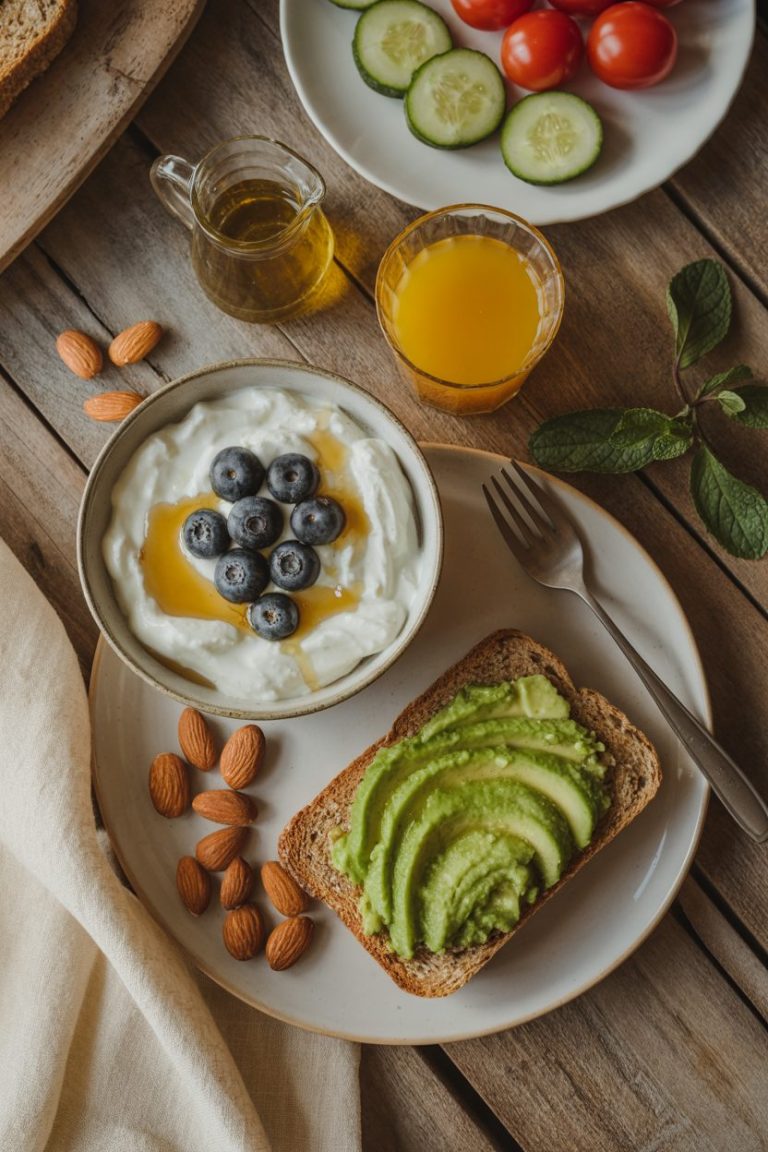
Breakfast: Greek yogurt with blueberries, walnuts, and a drizzle of honey. Sprinkle with cinnamon.
Lunch: Large salad with grilled chicken breast, mixed greens, cherry tomatoes, cucumber, olives, and olive oil-lemon dressing. Add chickpeas for extra protein and fiber.
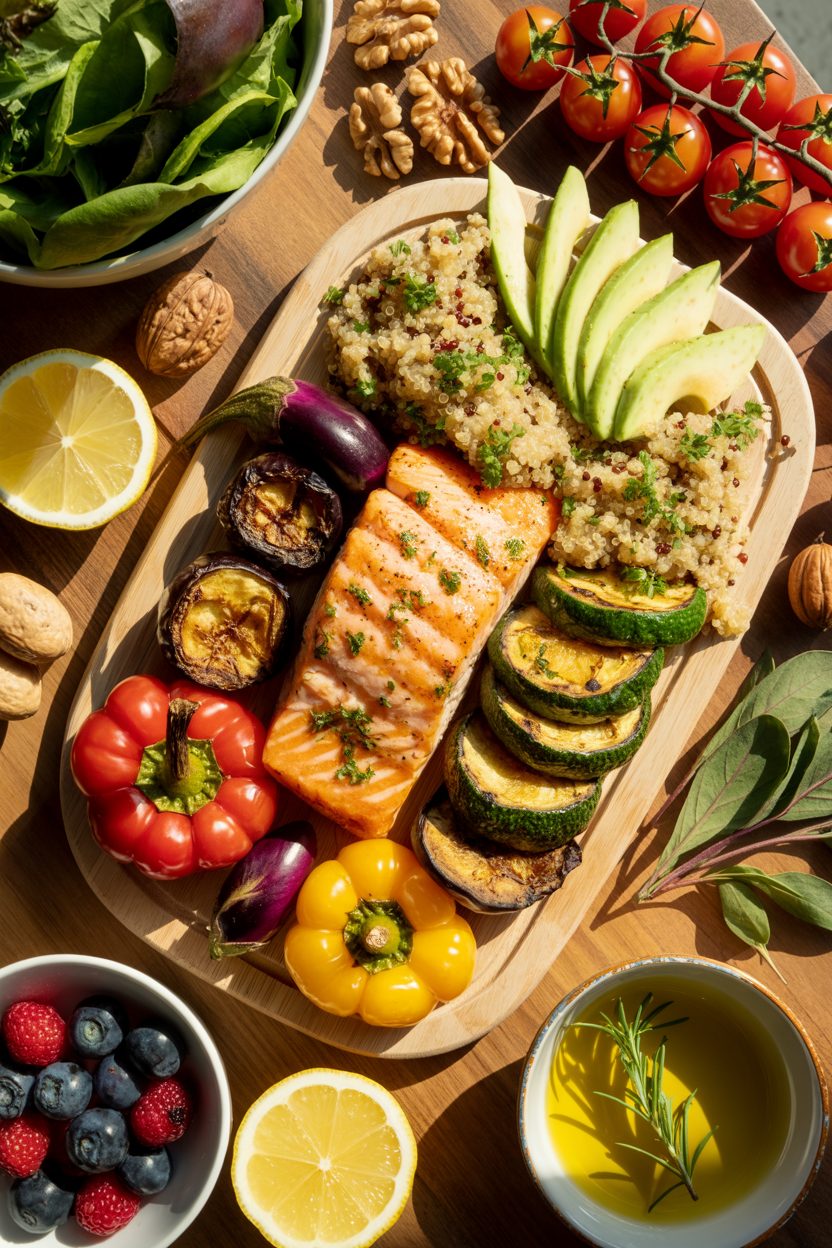
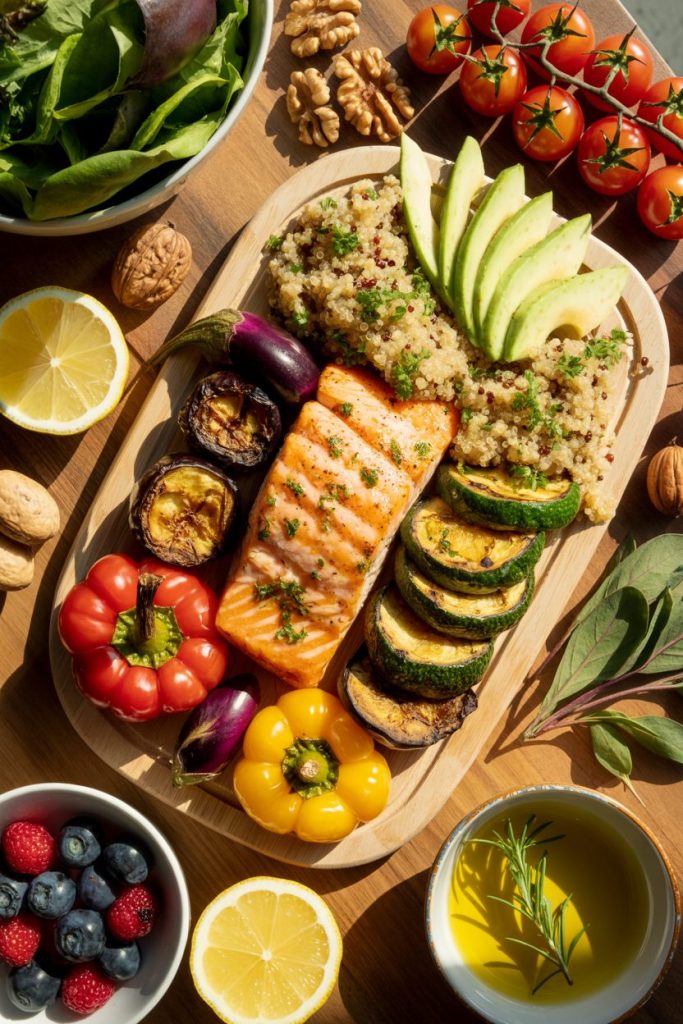
Dinner: Baked salmon with roasted Brussels sprouts and quinoa. Season everything with lemon, garlic, and herbs.
Snacks: Apple with almond butter, carrot sticks with hummus.
Day one might feel like you’re eating too much food to lose weight. That’s the point. The volume comes from vegetables, fiber, and protein—foods that fill you up without excessive calories. Trust the process even when it feels counterintuitive.
Greek yogurt provides protein that keeps you satisfied all morning. The walnuts add omega-3s and healthy fats. The berries deliver fiber and antioxidants. This breakfast combination keeps blood sugar stable for hours. Get Full Recipe for the perfect yogurt bowl proportions that maximize satiety.
Day 2: Tuesday
Breakfast: Scrambled eggs with spinach, tomatoes, and feta. Side of whole grain toast with avocado.
Lunch: Lentil soup with vegetables and a large side salad with olive oil dressing.
Dinner: Grilled chicken breast with roasted cauliflower and a generous portion of mixed greens dressed with olive oil and lemon.
Snacks: Handful of almonds, bell pepper strips with hummus.
Lentils are weight loss gold—15 grams of protein and 15 grams of fiber per cooked cup. They’re filling, satisfying, and take forever to digest, keeping you full for hours. Plus, they’re dirt cheap.
The key to weight loss on this plan is the massive vegetable portions. Half your plate at every meal should be non-starchy vegetables. They add volume and nutrients without many calories. I use these large dinner plates that make reasonable portions look abundant—portion control without feeling deprived.
If you’re enjoying these vegetable-forward meals, you might also love Mediterranean roasted vegetable combinations or try satisfying salad bowl ideas that keep lunches interesting.
Day 3: Wednesday
Breakfast: Smoothie with spinach, banana, frozen berries, Greek yogurt, and almond butter. Add chia seeds for extra fiber.
Lunch: Grilled salmon salad with mixed greens, cucumber, avocado, and olive oil dressing.
Dinner: Turkey meatballs (no breadcrumbs) over zucchini noodles with marinara sauce. Large side salad.
Snacks: Fresh berries, handful of walnuts.
Zucchini noodles are your friend on this plan. They provide volume and vegetable servings without the calorie density of pasta. You feel like you’re eating a huge plate of food, but the calorie count stays reasonable. I use this spiralizer multiple times weekly—worth every penny for effortless veggie noodles.
Days 4-7: Building Momentum
Day 4:
- Breakfast: Steel-cut oats with sliced apple, cinnamon, and chopped pecans
- Lunch: Mediterranean chickpea salad in a whole wheat pita with vegetables
- Dinner: Baked cod with roasted broccoli and quinoa
- Snacks: Cucumber slices with tzatziki, handful of cashews
Day 5:
- Breakfast: Veggie frittata with spinach, mushrooms, and tomatoes
- Lunch: White bean and kale soup with a large side salad
- Dinner: Grilled chicken thighs with roasted eggplant and a generous portion of mixed greens
- Snacks: Fresh pear, almonds
Day 6:
- Breakfast: Greek yogurt parfait with granola, strawberries, and ground flaxseed
- Lunch: Tuna salad over mixed greens with olive oil-lemon dressing
- Dinner: Baked salmon with asparagus and cauliflower rice
- Snacks: Apple slices with cashew butter, carrot sticks
Day 7:
- Breakfast: Scrambled eggs with avocado and cherry tomatoes on whole grain toast
- Lunch: Lentil and vegetable stew with fresh herbs
- Dinner: Grilled chicken breast with roasted bell peppers, zucchini, and a large salad
- Snacks: Fresh berries, handful of pistachios
By the end of week one, you should notice subtle changes. Maybe your clothes fit slightly better, or you’re not as bloated after meals. Your energy is probably more stable throughout the day. These early wins keep you motivated through week two.
The beauty of Mediterranean eating is that you’re never hungry. If you are constantly hungry, you’re not eating enough healthy fats or fiber. Add more olive oil to your vegetables, eat larger portions of salad, include more nuts. Weight loss shouldn’t require white-knuckling through hunger.
Speaking of satisfying meals that support weight loss, check out protein-rich Mediterranean dinners or explore filling lunch bowl combinations that keep you full for hours.
Week Two: Days 8-14
Day 8: Monday
Breakfast: Smoothie bowl topped with sliced banana, berries, granola, and hemp seeds.
Lunch: Mediterranean grain bowl with quinoa, roasted vegetables, chickpeas, and tahini dressing.
Dinner: Grilled sardines with roasted Brussels sprouts and a large mixed green salad.
Snacks: Orange slices, handful of walnuts.
Week two is when the weight loss typically becomes noticeable. You might be down 2-4 pounds from water weight and initial fat loss. More importantly, you’re feeling better—more energy, better sleep, less bloating, clearer thinking.
Sardines are underrated for weight loss. They’re packed with protein and omega-3s, incredibly filling, and one of the most nutrient-dense foods available. If the idea of sardines terrifies you, start with high-quality ones packed in olive oil and season them heavily with lemon and herbs.
Day 9: Tuesday
Breakfast: Whole grain toast with mashed avocado, poached egg, and everything bagel seasoning.
Lunch: Chicken and vegetable soup with a large side salad.
Dinner: Baked trout with roasted cauliflower and spinach sautéed with garlic.
Snacks: Sliced bell peppers with guacamole, handful of almonds.
The soup-and-salad combination is criminally effective for weight loss. The soup provides warmth and satisfaction. The salad adds massive volume. Together, they fill you up completely without excessive calories. I make huge pots of soup using this Dutch oven and eat it all week. Get Full Recipe for the most filling, weight-loss-friendly soup options.
Days 10-14: Final Push
Day 10:
- Breakfast: Greek yogurt with raspberries, walnuts, and a drizzle of honey
- Lunch: Farro salad with roasted vegetables, white beans, and lemon-olive oil dressing
- Dinner: Grilled chicken breast with roasted zucchini and a large mixed green salad
- Snacks: Apple with almond butter, cucumber slices
Day 11:
- Breakfast: Scrambled eggs with spinach, mushrooms, and feta
- Lunch: Mediterranean lentil bowl with vegetables and tahini sauce
- Dinner: Baked salmon with asparagus and cauliflower rice
- Snacks: Fresh berries, handful of cashews
Day 12:
- Breakfast: Overnight oats with chia seeds, sliced banana, and walnuts
- Lunch: Large salad with grilled chicken, mixed vegetables, and olive oil dressing
- Dinner: Turkey meatballs in tomato sauce over zucchini noodles
- Snacks: Bell pepper strips with hummus, handful of almonds
Day 13:
- Breakfast: Smoothie with kale, mango, Greek yogurt, and ground flaxseed
- Lunch: Chickpea and vegetable soup with a side salad
- Dinner: Grilled cod with roasted broccoli and quinoa
- Snacks: Fresh pear, walnuts
Day 14:
- Breakfast: Veggie frittata with tomatoes, onions, and spinach
- Lunch: Tuna salad lettuce wraps with vegetables
- Dinner: Baked chicken thighs with roasted cauliflower and a large salad
- Snacks: Fresh berries, handful of pistachios
By day 14, you’ve established a completely different relationship with food. You’re not thinking about what you can’t have—you’re enjoying what you are eating. The weight is coming off steadily without hunger or deprivation. That’s sustainable weight loss.
Portion Guidelines Without Counting
FYI, you don’t need to weigh and measure everything obsessively. Use these visual guides instead:
Protein: Palm-sized portion at each meal (about 4-6 ounces)
Healthy Fats: Thumb-sized portion of nuts, quarter avocado, or liberal drizzle of olive oil
Non-Starchy Vegetables: Fill half your plate at lunch and dinner, eat as much as you want
Whole Grains/Legumes: Fist-sized portion (about 1 cup cooked)
Fruit: 1-2 servings daily, preferably berries or other low-glycemic options
These guidelines create a natural calorie deficit for most people without the mental burden of calorie counting. You’re eating enough to feel satisfied while naturally consuming fewer calories than you burn.
The Meal Prep Advantage
IMO, meal prep is the difference between success and giving up by day four. Spend 90 minutes on Sunday, and you’ve set yourself up for an effortless week.
Sunday Prep Tasks:
- Grill or bake 4-5 chicken breasts
- Hard boil a dozen eggs
- Cook 2-3 types of whole grains (quinoa, farro, brown rice)
- Roast 3 sheet pans of mixed vegetables
- Make a large pot of soup or stew
- Wash and chop vegetables for salads and snacks
- Mix olive oil and lemon dressing
- Portion nuts into snack containers
With these components ready, meals assemble in 5-10 minutes. You’re not making complicated decisions when you’re hungry and vulnerable to poor choices. You’re just grabbing prepped components and eating.
I store everything in these glass meal prep containers that keep food fresh all week and go from fridge to microwave safely. They’re the foundation of my meal prep system.
For organizing all those prepped components, these stackable storage bins keep the fridge organized so you actually use what you prepped instead of forgetting about it until it goes bad.
Exercise: The Missing Piece
Diet handles 80% of weight loss, but movement matters. You don’t need intense workouts—consistency beats intensity for sustainable results.
Aim for:
- 30 minutes of walking daily (or 10,000 steps)
- 2-3 strength training sessions weekly
- Movement you actually enjoy so you’ll keep doing it
Exercise supports weight loss by preserving muscle mass as you lose fat, increasing daily calorie burn, improving insulin sensitivity, reducing stress, and supporting better sleep. But you can’t out-exercise a poor diet. Focus on the food first, add movement second.
I do quick home workouts using this set of resistance bands that takes minimal space and provides enough resistance for effective strength training without requiring a gym membership.
What About Alcohol and Treats?
The Mediterranean lifestyle traditionally includes moderate red wine consumption. During these 14 days, I’d suggest minimizing or eliminating alcohol to maximize weight loss results. Alcohol provides empty calories, disrupts sleep, increases appetite, and interferes with fat metabolism.
After the initial 14 days, moderate consumption (1 glass of red wine with dinner a few times weekly) fits within Mediterranean eating patterns. Just be aware that it will slow weight loss progress.
As for treats—this plan includes fruit and small amounts of honey. If you need something more, dark chocolate (70% cacao or higher) in small amounts fits the Mediterranean approach. But during these 14 days, see if you can let fruit satisfy your sweet tooth. Many people find their sugar cravings diminish dramatically within the first week.
For more ideas on satisfying your sweet tooth while staying on track, explore Mediterranean dessert options or check out naturally sweet snack ideas that won’t derail your progress.
Tracking Progress Beyond the Scale
Weight is one metric, but it’s not the only one that matters. Track these as well:
Measurements: Waist, hips, chest, thighs. Sometimes you lose inches before pounds.
Energy levels: Are you waking up rested? Making it through the afternoon without crashing?
Digestion: Less bloating? More regular? Better overall comfort?
Sleep quality: Falling asleep easier? Staying asleep through the night?
Mood: More stable? Less irritable? Better mental clarity?
Clothes fit: How do your jeans feel? Your shirts?
Hunger levels: Are you satisfied between meals? Experiencing less cravings?
These non-scale victories often appear before the scale budges and they’re more meaningful for long-term success. Weight fluctuates daily based on water retention, hormones, and digestion. Don’t let daily weigh-ins dictate your mood.
I track everything in this simple wellness journal that takes maybe 2 minutes daily but reveals patterns I’d otherwise miss.
Common Challenges and Solutions
Challenge: “I’m not losing weight fast enough.” Solution: Fast weight loss is usually water weight that comes back immediately. Sustainable loss is 1-2 pounds weekly. Trust the process even when it feels slow.
Challenge: “I’m so hungry all the time.” Solution: Add more healthy fats to your meals. Drizzle extra olive oil on vegetables, eat more nuts, include avocado. You might also need more protein or fiber.
Challenge: “I don’t like fish.” Solution: Focus on chicken, turkey, eggs, and legumes for protein. Add walnuts and chia seeds for omega-3s. Consider an algae-based omega-3 supplement.
Challenge: “My family won’t eat this way.” Solution: These are normal, delicious meals. Make the protein and vegetables, and let them add their bread or pasta if they want. You’re not forcing anyone to diet—you’re just making healthy choices for yourself.
Challenge: “I’m eating out for work multiple times this week.” Solution: Order grilled fish or chicken with double vegetables instead of starch. Ask for olive oil and lemon on the side. Most restaurants easily accommodate simple requests.
Challenge: “I messed up and ate pizza.” Solution: One meal doesn’t ruin anything. Just get back on track at your next meal. Progress over perfection always wins. Get Full Recipe for how to recover from setbacks without spiraling.
Related Recipes You’ll Love
Looking for more Mediterranean weight loss inspiration? Here are some recipes that fit perfectly:
More Breakfast Ideas: Try protein-packed egg dishes, satisfying smoothie bowls, or overnight oat variations that keep you full until lunch.
Filling Lunch Options: Explore grain bowl combinations, hearty soup recipes, or large salad ideas that provide maximum satisfaction with reasonable calories.
Easy Dinner Solutions: Check out grilled fish preparations, chicken breast recipes, or veggie-forward meals that make weeknight dinners effortless.
Smart Snack Choices: Browse portion-controlled snacks, vegetable-based options, or protein-rich choices that keep hunger at bay between meals.
Conclusion
Fourteen days isn’t magic, but it’s enough time to establish patterns that support long-term weight loss success. You’ve proven that you can eat satisfying, delicious food without feeling deprived. You’ve experienced how stable blood sugar eliminates constant hunger and cravings. You’ve noticed how eating this way makes you feel energized rather than sluggish.
The Mediterranean approach to weight loss works because it’s not actually a diet—it’s just eating real food in reasonable portions. Vegetables, proteins, healthy fats, whole grains, legumes, fruits, nuts, and seeds. That’s basically the entire plan. Nothing weird, nothing restrictive, nothing that requires superhuman willpower.
The weight you lose in these 14 days is just the beginning. What matters more is that you’ve built sustainable habits. You know how to construct satisfying meals that support weight loss. You’ve experienced that weight loss doesn’t require suffering. You understand which foods keep you full and which ones trigger cravings.
Keep going. Use these 14 days as a template for long-term eating. Adjust portions based on your hunger and results. Include occasional treats without guilt. Focus on how you feel as much as what the scale says. Sustainable weight loss happens gradually through habits you can maintain for years, not through extreme measures you can only tolerate for weeks.
Your body responds to consistent, quality nutrition over time. Give it that, and the weight takes care of itself.