
14-Day Mediterranean High-Protein Anti-Inflammatory Plan
You know that afternoon slump where your joints ache just a little more than they should? Or when you wake up feeling puffy and sluggish, wondering why your body decided to throw a tantrum overnight? Yeah, that’s inflammation being a total drama queen. And honestly, most of us are unknowingly feeding that fire every single day.
I spent years dealing with random flare-ups and brain fog before I realized my diet was basically a pro-inflammation masterclass. Fast forward to now, and I’ve cracked the code on how to eat in a way that actually makes my body happy—without turning into some kind of restrictive food martyr. Enter the Mediterranean high-protein anti-inflammatory plan. It’s basically everything delicious about Mediterranean eating, but with an extra protein punch to keep you satisfied and your muscles strong.

Why High-Protein Mediterranean Eating Actually Works
Here’s the thing about the standard Mediterranean diet—it’s phenomenal for your heart and overall health, but sometimes it leaves you hungry an hour later if you’re active or trying to maintain muscle mass. That’s where the protein boost comes in.
Traditional Mediterranean eating focuses heavily on fruits, vegetables, whole grains, fish, and olive oil. But when you strategically amp up the protein while keeping all those anti-inflammatory benefits, you get the best of both worlds. You’re still flooding your body with antioxidants and healthy fats, but you’re also giving it the building blocks it needs to repair tissues and keep your metabolism humming.
Research from Harvard Health shows that Mediterranean diet components help regulate immune cell adhesion molecules and improve cellular dysfunction, which basically means your body stops overreacting to every little thing. And when you pair that with adequate protein, you’re setting yourself up for sustained energy and better body composition.
I use these meal prep containers to portion out my proteins and veggies for the week—game changer for staying consistent without losing your mind on busy weekdays.
The Anti-Inflammatory Advantage You Can’t Ignore
Let’s talk about inflammation for a second because it’s not all bad. Acute inflammation is your body’s superhero response to injury or infection. But chronic inflammation? That’s the villain that shows up uninvited and overstays its welcome, potentially contributing to everything from joint pain to heart disease.
According to research from the Cleveland Clinic on anti-inflammatory diets, people following Mediterranean eating patterns often see improvements in symptoms within two to three weeks of eliminating inflammatory foods. That’s pretty wild when you think about it—your body can start feeling noticeably better in less than a month just by switching up what’s on your plate.
The Mediterranean approach is particularly effective because it emphasizes foods rich in omega-3 fatty acids, antioxidants, and fiber while minimizing processed junk that triggers inflammatory pathways. Fish like salmon and sardines deliver those crucial omega-3s, olive oil provides anti-inflammatory polyphenols, and colorful vegetables pack in antioxidants that help neutralize free radicals.
When you’re planning your meals, check out this 7-day Mediterranean anti-inflammation meal plan for some solid starter ideas. It walks you through the basics without overwhelming you with complicated recipes.
What Makes This Plan Different From Other Mediterranean Diets
Most Mediterranean plans hover around 15-20% protein, which is fine if you’re fairly sedentary. But if you’re active, recovering from an injury, or over 40 and trying to maintain muscle mass (hello, everyone), you need more. This plan targets roughly 25-30% of calories from protein while keeping those anti-inflammatory Mediterranean principles front and center.
You’ll still enjoy plenty of chickpeas, lentils, and beans—but we’re also incorporating Greek yogurt, cottage cheese, eggs, and fish more frequently than traditional plans suggest. The beauty is that all these protein sources fit perfectly within Mediterranean cuisine. Greeks have been crushing yogurt for centuries, and coastal Mediterranean communities have always prioritized seafood.
One thing I love is using this kitchen scale for portioning proteins—sounds obsessive, but it takes like five seconds and ensures you’re actually hitting your targets instead of guessing.
Plant-Based vs. Animal Protein: Finding Your Balance
FYI, you don’t have to go full carnivore to hit higher protein targets. Mediterranean eating naturally includes tons of plant-based options. Lentils pack about 18 grams of protein per cooked cup, chickpeas deliver around 15 grams, and even quinoa (technically a seed, but whatever) brings 8 grams per cup.
The key is mixing it up. I typically aim for fish 3-4 times per week, poultry a couple times, and the rest filled in with legumes, eggs, and dairy. This variety keeps meals interesting and ensures you’re getting a complete amino acid profile without overthinking it.
For those following a plant-based approach, this 7-day Mediterranean vegan anti-inflammation plan shows you exactly how to nail your protein needs without any animal products.
Your Complete 14-Day Meal Plan
Alright, let’s get into the actual plan. I’ve broken this down day by day with specific meals and recipes so you’re never guessing what to eat. Each day hits roughly 1,800-2,000 calories with 130-150g protein—adjust portions based on your individual needs.
Week One: Building Your Foundation
Day 1
Breakfast: Greek Yogurt Power Bowl Mix 1 cup full-fat Greek yogurt with ½ cup mixed berries, 2 tbsp chopped walnuts, 1 tbsp ground flaxseed, and a drizzle of honey. Serves with a hard-boiled egg on the side. Protein: 32g
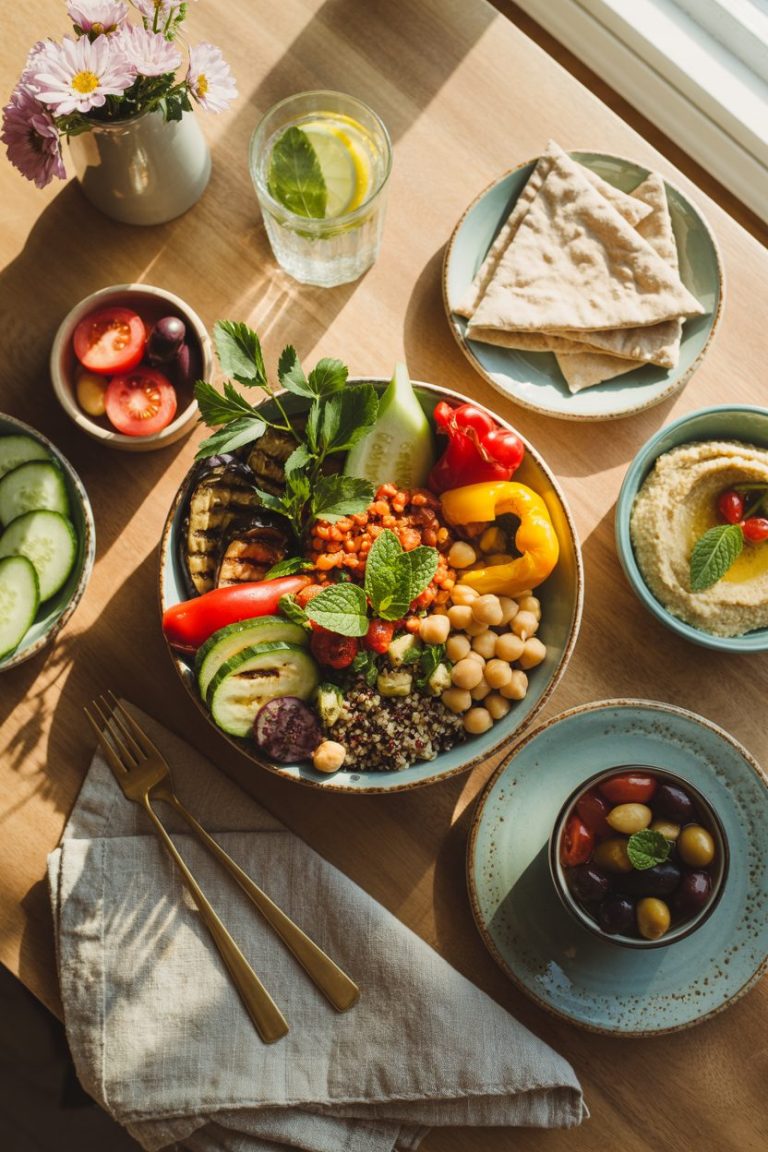
Lunch: Mediterranean Chicken Quinoa Bowl Grilled chicken breast over quinoa with cucumber, cherry tomatoes, red onion, kalamata olives, chickpeas, feta cheese, and lemon-olive oil dressing. Protein: 42g
Snack: Hummus with veggie sticks and 10 almonds Protein: 8g
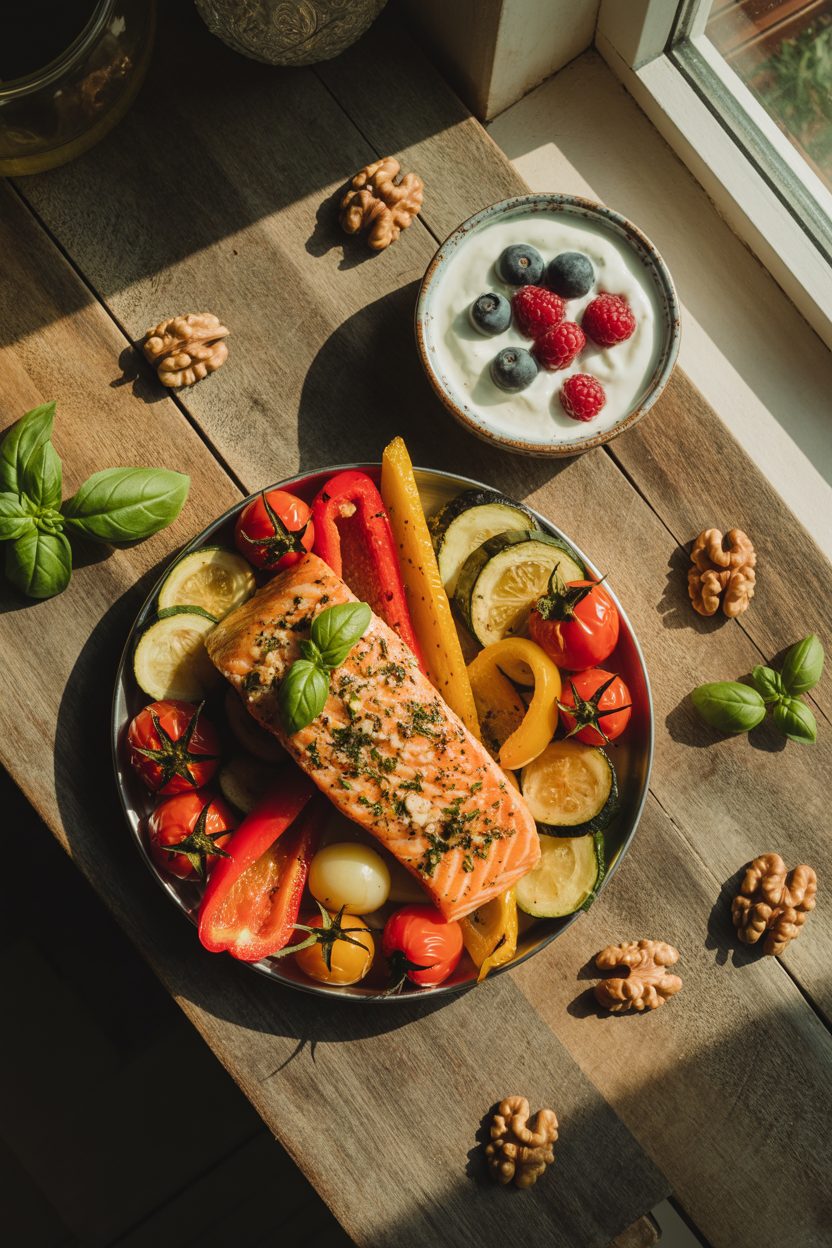
Dinner: Pan-Seared Salmon with Roasted Vegetables 6oz wild-caught salmon with roasted Brussels sprouts, sweet potato, and a side of sautéed spinach with garlic. Get the full recipe. Protein: 45g
Day 2
Breakfast: Vegetable Frittata Three-egg frittata loaded with spinach, bell peppers, tomatoes, and feta cheese. Serve with a slice of whole grain toast. Protein: 28g
Lunch: Tuna White Bean Salad Mixed greens topped with canned tuna, white beans, cherry tomatoes, cucumber, red onion, and a lemon-tahini dressing. Protein: 38g
Snack: Cottage cheese with sliced cucumber and everything bagel seasoning Protein: 14g
Dinner: Lemon Herb Chicken Thighs with Farro Baked chicken thighs with fresh herbs, served with cooked farro and roasted zucchini and bell peppers. Protein: 46g
Day 3
Breakfast: Protein-Packed Overnight Oats ½ cup oats soaked overnight with 1 scoop vanilla protein powder, chia seeds, almond milk, topped with sliced banana and almond butter. Protein: 35g
Lunch: Grilled Shrimp and Avocado Salad Mixed greens with grilled shrimp, avocado, cherry tomatoes, cucumber, and a citrus vinaigrette. Protein: 32g
Snack: Greek yogurt with a handful of pistachios Protein: 12g
Dinner: Turkey and Chickpea Skillet Ground turkey sautéed with chickpeas, diced tomatoes, spinach, and Mediterranean spices. Serve with a side of roasted cauliflower. Protein: 48g
If you’re looking for more breakfast inspiration, check out this high-protein Mediterranean breakfast collection or try these anti-inflammatory smoothie bowl recipes that work perfectly with this plan.
Day 4
Breakfast: Smoked Salmon Toast Whole grain sourdough with mashed avocado, smoked salmon, capers, red onion, and a poached egg on top. Protein: 30g
Lunch: Lentil and Vegetable Soup with Chicken Hearty lentil soup packed with carrots, celery, tomatoes, and shredded chicken breast. Serve with a small Greek salad. Protein: 35g
Snack: Turkey roll-ups with bell pepper strips Protein: 15g
Dinner: Baked Cod with Mediterranean Vegetables 6oz cod fillet baked with cherry tomatoes, olives, capers, and zucchini. Serve over a bed of wilted arugula. Protein: 42g
Day 5
Breakfast: Shakshuka with Extra Eggs Three eggs poached in a spiced tomato sauce with bell peppers and onions. Serve with whole grain pita. Protein: 25g
Lunch: Mediterranean Chicken Wrap Whole wheat wrap filled with grilled chicken, hummus, cucumber, tomatoes, red onion, and mixed greens. Protein: 38g
Snack: Edamame with sea salt Protein: 12g
Dinner: Grilled Lamb Chops with Herbed Cauliflower Rice 3-4 small lamb chops with cauliflower rice mixed with fresh herbs, pine nuts, and a side of roasted eggplant. Protein: 45g
Day 6
Breakfast: High-Protein Chia Pudding Chia seeds soaked in protein-enriched almond milk, topped with Greek yogurt, berries, and hemp seeds. Protein: 28g
Lunch: Grilled Halloumi and Quinoa Salad Grilled halloumi cheese over quinoa with roasted red peppers, artichokes, spinach, and a balsamic dressing. Protein: 32g
Snack: Hard-boiled eggs with cherry tomatoes Protein: 12g
Dinner: Mediterranean Meatballs with Zoodles Turkey or beef meatballs in a light tomato sauce served over zucchini noodles and topped with crumbled feta. Protein: 46g
Day 7
Breakfast: Mediterranean Breakfast Bowl Scrambled eggs with sautéed spinach, sun-dried tomatoes, and feta, served with roasted chickpeas on the side. Protein: 30g
Lunch: Sardine and White Bean Salad Canned sardines over mixed greens with white beans, cherry tomatoes, cucumber, red onion, and lemon dressing. Protein: 35g
Snack: Protein smoothie with berries and almond butter Protein: 20g
Dinner: Sheet Pan Greek Chicken Chicken breasts with cherry tomatoes, red onion, bell peppers, and chickpeas, all roasted together with olive oil and oregano. Protein: 44g
For complete meal prep guidance for week one, the 7-day Mediterranean high-fiber meal prep plan shows you exactly how to batch-cook these proteins and vegetables efficiently.
Week Two: Refining Your Rhythm
Day 8
Breakfast: Cottage Cheese Protein Pancakes Pancakes made with cottage cheese, oats, and eggs. Top with Greek yogurt and fresh berries. Protein: 32g
Lunch: Moroccan-Spiced Chicken Bowl Grilled chicken with roasted sweet potato, chickpeas, cucumber, and a tahini drizzle over mixed greens. Protein: 40g
Snack: Roasted chickpeas with paprika Protein: 10g
Dinner: Baked Salmon with Lentils 6oz salmon with a side of cooked green lentils, roasted cherry tomatoes, and sautéed kale with garlic. Protein: 48g
Day 9
Breakfast: Spanish Tortilla (Potato and Egg) Thick omelet made with eggs, thinly sliced potatoes, and onions. Serve with a side salad. Protein: 26g
Lunch: Greek Salad with Grilled Chicken Romaine lettuce, cucumber, tomatoes, red onion, kalamata olives, feta, and grilled chicken with olive oil and oregano. Protein: 38g
Snack: Greek yogurt with sunflower seeds Protein: 13g
Dinner: Shrimp and White Bean Stew Sautéed shrimp in a tomato-based stew with white beans, spinach, and crushed red pepper. Serve with whole grain bread. Protein: 42g
Day 10
Breakfast: Protein Smoothie Bowl Blend Greek yogurt, protein powder, frozen berries, and spinach. Top with granola, chia seeds, and sliced almonds. Protein: 35g
Lunch: Mediterranean Tuna Bowl Canned tuna over mixed greens with quinoa, cucumber, cherry tomatoes, artichokes, and a lemon-herb dressing. Protein: 36g
Snack: Turkey jerky with cucumber slices Protein: 15g
Dinner: Herb-Crusted Pork Tenderloin Roasted pork tenderloin with a Mediterranean herb crust, served with roasted Brussels sprouts and mashed white beans. Protein: 45g
Speaking of complete meal structures, you might also love this 14-day anti-inflammatory eating plan for women which provides additional daily menus tailored for hormonal balance and sustained energy.
Day 11
Breakfast: Egg White Scramble with Veggies Egg whites scrambled with whole eggs, bell peppers, onions, mushrooms, and a side of turkey sausage. Protein: 30g
Lunch: Chicken Souvlaki Bowl Grilled chicken skewers over rice with tzatziki, cucumber, tomatoes, red onion, and a small Greek salad. Protein: 42g
Snack: Celery sticks with almond butter Protein: 8g
Dinner: Baked Cod with Chickpea Salad 6oz cod with a side salad of chickpeas, cucumber, cherry tomatoes, parsley, and lemon dressing. Protein: 40g
Day 12
Breakfast: Mediterranean Egg Muffins Baked egg muffins with spinach, sun-dried tomatoes, and feta. Make a batch for easy grab-and-go breakfasts. I bake these in this silicone muffin pan because nothing sticks and cleanup is ridiculously easy. Protein: 24g
Lunch: Lentil and Quinoa Stuffed Peppers Bell peppers stuffed with lentils, quinoa, tomatoes, and topped with crumbled feta. Protein: 22g
Snack: Protein bar with minimal ingredients and a small handful of walnuts Protein: 18g
Dinner: Grilled Chicken Thighs with Cauliflower Mash Marinated chicken thighs with creamy cauliflower mash and roasted asparagus. Protein: 46g
Day 13
Breakfast: Greek Yogurt Parfait Deluxe Layers of Greek yogurt, protein granola, mixed berries, chopped almonds, and a drizzle of honey. Protein: 30g
Lunch: Sardine Avocado Toast Whole grain toast with mashed avocado, canned sardines, cherry tomatoes, and a squeeze of lemon. Protein: 28g
Snack: Cottage cheese with diced bell peppers Protein: 14g
Dinner: Mediterranean Baked Chicken Chicken breasts baked with artichokes, sun-dried tomatoes, olives, and white wine, served with roasted green beans. Protein: 48g
Day 14
Breakfast: Protein-Boosted Omelette Three-egg omelette with sautéed mushrooms, spinach, tomatoes, and goat cheese. Protein: 28g
Lunch: Grilled Salmon Salad Mixed greens with grilled salmon, avocado, cucumber, red cabbage, and a ginger-tahini dressing. Protein: 38g
Snack: Roasted almonds with dried apricots Protein: 10g
Dinner: Lamb and Vegetable Kebabs Grilled lamb kebabs with bell peppers, onions, and zucchini, served with a side of tabbouleh salad. Protein: 44g
The Protein-Packed Mediterranean Pantry
Stocking your kitchen correctly makes everything exponentially easier. You’re not going to stick with this if every meal requires a grocery run and seventeen specialty ingredients.
Essential proteins:
- Canned sardines and anchovies (seriously underrated)
- Wild-caught salmon (fresh or frozen)
- Free-range eggs
- Greek yogurt (full-fat tastes better, fight me)
- Cottage cheese
- Canned chickpeas, white beans, and lentils
- Chicken thighs (more flavorful than breasts)
- Feta and halloumi cheese
Anti-inflammatory staples:
- Extra virgin olive oil (the good stuff, not the $4 bottle)
- Raw nuts: almonds, walnuts, pistachios
- Seeds: chia, flax, hemp
- Turmeric, ginger, garlic
- Fresh herbs: basil, oregano, parsley
- Whole grains: quinoa, farro, bulgur
- Frozen berries (just as nutritious, way cheaper)
One tool that’s saved me countless times is this herb keeper—fresh herbs actually stay fresh instead of turning into expensive green slime after three days.
Meal Prep Strategies That Actually Work
I’m not going to lie and say meal prep is thrilling entertainment. But the alternative—scrambling to figure out what to eat when you’re already starving—is way worse. The key is finding a system that doesn’t consume your entire Sunday or make you feel like you’re running a small restaurant.
The Two-Hour Sunday Setup
Here’s my typical routine: Put on a podcast or some music, pour yourself a drink if that’s your thing, and knock out a few key tasks:
Proteins: Grill or bake 2-3 protein options. I usually do chicken thighs with lemon and herbs, a big piece of salmon, and sometimes hard-boil a dozen eggs.
Vegetables: Chop raw veggies for snacking (carrots, peppers, cucumbers), and roast a couple sheet pans of mixed vegetables with olive oil and garlic. I roast everything on these heavy-duty sheet pans that don’t warp in high heat.
Grains and legumes: Cook a big batch of quinoa or farro using this rice cooker that also does quinoa, and open a few cans of chickpeas or white beans. Drain and rinse them, portion into containers.
Extras: Make a big jar of vinaigrette, prep smoothie bags with frozen fruit and spinach, portion out nuts for grab-and-go snacks.
I swear by these glass meal prep containers with dividers—they keep everything fresh and make it easy to see what you have at a glance. Also, they’re microwave-safe, which is essential because no one wants to transfer food to another dish just to reheat it.
The Strategic Freezer Stash
Don’t sleep on your freezer. Cooked lentils freeze beautifully. Grilled chicken freezes great. Even frittata slices can go straight from freezer to oven or microwave. Having a backup stash means you’re never truly stuck without options, even on weeks when meal prep just doesn’t happen.
I also keep frozen wild-caught fish on hand—it’s actually flash-frozen at peak freshness, often making it higher quality than “fresh” fish that’s been sitting on ice for who knows how long. Store it properly in these freezer-safe containers to prevent freezer burn.
Navigating Social Situations and Dining Out
Let’s address the elephant in the room: what do you do when life happens? Because it will. There will be birthday dinners, work lunches, impromptu happy hours, and weekends away where you don’t have your perfectly portioned containers.
The good news is that Mediterranean-style eating translates pretty well to restaurant menus. Most places have grilled fish or chicken options, salads with actual substance, and vegetable sides that aren’t drowning in butter.
My restaurant strategy is stupidly simple: Start with protein, add vegetables, include some healthy fat, and call it a day. You don’t need to be weird about it or make the server’s life difficult. Just order what aligns with your plan and move on. If the meal comes with fries and you’re not feeling them, ask for a side salad or grilled veggies instead. Most places are totally fine with swaps.
Also, IMO, one off-plan meal isn’t going to derail anything. The goal is consistency over time, not perfection at every single meal. I’ve found that when I’m eating well 85-90% of the time, my body handles the occasional pizza or burger just fine.
For a simpler approach when you’re feeling overwhelmed, the 7-day anti-inflammation reset with simple meals strips things down to the basics with easy-to-follow recipes that require minimal ingredients.
Supplements: Helpful or Hype?
Do you need supplements on this plan? Probably not if you’re eating a varied diet with plenty of whole foods. But there are a few that can be beneficial, especially if you have specific deficiencies or dietary restrictions.
Omega-3s: If you’re not hitting 2-3 servings of fatty fish per week, a quality fish oil or algae-based omega-3 supplement can help bridge the gap. These fatty acids are crucial for managing inflammation.
Vitamin D: Most people are deficient, especially if you live somewhere that doesn’t see the sun for half the year. Vitamin D plays a role in immune function and inflammation regulation.
Magnesium: Supports muscle recovery and can help with sleep quality. Many people don’t get enough from food alone.
Turmeric/Curcumin: The active compound in turmeric has potent anti-inflammatory properties, but you’d need to eat an unrealistic amount of the spice to get therapeutic doses. A supplement can be worth it if you’re dealing with chronic inflammation.
I keep it pretty minimal with supplements—omega-3s, vitamin D, and magnesium glycinate. That’s it. Everything else I get from food. If you’re unsure about what you might need, it’s worth getting bloodwork done to identify any actual deficiencies rather than just throwing money at random bottles.
Troubleshooting Common Issues
Even with the best plan, you’ll hit snags. Here are the ones I see most often and how to handle them:
“I’m Still Hungry All the Time”
You’re probably not eating enough protein or fat, both of which are crucial for satiety. Double-check your portions—are you actually getting 25-30 grams of protein per meal? Are you including enough olive oil, nuts, or avocado? Volume alone doesn’t cut it if the macros aren’t right.
Also, consider your activity level. If you’re working out regularly or have a physically demanding job, you might need to increase overall calories while maintaining the same protein percentage.
“I Feel Bloated and Uncomfortable”
Adding fiber suddenly can wreak havoc on your digestive system, especially if you’re jumping from a low-fiber diet to Mediterranean eating overnight. The 7-day gut healing Mediterranean menu eases you in gradually, which might be a better starting point if you’re dealing with digestive sensitivity.
Also, make sure you’re drinking enough water. High-fiber, high-protein eating requires adequate hydration to keep everything moving smoothly. I keep this motivational water bottle on my desk as a visual reminder to actually drink throughout the day.
“My Joints Still Hurt”
Give it time. Research indicates that people typically notice reduced inflammation symptoms within days or weeks, but long-term benefits like lower inflammatory markers often take 4-12 weeks or more. Two weeks is a great start, but don’t expect miracles immediately.
That said, if you’re dealing with a diagnosed inflammatory condition, diet alone might not be enough. It’s a powerful tool, but it works best alongside other lifestyle factors like adequate sleep, stress management, and appropriate medical treatment.
“I’m Traveling and Can’t Prep”
Pack what you can. Protein bars with minimal ingredients, individual nut packs, dried fruit, and single-serve nut butter packets travel easily. When you’re eating out, stick to the basic principles: prioritize protein and vegetables, choose whole grains when available, and don’t stress about it being perfect.
I’ve traveled with these collapsible silicone containers in my carry-on to store leftovers or snacks from restaurants—sounds extra, but it saves you from making poor choices when you’re starving at the airport.
Making It Sustainable Beyond 14 Days
Here’s the truth: 14 days is enough time to feel noticeably different and establish some solid habits, but real change happens when you make this a lifestyle rather than a temporary project.
The mistake most people make is treating this like a diet with an end date. You do your 14 days, feel great, then immediately revert to old eating patterns and wonder why everything goes downhill again. The goal should be making Mediterranean high-protein eating your new normal, with room for flexibility and enjoyment.
What does that look like practically? It means having your reliable meal rotation that you can execute without much thought. It means keeping your pantry stocked with staples. It means not treating every social occasion as a free-for-all just because you’re “off the plan.”
But it also means not being so rigid that you can’t enjoy your life. If you want birthday cake, eat the birthday cake. If pizza night with friends sounds good, have the pizza. Just make sure the majority of your meals align with your goals, and you’ll be fine.
The 30-day high-fiber anti-inflammation program can be a natural next step after completing your initial two weeks, helping you build on the momentum you’ve created.
The Real Results: What to Actually Expect
Let’s set realistic expectations because I’m not going to sit here and promise you’ll lose 20 pounds, cure all your ailments, and wake up feeling like a new person after two weeks. That’s not how bodies work.
What you can reasonably expect:
- Better energy levels throughout the day without the 3 PM crash
- Reduced bloating and digestive discomfort, assuming you ease into the fiber increase
- Less joint pain and stiffness, particularly if chronic inflammation has been an issue
- Improved recovery after workouts if you’re active
- Better sleep quality (protein and healthy fats help stabilize blood sugar overnight)
- Some weight changes, though this varies wildly based on individual factors
Some people see dramatic changes quickly. Others notice subtler shifts that accumulate over time. Both are totally normal and valid.
I personally noticed my skin clearing up within the first week, which I wasn’t even expecting. My energy also stabilized—no more needing coffee at 2 PM just to function. The joint stuff took longer, maybe three weeks before I realized my knees weren’t randomly aching anymore.
Keep notes or take progress photos if that motivates you, but also pay attention to how you feel. Are stairs easier? Is your mood more stable? Are you sleeping better? These quality-of-life improvements matter just as much as what the scale says.
Related Plans You’ll Love
Looking for more ways to structure anti-inflammatory eating? Here are some plans that complement this approach perfectly:
If You Want More Structure: 7-day anti-inflammation reset with simple meals—great if you prefer uncomplicated, straightforward recipes that don’t require fancy ingredients
14-day Mediterranean weight loss plan—combines these principles with calorie targets for those with specific weight goals
For Specific Health Focus: 7-day gut healing Mediterranean menu—emphasizes digestive health alongside anti-inflammatory eating
14-day anti-inflammatory eating plan for women—addresses hormonal considerations and nutritional needs specific to women’s health
For Extended Commitment: 30-day high-fiber anti-inflammation program—takes the principles deeper with a full month of guidance and progressive habit-building
30-day anti-inflammation challenge—includes habit-building alongside meal planning for sustainable long-term results
Your Next Two Weeks Start Now
So here’s where we are: You’ve got the complete 14-day plan with every single meal mapped out, you understand why it works, and you know how to actually implement it in real life. The only thing left is deciding whether you’re going to act on this information or let it collect digital dust in your bookmarks.
Two weeks is nothing in the grand scheme of your life. It’s literally 14 days to test whether eating this way makes you feel noticeably better. And if it does—which, based on the research and my own experience, it probably will—you’ve just unlocked a sustainable way of eating that supports your body instead of fighting against it.
Start simple. Use the meal plan as written for week one to get your rhythm down. Add variety in week two once you’ve got the hang of it. Focus on protein at every meal, load up on colorful vegetables, embrace healthy fats, and stop stressing about being perfect.
Your body is basically just asking for nutrient-dense food that doesn’t trigger constant inflammatory responses. That’s not a huge ask. You’ve got this.
I followed your 7 Day Anti-Inflammatory reset post and felt less bloating, less pain!, and better sleep within the week. Your posts are so easy to follow, the meals and quick recipes are easy And yummy! They make it very easy to stick to!