
14-Day Anti-Inflammatory Eating Plan for Women
Let’s be real—women deal with inflammation differently than men. Between hormone fluctuations, monthly cycles, perimenopause, menopause, and the general chaos of balancing everything, our bodies face unique inflammatory challenges. That persistent joint pain, the brain fog that hits mid-afternoon, the bloating that makes your favorite jeans uncomfortable, the skin breakouts that show up like clockwork—inflammation is behind most of it.
Here’s what nobody tells you: you can actually do something about it without resorting to medication or extreme diets that leave you hangry and miserable. This 14-day anti-inflammatory eating plan is designed specifically for women’s bodies and nutritional needs. It addresses hormonal health, supports energy levels, includes enough iron and calcium, and actually tastes good enough that you’ll want to keep eating this way.
I’m not going to pretend two weeks will solve everything. But it’s enough time to reduce inflammatory markers, notice real improvements in how you feel, and build habits that support long-term health. No weird supplements, no meal replacement shakes, no feeling deprived—just real food that fights inflammation while supporting what your body specifically needs.

Why Women Need a Different Approach
Women’s bodies operate differently when it comes to inflammation. Our hormones—estrogen, progesterone, testosterone—all influence inflammatory responses throughout our cycles. During certain phases of your menstrual cycle, inflammation naturally increases. That’s why you might notice your joints ache more or your digestion gets wonky at specific times of the month.
According to research on inflammation and women’s health, women are also more susceptible to certain autoimmune conditions, which are fundamentally inflammatory disorders. We’re more likely to develop rheumatoid arthritis, lupus, and thyroid issues—all conditions where inflammation runs rampant.
Plus, women need more of certain nutrients. Iron gets depleted during menstruation. We need adequate calcium and vitamin D for bone health, especially as we age. We require specific B vitamins to support hormonal balance. A generic anti-inflammatory plan that ignores these needs isn’t doing us any favors.
This plan addresses inflammation while ensuring you get enough protein, healthy fats, iron, calcium, magnesium, and B vitamins. It supports stable blood sugar to prevent energy crashes and mood swings. It includes foods that specifically help with hormonal balance and menstrual comfort. And it’s flexible enough to adjust based on where you are in your cycle or life stage.
The Five Pillars of This Plan
Instead of overwhelming you with complicated rules, this plan operates on five straightforward principles:
Pillar 1: Prioritize omega-3 fatty acids. Fatty fish, walnuts, chia seeds, and flaxseeds reduce inflammatory prostaglandins—compounds that contribute to period pain, joint discomfort, and systemic inflammation.
Pillar 2: Eat protein at every meal. Women need 0.8-1.2 grams of protein per kilogram of body weight daily. Adequate protein supports muscle mass, hormonal production, and stable blood sugar. It also keeps you satisfied so you’re not raiding the pantry every hour.
Pillar 3: Load up on antioxidant-rich foods. Berries, leafy greens, colorful vegetables, and herbs combat oxidative stress that accelerates aging and increases inflammation.
Pillar 4: Include calcium and iron-rich foods daily. Women lose iron through menstruation and need calcium for bone health. This plan includes both without requiring supplements.
Pillar 5: Support gut health with fiber and fermented foods. Your gut health directly impacts inflammation levels, hormone metabolism, and immune function. Feed it well.
These pillars work synergistically. You’re not just reducing inflammation—you’re supporting your entire hormonal and metabolic system.
Week One: Foundation and Adjustment
Days 1-3: Starting Strong
Day 1:
- Breakfast: Greek yogurt with blueberries, ground flaxseed, and sliced almonds. Drizzle with honey.
- Lunch: Spinach salad with grilled salmon, cherry tomatoes, cucumber, and olive oil-lemon dressing.
- Dinner: Baked chicken breast with roasted Brussels sprouts and quinoa. Season with garlic and herbs.
- Snacks: Apple slices with almond butter, handful of walnuts.
Day 2:
- Breakfast: Scrambled eggs with sautéed spinach and mushrooms. Side of whole grain toast with avocado.
- Lunch: Lentil soup with carrots, celery, and turmeric. Serve with a mixed green salad.
- Dinner: Grilled sardines with roasted asparagus and wild rice. Finish with fresh lemon.
- Snacks: Carrot sticks with hummus, dark chocolate with almonds.
Day 3:
- Breakfast: Smoothie with spinach, banana, mixed berries, Greek yogurt, and chia seeds.
- Lunch: Quinoa bowl with roasted sweet potato, chickpeas, kale, and tahini dressing.
- Dinner: Baked cod with sautéed Swiss chard and farro. Drizzle with olive oil and garlic.
- Snacks: Bell pepper strips with guacamole, handful of cashews.
The first three days ease you into anti-inflammatory eating without shocking your system. You’re getting omega-3s, complete proteins, leafy greens, and colorful produce at every meal. Get Full Recipe for that salmon salad if you want exact portions.
Greek yogurt provides both protein and probiotics—crucial for gut health and calcium intake. The berries deliver anthocyanins that reduce inflammatory markers. Ground flaxseed offers omega-3s plus lignans that support hormone metabolism.
If you’re enjoying these protein-rich breakfast options, you might also love Mediterranean egg dishes or high-protein smoothie combinations that keep you satisfied until lunch.
Days 4-7: Building Momentum
Day 4:
- Breakfast: Overnight oats with chia seeds, grated apple, cinnamon, and chopped walnuts.
- Lunch: Mediterranean chickpea salad with cucumbers, tomatoes, red onion, and feta. Whole wheat pita on the side.
- Dinner: Turkey meatballs in tomato sauce with zucchini noodles. Side of roasted cauliflower.
- Snacks: Fresh figs with goat cheese, handful of pistachios.
Day 5:
- Breakfast: Whole grain toast with mashed avocado and poached eggs. Side of fresh berries.
- Lunch: White bean and kale soup with rosemary and garlic. Serve with whole grain crackers.
- Dinner: Baked trout with roasted beets and barley pilaf. Top with fresh dill.
- Snacks: Sliced pear with almond butter, Greek yogurt with honey.
Day 6:
- Breakfast: Vegetable frittata with bell peppers, onions, spinach, and feta. Side of fruit salad.
- Lunch: Grilled chicken salad with mixed greens, strawberries, walnuts, and balsamic vinaigrette.
- Dinner: Baked salmon with roasted artichoke hearts and quinoa. Season with lemon and herbs.
- Snacks: Edamame, fresh orange slices.
Day 7:
- Breakfast: Smoothie bowl topped with granola, sliced banana, raspberries, and hemp seeds.
- Lunch: Lentil and vegetable stew with turmeric and ginger. Whole grain sourdough on the side.
- Dinner: Grilled lamb chops with roasted eggplant and bulgur wheat. Finish with fresh mint.
- Snacks: Date and almond energy balls, cucumber slices with tzatziki.
By the end of week one, you should notice some shifts. Maybe you’re sleeping slightly better, or that afternoon energy crash isn’t hitting as hard. Your digestion might feel smoother, less bloated after meals. These early improvements motivate you to keep going.
Beets deserve special mention—they’re loaded with betalains, compounds that reduce inflammation and support liver detoxification. They also provide nitrates that improve blood flow and exercise performance. I use this vegetable peeler that actually removes beet skin without staining everything in sight.
For more ways to incorporate these anti-inflammatory vegetables, explore roasted vegetable combinations or check out Mediterranean side dishes that complement any protein.
Week Two: Deepening the Practice
Days 8-10: Expanding Variety
Day 8:
- Breakfast: Greek yogurt parfait with granola, mixed berries, and ground flaxseed.
- Lunch: Tuna salad with white beans, arugula, cherry tomatoes, and olive oil dressing.
- Dinner: Baked mackerel with roasted fennel and wild rice. Top with fresh parsley.
- Snacks: Sliced mango, handful of almonds.
Day 9:
- Breakfast: Whole grain waffle with almond butter, sliced strawberries, and a drizzle of maple syrup.
- Lunch: Minestrone soup with vegetables, beans, and whole wheat pasta. Side salad with olive oil.
- Dinner: Grilled chicken skewers with bell peppers and onions, served over brown rice.
- Snacks: Baby carrots with hummus, dark chocolate.
Day 10:
- Breakfast: Shakshuka with tomatoes, peppers, and herbs. Serve with whole grain pita.
- Lunch: Quinoa tabbouleh with loads of parsley, mint, cucumber, and tomatoes. Add grilled shrimp.
- Dinner: Baked halibut with sautéed green beans and sweet potato mash. Drizzle with olive oil.
- Snacks: Fresh cherries, handful of walnuts.
Fennel is underrated for women’s health. It contains phytoestrogens that can help balance hormones, plus compounds that reduce bloating and digestive discomfort. Roasted fennel develops a sweet, mild flavor that’s nothing like the strong licorice taste some people expect.
Mackerel is one of the highest omega-3 fish available—even better than salmon in terms of EPA and DHA content. If you’re not used to stronger-flavored fish, start with smaller portions and season generously with lemon, garlic, and herbs. Get Full Recipe for perfectly baked mackerel that doesn’t taste fishy.
Days 11-14: Finishing Strong
Day 11:
- Breakfast: Steel-cut oats with sliced pear, cinnamon, and chopped pecans. Add a dollop of Greek yogurt.
- Lunch: Mediterranean lentil bowl with roasted vegetables, spinach, and tahini dressing.
- Dinner: Grilled sardines with roasted Brussels sprouts and farro salad. Top with lemon zest.
- Snacks: Apple with cashew butter, fresh blueberries.
Day 12:
- Breakfast: Scrambled eggs with smoked salmon, cherry tomatoes, and fresh dill. Side of whole grain toast.
- Lunch: Black bean and sweet potato chili with cumin and paprika. Top with avocado slices.
- Dinner: Baked chicken thighs with roasted cauliflower and quinoa. Season with turmeric and garlic.
- Snacks: Bell pepper strips with baba ganoush, handful of pistachios.
Day 13:
- Breakfast: Smoothie with kale, mango, banana, almond butter, and ground flaxseed.
- Lunch: Grilled vegetable and white bean wrap in a whole wheat tortilla. Add hummus and arugula.
- Dinner: Pan-seared trout with sautéed spinach and wild rice. Finish with lemon and olive oil.
- Snacks: Date stuffed with almond butter, sliced cucumber.
Day 14:
- Breakfast: Greek yogurt bowl with granola, pomegranate seeds, walnuts, and honey.
- Lunch: Tuscan white bean soup with kale, garlic, and rosemary. Whole grain crackers on the side.
- Dinner: Grilled salmon with roasted artichokes and bulgur wheat. Top with fresh herbs.
- Snacks: Fresh pineapple chunks, handful of almonds.
Two weeks in, the improvements should be undeniable. Less joint stiffness, better sleep quality, clearer skin, more stable energy, improved mood, reduced bloating. These aren’t placebo effects—they’re your body responding to consistent anti-inflammatory eating.
Speaking of satisfying meals that fight inflammation, you might enjoy omega-3 rich fish recipes or explore plant-based protein options for days when you want a break from animal proteins.
Nutrients Women Specifically Need
Let’s break down the nutrients this plan prioritizes and why they matter for women:
Iron: Women need 18mg daily before menopause, 8mg after. This plan includes iron-rich foods like leafy greens, lentils, chickpeas, and lean meats. Pair them with vitamin C sources (tomatoes, bell peppers, citrus) to enhance absorption.
Calcium: Women need 1,000-1,200mg daily for bone health. Greek yogurt, leafy greens, sardines (with bones), and fortified foods provide calcium without excessive dairy.
Omega-3 Fatty Acids: Especially important for reducing period pain, supporting brain health, and fighting inflammation. This plan includes fatty fish 3-4 times per week plus plant-based sources daily.
Magnesium: Supports over 300 enzymatic reactions, helps with sleep, reduces PMS symptoms, and combats inflammation. Found in leafy greens, nuts, seeds, whole grains, and dark chocolate.
B Vitamins: Crucial for energy production and hormone metabolism. This plan includes B-vitamin-rich foods like eggs, fish, legumes, whole grains, and leafy greens.
Vitamin D: Works with calcium for bone health and immune function. Fatty fish, egg yolks, and fortified foods provide some, but many women benefit from supplementation.
Fiber: Women need 25g daily for digestive health, blood sugar control, and hormone balance. This plan easily exceeds that target through vegetables, fruits, whole grains, and legumes.
Protein: Essential for muscle mass, hormone production, and satiety. This plan provides 80-100g daily, distributed across meals for optimal absorption and utilization.
FYI, you don’t need to track every nutrient obsessively. Following this meal pattern naturally provides what you need. But understanding the why helps you make informed choices when adapting recipes or eating out.
Adjusting for Your Cycle
Your nutritional needs shift throughout your menstrual cycle. Here’s how to optimize this plan based on where you are:
Follicular Phase (Days 1-14): Energy typically increases during this phase. You might naturally crave lighter meals and have better workout tolerance. Focus on:
- Lean proteins and plenty of vegetables
- Fermented foods to support estrogen metabolism
- Cruciferous vegetables (broccoli, Brussels sprouts, cauliflower)
- Fresh, raw vegetables in salads
Ovulation (Around Day 14): Peak energy and metabolism. Your body can handle more:
- Higher intensity workouts
- Larger portions if you’re active
- Raw vegetables and salads
- More variety in proteins
Luteal Phase (Days 15-28): Progesterone rises, which can increase inflammation, water retention, and appetite. Adjust by:
- Increasing complex carbs slightly (sweet potatoes, quinoa, oats)
- Adding extra magnesium-rich foods (dark leafy greens, dark chocolate, nuts)
- Including more warming, cooked foods versus raw
- Staying extra hydrated to combat water retention
Menstruation (Days 1-5): Iron needs increase due to blood loss. Inflammation often peaks. Focus on:
- Iron-rich foods paired with vitamin C
- Omega-3s to reduce prostaglandin-driven cramps
- Warming, comforting meals (soups, stews)
- Anti-inflammatory spices like ginger and turmeric
IMO, syncing your eating with your cycle isn’t essential, but it can make a noticeable difference in how you feel. Pay attention to what your body craves and needs during different phases.
Meal Prep Strategy for Busy Women
Most women I know are juggling approximately 47 things at once. You don’t have time to cook elaborate meals three times daily. Here’s how to make this plan actually doable:
Sunday Prep (90 minutes):
- Cook 3 types of whole grains (quinoa, brown rice, farro)
- Roast a large pan of mixed vegetables
- Prep 1-2 large batches of soup or stew
- Hard boil a dozen eggs
- Make overnight oats for 3-4 mornings
- Wash and chop vegetables for the week
- Mix olive oil and lemon dressing
- Portion nuts into snack containers
Mid-Week Refresh (Wednesday, 30 minutes):
- Replenish fresh produce
- Make another batch of overnight oats
- Prep any proteins needed
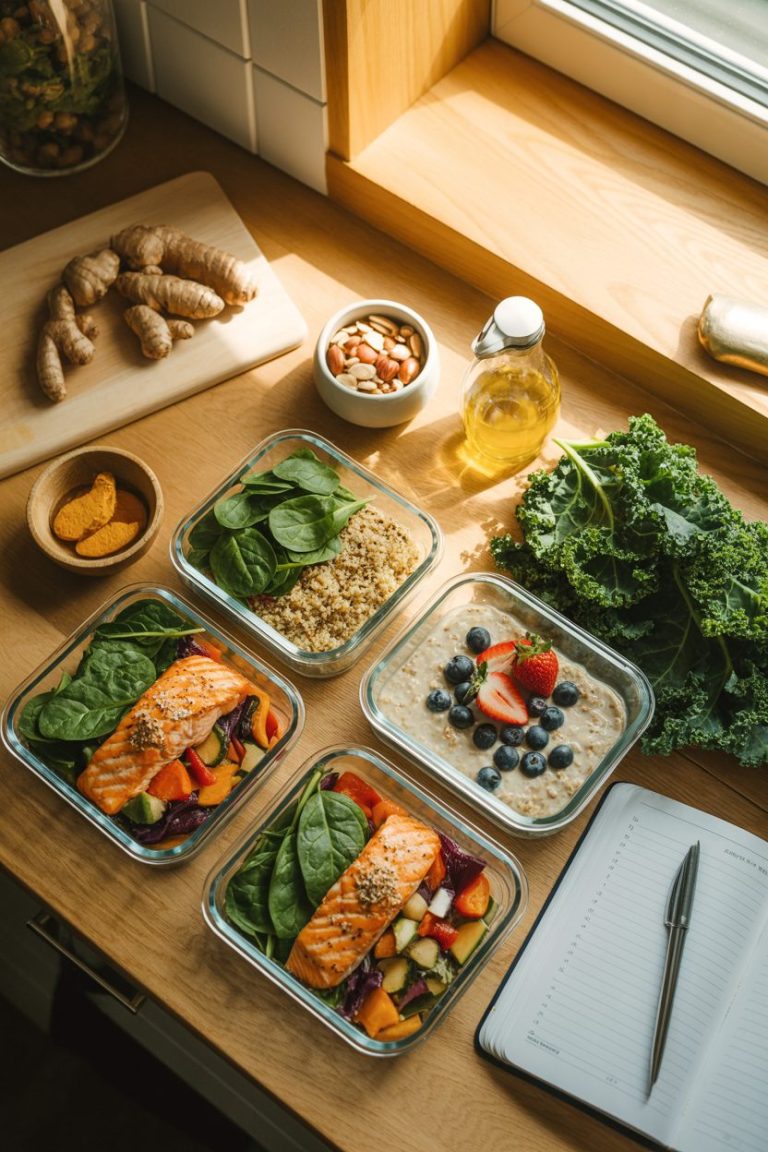
I use these glass meal prep containers that go from fridge to microwave to dishwasher without drama. They’re worth every penny.
For storing prepped ingredients separately, these small containers keep chopped vegetables, cooked grains, and dressings organized. Everything stays fresh and visible so you actually use it.
The goal is assembly, not full cooking. Dinner becomes “reheat chicken, warm up quinoa, throw together a quick salad” instead of “what am I even making?”
Managing Inflammation Through Different Life Stages
For Women in Their 20s-30s
You’re likely dealing with monthly cycles, possibly planning for or recovering from pregnancy, and managing high stress levels. Focus on:
- Adequate iron intake throughout your cycle
- Omega-3s to reduce period pain
- Stable blood sugar to manage energy and mood
- Building strong bones with calcium and weight-bearing exercise
For Women in Perimenopause
Hormones fluctuate wildly during this transition, often triggering increased inflammation, weight gain, and mood changes. Emphasize:
- Phytoestrogen-rich foods (flaxseed, soy, legumes)
- Extra omega-3s for brain health and mood support
- Adequate protein to maintain muscle mass
- Magnesium-rich foods for sleep and hot flash management
For Women in Menopause and Beyond
Estrogen’s protective anti-inflammatory effects decline after menopause. Counter this by:
- Increasing anti-inflammatory foods across the board
- Prioritizing bone health with calcium, vitamin D, and protein
- Supporting heart health with omega-3s and fiber
- Maintaining muscle mass through adequate protein and resistance training
Regardless of your age or life stage, this eating plan provides a solid foundation. Adjust portions and specific foods based on your individual needs and how you feel.
Common Challenges and Solutions
Challenge: “I’m vegetarian and can’t eat all this fish.” Solution: Focus on plant-based omega-3s from walnuts, chia seeds, flaxseeds, and hemp seeds. Add legumes, tofu, tempeh, and eggs for protein. Consider an algae-based omega-3 supplement.
Challenge: “This feels like too much food.” Solution: Adjust portions to your appetite. The meal structure matters more than eating everything listed. Listen to your hunger cues.
Challenge: “I’m iron deficient despite eating this way.” Solution: Some women need supplementation, especially if you have heavy periods. Cook in cast iron pans to increase iron content of food. Avoid tea and coffee with meals—they inhibit iron absorption. This cast iron skillet naturally adds iron to everything you cook.
Challenge: “I get intense cravings before my period.” Solution: Increase complex carbs and magnesium-rich foods during your luteal phase. Allow yourself moderate amounts of what you’re craving rather than fighting it completely. Dark chocolate counts as anti-inflammatory—seriously.
Challenge: “Meal prep overwhelms me.” Solution: Start smaller. Just prep overnight oats for breakfast and one soup for lunches. That alone makes the week significantly easier.
Challenge: “My family won’t eat this way.” Solution: Make components everyone can customize. Taco night, pasta with various toppings, grain bowls with different proteins. You load up on vegetables and anti-inflammatory options while they do their thing.
Lifestyle Factors That Matter
Diet is crucial, but other factors significantly impact inflammation levels in women’s bodies:
Sleep: Women need 7-9 hours nightly. Poor sleep disrupts hormones and increases inflammatory markers. Create a consistent sleep schedule and cool bedroom environment.
Stress Management: Chronic stress keeps cortisol elevated, which promotes inflammation and hormonal imbalance. Find what works—meditation, yoga, therapy, walking, or just saying no more often.
Movement: Regular exercise reduces inflammation, but overtraining increases it. Find a sustainable balance that includes both cardio and strength training. Walking 30 minutes daily makes a measurable difference.
Toxin Reduction: Minimize exposure to endocrine disruptors in plastics, personal care products, and cleaning supplies. These compounds increase inflammation and interfere with hormonal function.
Hydration: Women need about 2.7 liters of total water daily (including from food). Proper hydration supports every bodily function including inflammation regulation.
Social Connection: Loneliness and isolation increase inflammatory markers. Regular social interaction supports overall wellbeing and reduces systemic inflammation.
You don’t need to optimize everything simultaneously. Start with food, then gradually incorporate other changes as they feel manageable.
Supplements: What Women Actually Need
Honestly, if you’re following this eating plan consistently, you probably don’t need a cabinet full of supplements. But some are worth considering:
Omega-3: If you can’t or won’t eat fish regularly, a high-quality fish oil or algae-based supplement provides EPA and DHA.
Vitamin D: Most women are deficient. Get your levels tested and supplement accordingly—usually 1,000-2,000 IU daily.
Magnesium: Many women benefit from 200-400mg daily, especially for PMS symptoms, sleep, and muscle relaxation. This magnesium glycinate is well-absorbed and doesn’t cause digestive issues.
Probiotic: If you don’t eat fermented foods regularly or have taken antibiotics recently, a multi-strain probiotic supports gut health and inflammation reduction.
Iron: If you have heavy periods or confirmed deficiency, you might need supplementation. Take with vitamin C and away from calcium for best absorption.
B-Complex: Supports energy and hormone metabolism, especially if you’re stressed or dealing with hormonal transitions.
Always talk to your healthcare provider before starting supplements, especially if you take medications or have health conditions.
Related Recipes You’ll Love
Looking for more anti-inflammatory meal ideas? Here are some recipes that support women’s health:
More Breakfast Ideas: Try hormone-balancing smoothie bowls, protein-packed egg dishes, or make-ahead breakfast options that fuel your morning without spiking blood sugar.
Satisfying Lunch Options: Explore nutrient-dense grain bowls, healing soup recipes, or creative salad combinations that keep you satisfied until dinner.
Easy Dinner Solutions: Check out omega-3 rich fish preparations, one-pot Mediterranean meals, or sheet pan dinners that minimize cleanup while maximizing nutrition.
Smart Snack Ideas: Browse energy ball recipes, savory snack options, or anti-inflammatory treats for when you need something between meals.
Conclusion
Fourteen days might not sound like much, but it’s enough time to experience real improvements in how your body feels and functions. Chronic inflammation didn’t develop overnight, and it won’t disappear overnight either. But consistent anti-inflammatory eating creates meaningful change faster than most women expect.
This eating plan acknowledges that women’s bodies have specific nutritional needs that change throughout our cycles and life stages. You’re not just fighting inflammation—you’re supporting hormonal balance, bone health, energy production, and every system that keeps your body functioning optimally.
The meals are straightforward enough to prepare even during your busiest weeks. The ingredients are accessible at regular grocery stores. The principles are simple enough to remember without consulting meal plans forever. And most importantly, the food tastes good enough that you’ll want to keep eating this way.
Give yourself these two weeks. Follow the plan, pay attention to how you feel, and notice what changes. Track your energy levels, sleep quality, digestive comfort, mood stability, and pain levels. These improvements provide the motivation to continue beyond the initial 14 days.
Your body—with its complex hormonal systems, unique nutritional needs, and everything it does for you daily—deserves this level of care. Start tomorrow. Two weeks from now, you’ll be grateful you did.